




I absolutely understand the concept of making law enforcement more effective. If we want criminals to go to prison for their crimes, the first step is to find them. Sure, we also need judges to actually lock them up, but that’s a separate issue from making the police’s job easier. The only issue is that so much of the time, the proposals to do that are really boneheaded.
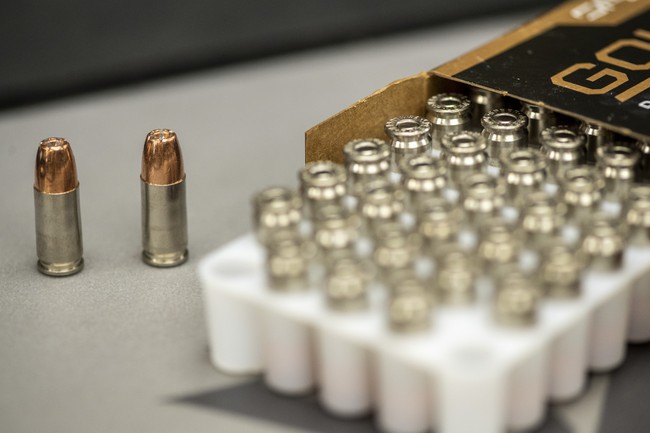
One plan in Illinois seems to hinge on requiring markings on bullets that, in theory, could be later identified by police when used in a shooting.
There are issues with this plan, though.
Supporters say it could help link shell casings to firearms, while critics question its cost and effectiveness. Guns Save Life Executive Director John Boch argued the proposal is driven more by financial motives than public safety.
“This bill is an effort by a half-assed BS artist to get his patented bullet engraving system mandated into law so he can become a multimillionaire or a billionaire,” Boch said. “There’s no way this is feasible to come into existence, and this is a joke. The whole bill is a joke.”
Boch claimed similar proposals have been introduced repeatedly over the past decade and a half, tied to patented ammunition-marking technology that would imprint serial numbers onto bullets and casings.
“He owns the patent on the technology, and he stands to make out like Elon Musk if it were to be adopted into law,” Boch said. “He would get a payment, a portion of every round that’s created with his technology.”
Boch raised concerns about how ballistic evidence is used, pointing to limitations in forensic analysis.
“Bullets deform and fragment when they hit tissue,” Boch said. “There’s no guarantee that his ballistics information will be readable on slugs that are found in bad guys or innocent victims alike.”
Boch also pointed out that New Jersey tried something similar, and after spending tens of millions of dollars, they solved zero cases with it.
He also took issue with the suggestion that the system would deter crime, correctly noting that criminals don’t care about the law. I’d also add that every criminal out there assumes he’s too smart to get caught by the police in the first place, so he’s not worried about his gun getting linked to a crime somewhere in the state.
See, one issue with this system is that it’s just a database of ballistics imaging from crimes throughout the nation. If you find a suspect and if they still have the gun and if you can get a court order to take the gun and test the ballistics, you might get a match and close several cases. That’s a lot of ifs for only a might, if you ask me.
But imprinting serial numbers would make that “might” more definite, right?
Wrong. As Boch noted, rounds do odd things when they hit the human body. Think about the evidence in the Tyler Robinson case. The round we pretty much know he shot can’t actually be matched to the gun we pretty much know he used because there’s so little of it left. Why would we assume the part of the round with a serial number would be what survives?
And even if it did, how do you link a serial number on a round to a particular gun? You’d need a record of who bought what serial numbers–a far more invasive prospect than just wasting taxpayer money on a database that doesn’t do much to help police–and then hope that you could connect the buyer to the shooter.
Which you probably won’t be able to.
All around, this is nothing more than an attempt to look like something is being accomplished without actually doing anything of value. Par for the course of Illinois, really.
Editor’s Note: The radical Left will stop at nothing to enact their radical gun control agenda and strip us of our Second Amendment rights.
Help us continue to report on and expose the Democrats’ gun control policies and schemes. Join Bearing Arms VIP and use promo code FIGHT to receive 60% off your membership.
Read the full article here
