



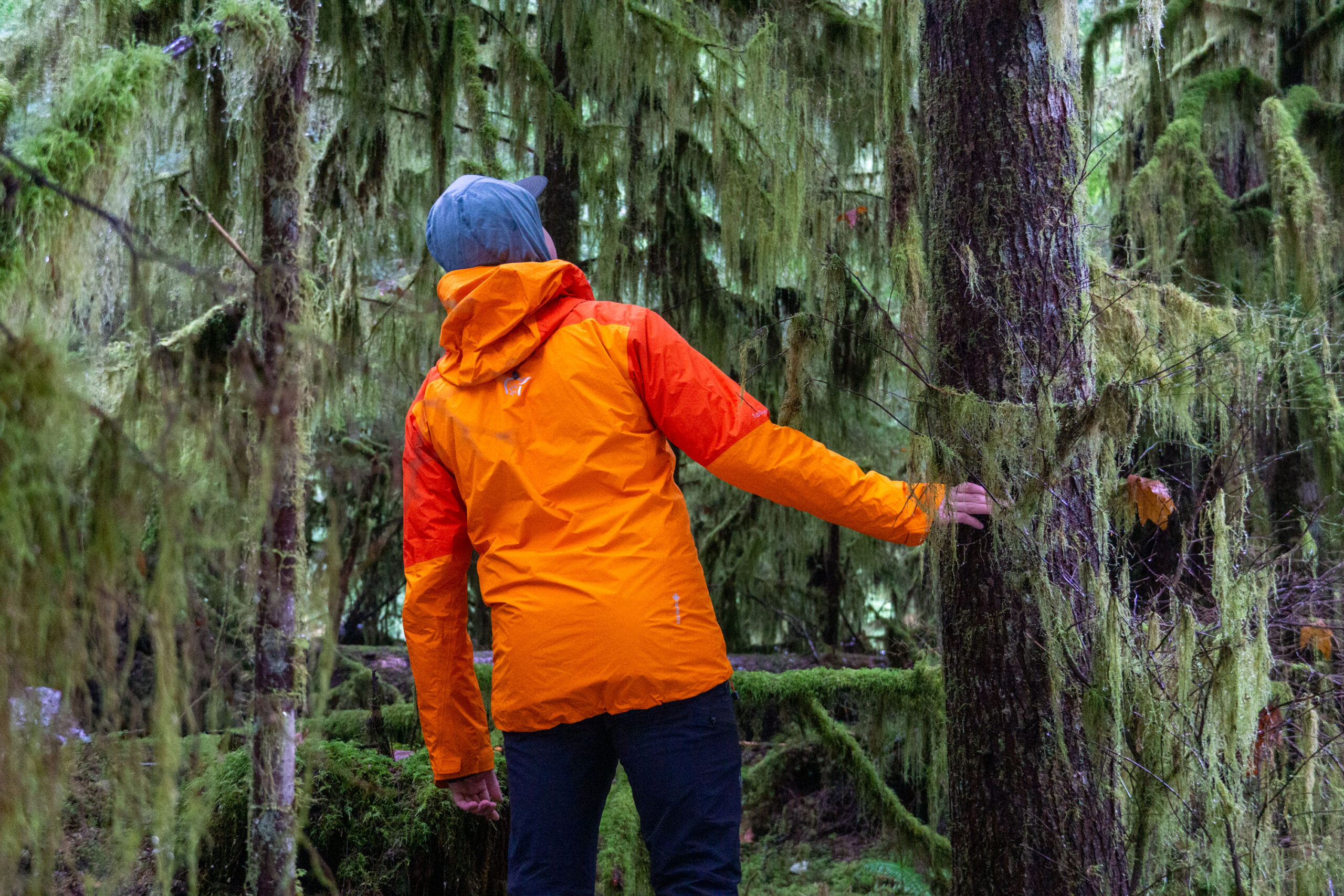

For more than a decade, the GearJunkie team has worn close to 50 different rain jackets in just about every name for precipitation. We’ve pulled together everything from jackets for bumping around town to the most ultralight shells for thru-hiking and even techy rainwear for trail running, cycling, and climbing.
During testing, a team of wet-weather adventurers and I aimed for the worst weather windows to push these jackets to the limit in terms of waterproofing, livability, and rough-and-tumble durability. I paid close attention to performance over entire seasons, and if the weather failed to materialize, I wasn’t above busting out the garden hose. Every jacket was backpacked in, worn hard, and put away wet.
Whether you’re after an easy-to-use get-it-done option like the REI Co-op Rainier or want something that’ll really shoulder the rain with ease, like my best overall pick, the Patagonia Torrentshell 3L, there are options here for most everyone. Read on to find a shell that’ll have your back.
Editor’s Note: We updated our Rain Jackets guide on March 31, 2026, to elevate the Patagonia Torrentshell 3L to our top spot, as well as update the review of the 2026 Outdoor Research Helium UL, which gained a new Dermizax membrane that makes it more breathable.
The Best Rain Jackets of 2026
Waterproof Membrane
Proprietary H₂No 3L
Waterproof Rating
20,000 mm/24 hours
Breathability Rating
Unpublished
Pros
- 3-layer waterproof membrane for the price of many 2-layer jackets
- Budget pricing
- Fit accommodates layering
- Good size range available
Cons
- Plastic-y feel
- Bulky packed size
- No pit zips
Read Review: A Classic Shell Jacket Gets New Tech: Patagonia Torrentshell 3L Jacket Review
The Quick & Dirty: Our best overall pick, it uses 3-layer H2No protection that balances elite waterproofing with a moisture-wicking interior. It’s fully PFC-free and built to last, though the fabric is slightly crinkly.
The Patagonia Torrentshell 3L ($189) has transitioned from a solid value pick to our definitive Best Overall Rain Jacket. While it sits just north of budget territory, it outperforms nearly every shell in its class by offering a full 3-layer H2No waterproof membrane, a construction typically reserved for jackets twice the price. This professional-grade layering ensures the Torrentshell breathes significantly better than standard 2- or 2.5-layer alternatives.
The standout performance lies in the interior tricot backer. In side-by-side field testing in Washington State this spring, the Torrentshell remained noticeably less clammy during high-output climbs than its predecessors. Its waterproofing is equally impressive; in my controlled shower tests, it held back precipitation on par with higher-specced technical shells like the Outdoor Research Foray 3L.
Sustainability remains a cornerstone of this jacket’s design. Patagonia has moved to a completely PFC-free build, eliminating forever chemicals without sacrificing storm protection. The 100% recycled nylon ripstop face fabric is Fair Trade Certified and incorporates a bio-based membrane. While the fabric has a slightly crinkly feel out of the box, it softens significantly after a few miles on the trail.
When compared to rivals like the value-minded 3-layer jackets such as the Marmot Precip Pro ($160), the Torrentshell proves its superiority by holding out longer in heavy deluges, easily justifying the minor price difference. It strikes the perfect balance between trail-ready technicality and around-town aesthetics.
Ultimately, the Torrentshell 3L is the most reliable, high-performance shell we’ve tested for under $200. It offers the best combination of waterproofing, breathability, and ethical manufacturing available today. If you need one jacket that can handle a week-long backpacking trip and a rainy commute with equal ease, this is the winner.
Waterproof Membrane
HydroWall 2.5L
Waterproof Rating
Unpublished
Breathability Rating
Unpublished
Weight
11.3 oz. (men’s medium); 9.9 oz. (women’s small)
Pros
- Budget price less than $100
- Admirable waterproofing
- Smartly designed torso pockets create drop-in pockets on the interior
- Exterior fabric is soft to the touch with slight stretch
- Stormflap is secured with Velcro tabs for extra security
Cons
- Slick 2.5 layer interior can become clammy with too much exertion
- Hood isn’t the most adjustable, with only periphery shockcords
The Quick & Dirty: The best sub-$100 shell on the market, with a functional 2.5-layer build and recycled materials. It’s reliable for casual use but feels clammy during high-exertion hikes.
The Co-op continues to make the grade with its in-house line-up, and the recently updated REI Co-op Rainier Rain Jacket ($100) takes no detour. Sporting a new HydroWall 2.5L membrane and more features than it rightfully should have for the price, the value needle is pinned on this budget rain jacket. It’s no fortress, but even after braving an exceptionally rainy Pacific Northwest spring, I was impressed with the chutzpah on this shell.
REI hasn’t published any waterproofing or breathability specs for its new HydroWall membrane. But after using it, I’m comfortable placing it at about the same level as other polyurethane membranes, such as Marmot NanoPro or North Face Hyvent. That means rainy-day hikes, blustery commutes, and gray bird camping trips are all on the menu. When the cadence kicks up, twin pit zips help to vent excess heat (though they are a bit on the small side).
In terms of fit, I found the Rainier to be fairly spacious and accommodating, easily allowing layers underneath it. The hood isn’t very technical, but a set of drawcords lets you adjust the periphery. As a surprise, one of my favorite features of this jacket ended up being the pockets, as the exterior pockets are sewn into the interior, creating two additional drop-in pockets. Two for one!
These pockets are all made of soft mesh, meaning they do double-duty to whisk away excess moisture — smart. The entire jacket also packs up into one of these pockets, and while not a super small package, it does keep the shell all in one place for stashing it away. True to REI, this jacket doesn’t miss when it comes to sustainability, either. The DWR finish is non-fluorinated and protects the recycled nylon shell from light precip. The entire jacket is made from Bluesign-approved materials and sewn in a Fair Trade Certified factory.
At an approachable price, I’m impressed by the number of “gotta-have-it” rain jacket features that REI has been able to shoehorn into the Rainier Rain Jacket. As a 2.5L jacket, there’s a breathability ceiling that, when you hit it, you’ll know. But at $100, it’s an easy issue to sidestep with proper use of those pit zips and mesh pockets. For anyone looking for their first proper rain jacket, or just a daily driver to beat around in, the Rainier is high on my list of recommendations.
Waterproof Membrane
AscentShell Dry 3L
Waterproof Rating
20,000 mm/24 hours
Breathability Rating
10,000 g/m²
Pros
- New 3-layer membrane wets out much less
- Torso-Flo venting stretches from hem to the pits
- Large size range
- YKK Aquaguard zippers
- Fully adjustable hood
Cons
- 3-layer version is ~2 ounces heavier than previous
- Waterproofing isn’t the highest out there
Read Review: OR’s Most Eco-Friendly Shell Has a Trick Up Its Sleeve: Outdoor Research Aspire II Jacket Review
The Quick & Dirty: A versatile 3-layer upgrade with massive Torso-Flo zippers that vent from hem to pit. It offers better protection than the previous version, but it did gain a few ounces in the process.
Newly revamped in a big way, the Outdoor Research Foray 3L ($249) gets a major upgrade in the membrane department, moving from 2-layer GORE-TEX Paclite to OR’s 3-layer AscentShell Dry. This membrane is a cousin to the brand’s airy AscentShell Air and sports higher waterproofing, but less breathability. The jacket itself is a bit heavier (and has a slightly higher price tag), but I think this shell is better in almost every way.
Couple better waterproofing with the built-in breathability of the hem-to-pits zippers, which can be fully opened for a poncho-like fit, and the Foray (and the women’s equivalent, Aspire) is particularly versatile in different weather conditions. In testing through the winter months of the Pacific Northwest, I found this jacket to perform better than most. Long-term waterproofing isn’t quite as impressive as true GORE-TEX hardshells like the Arc’teryx Beta AR, but it was great for weekend-long use.
The updated jacket is $24 more expensive than the previous, and while it’s not quite the cheapest 3-layer jacket on the market (look to the $179 Patagonia Torrentshell), it’s dang near, and the value is impressive. The jacket did gain a few ounces to update the fabric, but the 13.7-ounce weight for a medium I tested is still well within reason.
Rounding out the Foray 3L is a three-way adjustable hood with buried cord locks, YKK Aquaguard zippers (further guarded by storm flaps), and two torso pockets large enough to stuff the jacket into for storage. There is also a left-hand chest pocket and an elastic drawcord hem. For most folks looking for a high-ventilating rain shell, this is the jacket to snag.
Waterproof Membrane
3L GORE-TEX ePE
Waterproof Rating
28,000 mm/24 hours
Breathability Rating
<13 RET
Pros
- Excellent 3-layer GORE-TEX protection in a lightweight and packable jacket
- High-quality and water-resistant zippers
- Lighter and more packable material compared to Beta jacket
- Integrated RECCO reflector
Cons
- Fit might not accommodate many layers, so consider upsizing for bulky insulation
- Waterproofing will need more frequent refreshing compared to previous GORE-TEX versions
- Price
The Quick & Dirty: A premium, expertly tailored shell using the new GORE-TEX ePE membrane. It offers a world-class fit and high-end storm protection in a surprisingly lightweight package.
The updated Arc’teryx Beta SL Jacket ($500) is just about the best weather protection you can get in a rain jacket (before moving onto something meant for mountaineers). It does this while keeping weight and feature-bloat down. Only the price truly holds us back from recommending this jacket over our top pick, but for many, the investment can be worth it for the performance and fit.
The ‘SL’ designation gives this shell away as a ‘super light’ variant, and at 12 ounces in the men’s medium I tested, it’s pretty light for a three-layer shell. It accomplishes this with a 40D x 70D nylon face fabric that’s still tough, but uses one of the thinnest 3-layer membrane laminations I’ve seen in a rain jacket. The body of the jacket adds a C-KNIT woven backer to aid moisture movement there.
What truly wins me over about Arc’teryx jackets is the articulated fit, which is particularly noticeable in the arms. Few other brands put the time into finessing the paneling here, but the overhead reach is unparalleled on the Beta SL, and that’s without using a stretch-faced material. The hood is equally well-attended to, and is both helmet-compatible, but also not so huge that it billows when not cinched down.
The new GORE-TEX ePE 3-layer membrane is now the standard-bearer technology, and it made a few chemical tweaks to create a GORE that’s PFAS-free, inside and out. This is a win for everyone, and the waterproofing right out of the gate is just as good as the old stuff. I’ve been hands-on long enough to know that the interval between washes is a bit shorter, and that even tossing it in a load in the dryer can help refresh the waterproofing. Ultimately, I’m fine with trading some gear maintenance for the environmental permanence of PFAS chemicals.
At $500, the price tag is undeniably up there. You can get other 3-layer jackets like the Outdoor Research Foray 3L at half the price (and even the Patagonia Torrentshell at $189!) That said, the jacket patterning on both of those can’t touch this shell. The steadfast performance of GORE-TEX is tough to deny, also, and if you need reliable waterproofing in a jacket that just fits nicely, the Beta SL is a solid consideration.
Waterproof Membrane
REI HydroWall 3L
Waterproof Rating
Unavailable
Breathability Rating
Unavailable
Weight
13.4 oz. (tested men’s medium)
Pros
- 3-layer membrane at a more budget-oriented price
- Good stretch in the fabric
- Packs into its own pocket
- Great value for the spend
- Large size and color range
Cons
- Not the best waterproofing out there, and will need DWR refreshes to stay dry
- No internal drop pockets like the REI Rainier
The Quick & Dirty: A high-performance 3-layer shell that leads with a fully PFC-free and sustainable build. It’s quieter and more supple than the Torrentshell, though the athletic cut can feel restrictive over heavy mid-layers.
The REI Co-op XeroCloud 3L ($190) is a high-performance sleeper hit that proves you don’t have to sacrifice sustainability for professional-grade protection. Built with a fully PFC-free DWR and recycled materials, this jacket is a win for eco-conscious hikers who want to move away from forever chemicals. For the same price as the Patagonia Torrentshell, the XeroCloud offers a more supple and quieter hand-feel.
At the core of the jacket is REI’s HydroWall 3-layer membrane, a significant step up from the 2.5-layer construction found in budget shells. While official specs aren’t public, my field testing suggests it hits a competitive 20K/20K benchmark. It held its own against premium 3-layer rivals in my shower tests, offering a breathable, non-clammy interior that outshines more expensive technical emergency layers.
Where the Torrentshell can feel a bit crinkly, the XeroCloud uses a sustainable stretch fabric that offers much better mobility for scrambling and high-stepping. It’s significantly quieter on the trail, though, like all stretch-woven shells, you’ll want to stay on top of your DWR maintenance to keep the face fabric from wetting out over time.
The feature set is equally refined, headlined by a water-resistant front zipper that eliminates the need for the clunky Velcro storm flaps found on entry-level jackets. For the $90 jump over the budget Rainier, you’re getting a far more durable waterproof liner, a functional chest pocket, and a much more premium feel during all-day downpours.
Choosing between this and the Torrentshell comes down to feel: if you want the most protective and hardiest feel, stick with Patagonia. However, if you want a PFC-free, 3-layer workhorse that is quiet, stretchy, and eco-friendly, the XeroCloud 3L is the superior choice for just a few dollars more.
Waterproof Membrane
Patagonia 3L H2No
Waterproof Rating
20,000 mm/24 hours
Breathability Rating
Unpublished
Pros
- Great just-in-case layer for rain and wind
- Lightweight
- Breathable
- Stuffs down small
- Sustainable design
Cons
- Won’t stand up to intense rain
- Small chest pocket
Read Review: This Jacket Is Your Next Take-Everywhere Layer: Patagonia Storm Racer Jacket Review
The Quick & Dirty: A featherweight, packable layer designed specifically for trail runners. It prioritizes breathability and weight over long-term waterproofness in heavy, multi-day monsoons.
Running rain jackets are tough to pin down, as they have to be uber-breathable and waterproof enough to keep cold water off you. The Patagonia Storm Racer ($315) is about as good as the options available, and it sits between tough windshells and more rugged (and heavy) rain jackets.
At a certain level of running output, you’re going to be wet from perspiration anyway, so the Storm Racer aims to be waterproof enough and thin so it does not build up extra heat while you’re trying to move moisture through it. This seems somewhat antithetical to the idea of a rain jacket, but when you’re generating significant warmth, the equation changes.
The 3-layer Patagonia H2No membrane is a proven one, and it’s the same one that’s used in the popular Torrentshell. The difference lies in the thinner 20-denier, 100% recycled nylon face fabric used by the Storm Racer, as opposed to the 50D in the more all-around Torrentshell. This not only helps out breathability (it’s easier to blow through tissue than paper), but it makes the Storm Racer compact enough for race day — packing into its own chest pocket.
Courtney Holder took this shell to New Zealand for a few months of running and adventuring, and while it didn’t conquer everything, the Storm Racer was her choice for any day with high RPMs. Where other rain jackets might have been stuffy, this jacket kept a level head while running through temperate rainforests.
The Storm Racer isn’t quite as lightweight as the Rab Phantom, but we think the added value of going with a 3-layer shell is worth the handful of ounces. The pocket also isn’t anything to write home about and doesn’t fit many modern phones all that well. That said, it’s rare to want to carry much there anyway while running.
You might also consider The North Face Superior for a running shell. Its air-permeable FUTURELIGHT membrane is more breathable than the Storm Racer, but also feels a bit more fragile and is more expensive. For a solid balance of all the running rain jacket concerns, however, the Storm Racer is the choice to make.
Waterproof Membrane
FUTURELIGHT 3L
Waterproof Rating
Unavailable
Breathability Rating
75,000 g/m²
Pros
- Quite lightweight at 8 ounces
- Highly breathable air-permeable membrane
- Climbing-specific fit and features
- Non-PFC DWR finish
Cons
- Crinkly 7D material can be a bit noisy if you’re paying attention
- Won’t be as waterproof as other hardshell jackets
- Price
The Quick & Dirty: A technical, minimalist shell built for fast-and-light alpine missions. It offers excellent mobility for climbing, though the feature set is sparse for general backpacking.
I’ve previously been highly impressed by The North Face’s rugged hardshell jackets and its air-permeable FUTURELIGHT membrane, but The North Face Papsura Jacket ($350) is a lightweight cut for fast, technical objectives. At under 8 ounces, this is the new go-to shell for the ski mountaineers and climbers out there.
Eschewing some features certainly played a role in reducing that weight, but it’s really the 7D x 15D 3-layer FUTURELIGHT membrane that’s doing the heavy lifting here. This material feels quite thin in the hand but holds up to liquid or frozen precipitation. Breathability is a big deal on the FUTURELIGHT membrane, however, and it is impressive in this jacket.
Ski touring may be one of the sweatiest endeavours to test a shell, and that’s what I did in the Papsura, traversing the backcountry surrounding Mt. Baker in Washington State. On uphill grinds in sunny weather this spring, I kept the zips up on this jacket, where it held out longer than any other I tested against it. There’s a limit for everything, and when the sun started beaming, even this jacket tapped out and needed to be shed, but it handled the sweat better than any other shell.
Papsura’s feature set is purposefully limited, and you won’t see adjustable hem or wrist closures. The hood is also minimal, but it makes up for it where it counts. Namely, being helmet-compatible and using elastic on the sides of the aperture to keep visibility up while keeping weight down.
Thankfully for the climbers, there’s a sewn-in carabiner loop inside the storage pocket for clipping to a harness. I’ve previously leaned on the Patagonia Storm10 or Black Diamond Fineline for an on-route rain jacket, but the Papsura now owns the space in my closet.
The downside of this material is that this jacket can be a bit noisy when active, which I found out while ski touring. The crinkle isn’t overt, though — it’s noticeable only if you’re listening for it. Waterproofing is also another consideration in a shell that has gone all-in on breathability, and I’d pivot to a more durable jacket if I had to spend multiple days in the Papsura under poor weather.
At 8 ounces, though, I’m willing to get away with the Papsura Jacket whenever I can. If you need a protective rain shell that balances a light weight with an uber-breathable membrane, this is the ticket.
Other Rain Shells to Keep You Dry
The seven rain jackets above will cover you in just about any conditions you’ll face, but there are plenty of other options I think are well worth the space in your closet. Check out the seven shells below for excellent alternatives the team has tested and thinks deserve some consideration.
Material Construction
80D/100D 3L GORE-TEX Pro ePE
Waterproof Rating (mm)
28,000
Breathability Rating (RET)
<13
Pockets
Two handwarming pockets
Best For
General mountaineering, ski-touring, alpine rock
Pros
- Versatile feature set
- Unique raised collar for weather protection
- Built with GORE-TEX Pro ePE membrane
- Lightweight at only 1 pound (tested men’s medium)
- Rugged exterior shell fabric absorbs abrasion
Cons
- Price
- New version of GORE-TEX Pro ePE needs to be re-waterproofed more often
- No two-way front zipper
The Quick & Dirty: A rugged GORE-TEX Pro fortress with reinforced wear zones and massive pit zips. It’s a bombproof alpine essential, though the stiff fabric and high price are overkill for casual trails.
If you need the ultimate in waterproof performance, an alpine-ready hardshell like the Arc’teryx Beta AR ($650) ought to be on your shortlist. The Beta AR isn’t the most full-tilt hardshell that the legendary Canadian mountain-wear brand makes, making it far more approachable for outdoor endeavors where you need top-tier protection but aren’t planning on bivying on the side of a mountain.
Combining the new GORE-TEX Pro ePE membrane with a generous cut for layering, the Beta AR is primed for long trips under unfriendly conditions. The Pro version of GORE-TEX ePE stacks multiple layers of the membrane atop one another, creating a supremely waterproof barrier, and eliminating the need for a polyurethane lining — instead adding a Micro-Grid backer.
All this is to say, this jacket isn’t afraid of a little rain — or a lot. Mountain man David Gladish’s usage has taken this shell everywhere from deep into the Alaskan bush to skiing in the Cascade concrete of Washington State, and all without fail.
Generous pit zips help dump heat when the mercury begins to rise, and while other hardshell jackets lean further into the spartan alpine-climber trim, the Beta AR is a more well-rounded shell. The handwarmer pockets on the chest are roomy. On the interior, a small accessory pocket aids in wrangling your keys or phone.
Up in the cockpit, a 2.5-inch collar made for one of David’s favorite features. It was perfect to duck behind when the wind blew up and provided a secondary option for protection without going full batten-down-the-hatches and pulling the hood up. The trade for all this protection, obviously, comes at a cost. At $650, you could easily buy a couple of the cheaper jackets on this list. But none of the other shells will keep up in terms of protection for as long as the Beta AR can hang.
With Arc’teryx recently releasing its updated Beta SL, the choice to suggest the AR variant comes down to sport-specific functions (and the need for the GORE-TEX Pro ePE membrane). The new SL uses the slightly lesser GORE-TEX 3L ePE membrane and an FC0 DWR, and while there’s much to like about the improved PFC-free membrane, it’s just not the storm bunker that this shell is.
Primed for weather of any stripe, the Beta AR is well and truly up for it. For locales such as the icefields of Patagonia, the peaks of New Zealand, or the highlands of Iceland, this is the shell you’ll find climbers and alpinists in nine times out of ten.
Waterproof Membrane
GORE-TEX INFINIUM 2L
Waterproof Rating
30,000 mm/24 hours
Breathability Rating
43,000 g/m²
Pros
- Full-featured at UL 6.5 oz. weight
- Impressive breathability
- Smart patterning reduces seam lines
- Three-way adjustable hood
- Reflective hits for night-time visibility
Cons
- Interior can feel slick
- Left hand zipper
- Not the widest size or color range available
The Quick & Dirty: This jacket has recently been updated to use a new in-house waterproof membrane, and we’ve yet to be hands-on with the new jacket. Old stock of the previous version is still available, so we’ll leave our review until our updated take is in.
At a claimed 6.2 ounces (and even less on my own scale), Montbell certainly had weight on the brain when they crafted the Versalite Jacket ($260). Part of the brand’s UL Hiking selection, the Versalite impressed me during testing not only with its weight, but also with the features it offers. Note: this review is for the previous version of the Versalite, for which some stock still remains. We are testing the new version and will update our review accordingly.
While GORE-TEX INFINIUM WINDSTOPPER isn’t marketed as being a fully waterproof membrane, by incorporating fully taped seams and a DWR-finished face fabric, Montbell has been able to whip up a rain shell that sports water resistance that keeps up with the best and puts up breathability numbers that knock many out of the running.
In the wilds, my initial fears over using a “windshell” material were quickly assuaged. Make no mistake, the Versalite can hang in a good rain. During shower testing, this shell staved off soaking through for the entire 10-minute testing period, impressing the skeptic in me. And the benefit to using GORE INFINIUM shows when the grade steepens or a thick mist rolls in: this jacket breathes like it’s got a set of lungs stashed away somewhere, and you don’t have to be knocking out 30-mile days to appreciate that.
For the weight, the Versalite is simply feature-packed. Compared to other jackets of the same or even more weight, the Versalite boasts the full complement: a three-way adjustable hood that rolls up and stows away, two zippered hand pockets with ample space, and 16.5-inch pit zips for easy venting.
As with any specialized piece, the tech-heavy styling won’t win you any awards, and at 10-denier, the face fabric will require more care than your average knock-around rain jacket. But put to the task, the Versalite excels in its lane, jamming in many extra features that jackets of the same ilk can’t claim.
Waterproof Membrane
Proflex 2.5L
Waterproof Rating
20,000 mm/24 hours
Breathability Rating
20,000 g/m²
Weight
7.7 oz. (tested men’s medium)
Pros
- Lightweight at under 8 ounces
- Flexible and stiffened hood brim
- Hand pockets tucked up high on torso
- YKK Aquaguard zippers
Cons
- No pitzips for ventilation
- Not immune from slick interior when really working up a sweat
The Quick & Dirty: A soft, 8-ounce shell using Proflex material that feels comfortable against the skin. It’s highly packable, but the lack of pit zips makes it prone to internal condensation.
An update to the Downpour Plus 2.0 Jacket that I’ve reviewed previously, the new Rab Downpour Light ($180) version pivots to an in-house Proflex 2.5L membrane and, in the process, weighs half as much. This quick-paced shell is best suited for those going light and fast on their adventures.
While the Downpour Plus 2.0 weighed 13 ounces, the new Light came in under 8 in the men’s medium I tested this spring. This makes the jacket a little bit less of an all-arounder, but there are good weight savings if you’re trying to keep your bag weight low and don’t need the maximum protection. I tested this shell on trail runs and longer backpacking trips recently, where the lighter weight could be appreciated, and found it performed well.
While not quite as breathable as the Montbell Versalite, the Proflex does vent perspiration well up to a point. The real loss is the missing pit zips on the Downpour Light, and mechanical venting is limited. In practice, this means you’ll start to feel clammy on the inside if you really get sweating. Thankfully, I found that wearing a long-sleeved top or Alpha90 fleece underneath goes a long way in eliminating the feeling.
Otherwise, I enjoyed the extended wrist cuffs on the arms of the Downpour Light (which kept my watches covered while I hiked) and the YKK AquaGuard zippers, which, while not perfect, are very good at keeping dripping water at bay. There are a few stumbles, such as the sometimes difficult-to-manage left-hand zipper and the trimmer fit, which didn’t jive with all of the other hikers I lent the jacket to.
That said, I think the Downpour Light is a great alternative to the Patagonia Storm Racer, which is more than $100 north of this jacket. For the extra bill, you do get a 3-layer membrane in the Storm Racer, and it’s even half an ounce lighter. If those half ounces matter to you, go for the best, but I think the Downpour Light does a solid job for the money.
Waterproof Membrane
Dermizax 3D 2.75L
Waterproof Rating
20,000 mm/24 hours
Breathability Rating
20,000 g/m²
Pros
- Ultra-packable and lightweight build
- New Dermizax membrane improves breathability
- YKK Aquaguard front zipper
- Packs into its own pocket
Cons
- Waterproofing and breathability has a ceiling, and high-output activities can overwhelm it
- No pit zips
The Quick & Dirty: An updated ultralight shell for thru-hikers and stable forecasts. The new Dermizax membrane improves breathability, but this is still a shell that’s better suited to emergent use.
The Outdoor Research Helium UL ($225) has long been a staple for just-in-case rain gear, and the 2026 update keeps that reputation intact. The big change is the new Dermizax 2.75-layer membrane, which hedges its bets against the wetting out I’ve experienced in previous Helium jackets. It gives you a bump in waterproof reliability without adding any real bulk to your pack.
The “0.75” in the name refers to a raised 3D texture printed on the inside. In my testing in the rainforests of Costa Rica this spring, this was a nice comfort upgrade; it creates a tiny bit of space between the fabric and your skin, cutting down on the trash bag clamminess that usually plagues ultralight gear. If you’re a thru-hiker or fastpacker moving through a steady mist, you’ll likely notice it feels better against your arms than the older, stickier versions.
At just 5.7 ounces on my scale, weight is still one of the only reasons to buy this jacket. It still stuffs into its own chest pocket (about the size of a granola bar), making it the ultimate insurance policy for weight-conscious hikers. The 15D nylon face fabric is surprisingly tough for how thin it is, but make no mistake: this is a thin shell that requires much more care than a standard 3-layer workhorse.
It is important to be clear: this is strictly an emergency-first layer made for a specific crowd. To keep the weight this low, OR skipped the pit zips and hand pockets. You’re relying entirely on the fabric’s breathability and a single chest pocket for storage. For casual hikers or anyone heading into a multi-day monsoon, the lack of mechanical vents and basic features will likely feel too restrictive for all-day wear.
Ultimately, the new Helium UL is a solid refinement for the thru-hiking and UL community, but it’s a specialized tool. By improving the sticky feel of previous models, OR made a minimalist shell that’s much easier to tolerate when the weather turns. It’s perfect for someone who wants protection that disappears in a pack, but it’s definitely not a bombproof daily driver for those who want a full-featured rain jacket.
Waterproof Membrane
Dry.Q 2.5L
Waterproof Rating
10,000 mm/24 hours
Breathability Rating
10,000 g/m²
Pros
- Whole body stretch doesn’t limit mobility
- Soft exterior material feel
- Mesh-lined pockets aids in venting
- Microfleece chin guard
Cons
- Not the most waterproof or breathable
- Simple hood design
- Stretch fabrics require more frequent DWR treatments
The Quick & Dirty: A 2.5-layer shell defined by its four-way stretch and soft, hoodie-like feel. It’s a sustainable, PFC-free standout that offers unmatched mobility, though it lacks the bombproof protection of a 3-layer shell.
The Mountain Hardwear Stretch Ozonic Jacket ($230) takes the phrase moves with you to heart, incorporating a four-way stretch across the entire jacket that not only makes pulling the move easier, but it also does so quietly and with a super soft hand.
Billed as a front-to-backcountry do-it-all shell, this jacket oozes movement and adds a nice amount of stretch to Mountain Hardwear’s 2.5L Dry.Q waterproof membrane. The membrane itself specs out at a respectable 10,000 mm waterproofing and 10,000 g/m² breathability, and in a live-fire environment, I found the Stretch Ozonic to be ideal for lighter precip environments where motion is king, such as trail running, scrambling, or bumping around the city.
Taken to the bench, the Stretch Ozonic did wilt a bit faster than jackets with higher waterproofing counts, and in my shower tests, while wearing a backpack, the areas beneath the pack straps began to wet out before the time was up. This is a known issue for stretch shells and is why the jacket finds itself below the fold in my recommendations.
As a surprise, one of my favorite features of this jacket is hidden away: mesh-lined pockets. In terms of easy methods to add physical venting to a jacket, mesh is high on the list (I’m surprised more jackets don’t incorporate this). There will be a slight durability ding with using a lighter material, but I’ve yet to see it pan out that way in my experience.
The hood of the Stretch Ozonic is fairly standard, with a single drawcord adjustment at the rear of the head to keep it out of your eyes. No wire-stiffened brim here, but I did enjoy the soft microfleece chin guard for when the rain really let loose and I had to retreat inside the hood.
As with many stretch-infused jackets, you’ll need to keep up on the DWR treatments, as this is an area of tradeoff for the impressive flexibility of the membrane. But for when the occasional storm brews up, this jacket certainly will make the cut for folks who want a shell that will flow with them.
Waterproof Membrane
GORE-TEX ePE 3L
Waterproof Rating
28,000 mm/24 hours
Breathability Rating (RET)
<13 RET
Pros
- Burly construction
- Lightweight design
- High-quality fit and finish
- Non-PFC GORE-TEX ePE membrane
Cons
- High price
- Fabric crinkle
The Quick & Dirty: A streamlined, 3-layer GORE-TEX shell with a premium fit. It’s highly breathable and versatile, though it lacks pit zips for mechanical venting.
From your morning commute to a coastal deluge, the Arc’teryx Beta Jacket ($400) ticks the boxes for my needs when it comes to a rain jacket that can simply do it all. And freshly updated, the Beta follows in the footsteps of the Beta Lightweight shell and adopts the GORE-TEX ePE membrane, which incorporates zero forever chemicals in its construction.
Arc’teryx’s Beta line of jackets is made for all-around activities, and I can confirm that this jacket will just about do most of it. Utilizing a high-power GORE-TEX 3-layer ePE membrane and a durable face fabric, this is the shell for serious outdoors folk who need absolute protection, no matter the price. My own testing has taken the Arc’teryx Beta to places that other rain jackets shudder to dream of. Through it all, this jacket came out ready for more.
The Beta certainly isn’t cheap. At its premium price point, it’s better thought of as a long-term investment piece that’ll be around far into the future. But at a 28,000mm waterproof rating, know that you’ll be protected from the rain for the long haul.
During testing around British Columbia’s Squamish, I came to greatly appreciate this heightened waterproofing, as well as the trim fit that worked equally well cutting through downtown as it did getting up close and personal with a few waterfalls.
One downside of the über-waterproof fabric is the distinct crinkle of fabric on fabric, which can become a drone on repetitive missions like ski touring. And since this is the lower end of the Beta line, this jacket does without pit-zips. If some added mechanical ventilation is high on your list, check out the Beta SL ($500).
One benefit of the buy-once-cry-once ethos is getting access to brands that are pushing innovation. Arc’teryx works closely with GORE-TEX to produce leading-edge fabric technologies, and if the leading edge is where you spend most of your time, the Beta is up to the task. It’s probably one of the better rain jackets money can buy today, without stepping up to something more mountain-savvy like a hardshell jacket.
Waterproof Membrane
Proprietary BD.dry 2.5L
Waterproof Rating
10,000 mm/24 hours
Breathability Rating
10,000 g/m²
Pros
- Great value
- Impressive material stretch doesn’t limit mobility
- Water-resistant front zipper
- Helmet-compatible hood
- Packs into its own pocket
Cons
- Not ideal over layers
- Not the most waterproof or breathable
The Quick & Dirty: Built with a stretchy fabric that moves with you during technical scrambles. It includes pit zips and a helmet-compatible hood, though the 2.5-layer membrane has a breathability ceiling.
A solid blend of packability, stretch, weight, and value, the Black Diamond Fineline Stretch ($189) provides a good option for traveling and daily getaways. This jacket is functionally the same as the previous StormLine Stretch, and available at below $200, it’s a reasonable option from a trusted brand.
Underarm gussets pair with four-way stretch to allow greater freedom of motion, while Black Diamond’s proprietary BD.dry membrane seals out the elements. The StormLine packs into its own pocket and has adjustable cuffs, and also has a climbing helmet-compatible hood. Plus, the jacket weighs just 11.3 ounces, which means you’ll hardly register that it’s hanging from your climbing harness or stashed away in your pack.
While this shell sits great parked on the back of a harness, it isn’t the jacket you want to spend all day camped out in. During an unexpected rain shower halfway up a wall in the Cascades, I found the Fineline to give up the ghost where it was pressed against my harnesses and the environment — something I replicated in my bench tests. It’ll still keep you warm — arguably the more important part when moving quickly — but there’ll be some wringing to do when you’re done.
While not the best suited for layering, the Fineline Stretch will do just fine as a jacket to hedge your bets against a middling forecast. The more climbing-oriented among us more often reach for the 3-layer protection of the Arc’teryx Beta — and recommend you do, too, if you’ve got the dough.
Rain Jackets Comparison Chart
| Rain Jacket | Price | Waterproof Membrane (Waterproof, Breathable Ratings) | Weight | Who Its For |
|---|---|---|---|---|
| Patagonia Torrentshell 3L |
$189 | Patagonia H2No 3L (20K mm, N/A) | 13.9 oz. | Hikers wanting the best 3-layer durability and sustainability for under $200 |
| REI Co-op Rainier | $100 | REI HydroWall 2.5L (N/A, N/A) | 11.3 oz. | Casual hikers or travelers looking for the most reliable protection for $100 or less |
| Outdoor Research Foray 3L | $249 | AscentShell Dry 3L (20K mm, 10K g/m²) | 13.7 oz. | High-output adventurers who run hot and need maximum venting |
| Arc’teryx Beta SL Jacket | $500 | 3L GORE-TEX ePE (28K mm, <13 RET) | 12 oz. | High-end hikers seeking the latest GORE-TEX tech in a lightweight package |
| REI Co-op XeroCloud 3L | $190 | REI HydroWall 3L (N/A, N/A) | 13.4 oz. | Eco-conscious hikers seeking a quiet, stretchy, and PFC-free alternative |
| Patagonia Storm Racer | $315 | Patagonia H2No 3L (20K mm, N/A) | 7.2 oz. | Trail runners who need to prioritize packed size and warmth over total weather protection |
| The North Face Papsura | $350 | FUTURELIGHT 3L (N/A, 75K g/m²) | 8.0 oz. | Fast-and-light climbers needing a minimalist shell for high-altitude weather |
| Arc’teryx Beta AR | $650 | GORE-TEX Pro ePE 3L (28K mm, <13 RET) | 1 lb., 0.2 oz. | Guides and mountaineers needing a reinforced fortress for extreme conditions |
| Montbell Versalite | $260 | GORE-TEX INFINIUM 2L (30K mm, 43K g/m²) | 6.4 oz. | Gram-counters who refuse to sacrifice breathability for a sub-7-ounce base weight |
| Rab Downpour Light | $165 | Proflex 2.5L (20K mm, 20K g/m²) | 7.7 oz. | Fastpackers wanting a soft-touch shell that feels comfortable against bare skin |
| Outdoor Research Helium UL |
$225 | Dermizax 3D 2.75L (20K mm, 20K g/m²) | 5.7 oz. | Thru-hikers needing a granola-bar-sized insurance policy that disappears in a pack |
| MH Stretch Ozonic |
$230 | Dry.Q 2.5L (10K mm, 10K g/m²) | 10.5 oz. | Scramblers prioritizing mobility over long-term storm-proofing |
| Arc’teryx Beta | $400 | GORE-TEX ePE 3L (28K mm, <13 RET) | 10.6 oz. | Enthusiasts wanting a premium GORE-TEX shell that works for both the city and the trail |
| Black Diamond Fineline Stretch | $189 | Black Diamond BD.dry 2.5L (10K mm, 10K g/m²) | 11.3 oz. | Climbers wanting a stretchy, helmet-compatible shell that packs down small |
How We Tested the Best Rain Jackets
From time spent on long trails to running laps on ice climbs, rain shells are often put to the test in a wide variety of conditions, and I aimed to review all of them in a broad spectrum of environments.
- Field testing: Our rain jacket testing occurs year-round, but mostly during the wettest months of autumn in the Pacific Northwest. I, along with a crew of dedicated trail hounds, have been pulling on waterproofs and treading out into uncertain weather patterns for more than 5 years — collectively testing more than 50 different rain jackets now. This testing aims to challenge these jackets and looks at waterproofing over 24-hour periods, breathability during hill climbs, and durability against dense Cascadian bushwhacks.
- Shower waterproofing challenge: Every shell tested endures the classic shower soak — a 10-minute deluge with all hatches battened down and seams inspected for soaking through. I also completed this test a second time while wearing a weighted pack to challenge the waterproof rating even further. Zipper waterproofing is tested by tucking away paper towels inside and soaking the exterior.
- Fit and finish testing: Hoods are tested for visibility and mobility while looking in all directions. All jackets are weighed on our own scales to ensure accurate weight verification. I even compress each shell into the same stuff sack and measure volume for a real-deal understanding of packed size.
- Our rain jacket rating system:
- Weather Protection: 30% weighted. I look for solid protection from wind and rain over longer periods, typically a full 24 hours out in the elements. Long hem lines with drop tails, zippers that are either covered by fabric or water-resistant, and high-quality 3-layer membranes all secure high scores here.
- Breathability: 30% weighted. I look for the ability to mechanically vent through pit zips, a roomy fit, and a solid breathability testing score, typically greater than 15,000 g/m² or a RET of 12.
- Comfort & Fit: 20% weighted. I look for design features that provide some solid comfort and a good fit, such as a versatile cut for layering, a cinchable hem, sleeves that reach the wrists just right, and a hood that is adjustable in more than one dimension. We pass these jackets around to a handful of different in-house testers and compile notes from a variety of different body types to ensure our impression is accurate.
- Weight: 20% weighted. I look for all-around rain jackets to be less than a pound and ultralight jackets to be less than half a pound to award a decent score.
Our Expert Testers
My team of testers has braved storms from the rain-drenched foothills of the Pacific Northwest to the mountains of Colorado for half a decade now to review and publish rain jacket guides for men and women. The GearJunkie crew isn’t afraid of a poor forecast, and our gathered rain jacket knowledge is pulled together here to guide your rain jacket choice. While we might be a bit wet behind the ears, it’s not for a lack of experience.
I, Senior Editor Nick Belcaster, am no stranger to a little precip, and am the principal tester for this guide. Living and playing in the state of Washington requires either a lot of patience in waiting for the weather to change or a lot of grit to get outside anyway. I’ve also thru-hiked the Pacific Crest Trail, and have previously professionally equipped alpine climbers for whatever conditions they might encounter, including week-long deluges.

Buyer’s Guide: How to Choose a Rain Jacket
There are many rain jackets on the market, and while having options is great, it can be overwhelming to choose. In this buyer’s guide, I’ll explain the most important factors to keep in mind when deciding on the best rain jacket for your needs.
What Is ‘Waterproof’?
Given enough time and pressure, nothing is truly waterproof. Even the yellow rubber slickers that swaddle fisherfolk will eventually yield to enough H₂O, which means a little science is needed in order to understand what is ‘waterproof’, and what is ‘water-resistant’.
Waterproofness is measured by the amount of water that can pile up on fabric before it leaks over a period of 24 hours. The minimum standard to call something waterproof is 1,000 mm, which should generally be capable of handling everyday front country use, like walking your dog around town in a light drizzle. But for outdoor adventures with severe weather, you’ll want to find a jacket with a waterproof rating between 5,000 mm and 30,000 mm.
Pressure can also lower the waterproofness of your rain jacket, and it can be introduced from backpack straps or heavy snow. It is important to note that waterproofness and breathability are two metrics pulling in opposite directions, and superior water resistance will require some concessions in the breathability department.
Waterproof Breathable Membranes
The waterproof breathable membrane is the heart and soul of a rain jacket, and has the difficult task of balancing keeping rain from getting in, and passing moisture-heavy air out. GORE-TEX is widely known, and is an industry leading technology that performs at a high level, but there are other in-house options as well, such as Outdoor Research’s AscentShell and REI’s HydroWall.
There are a few different ways to make a waterproof membrane, but the most important differentiator to know is between old-school membranes like GORE-TEX, and new-school ‘air-permeable’ options. GORE-TEX will prioritize waterproofing (and not breathe as well), while air-permeable options breath much better — but won’t be as waterproof.
Jacket Layers & Breathability
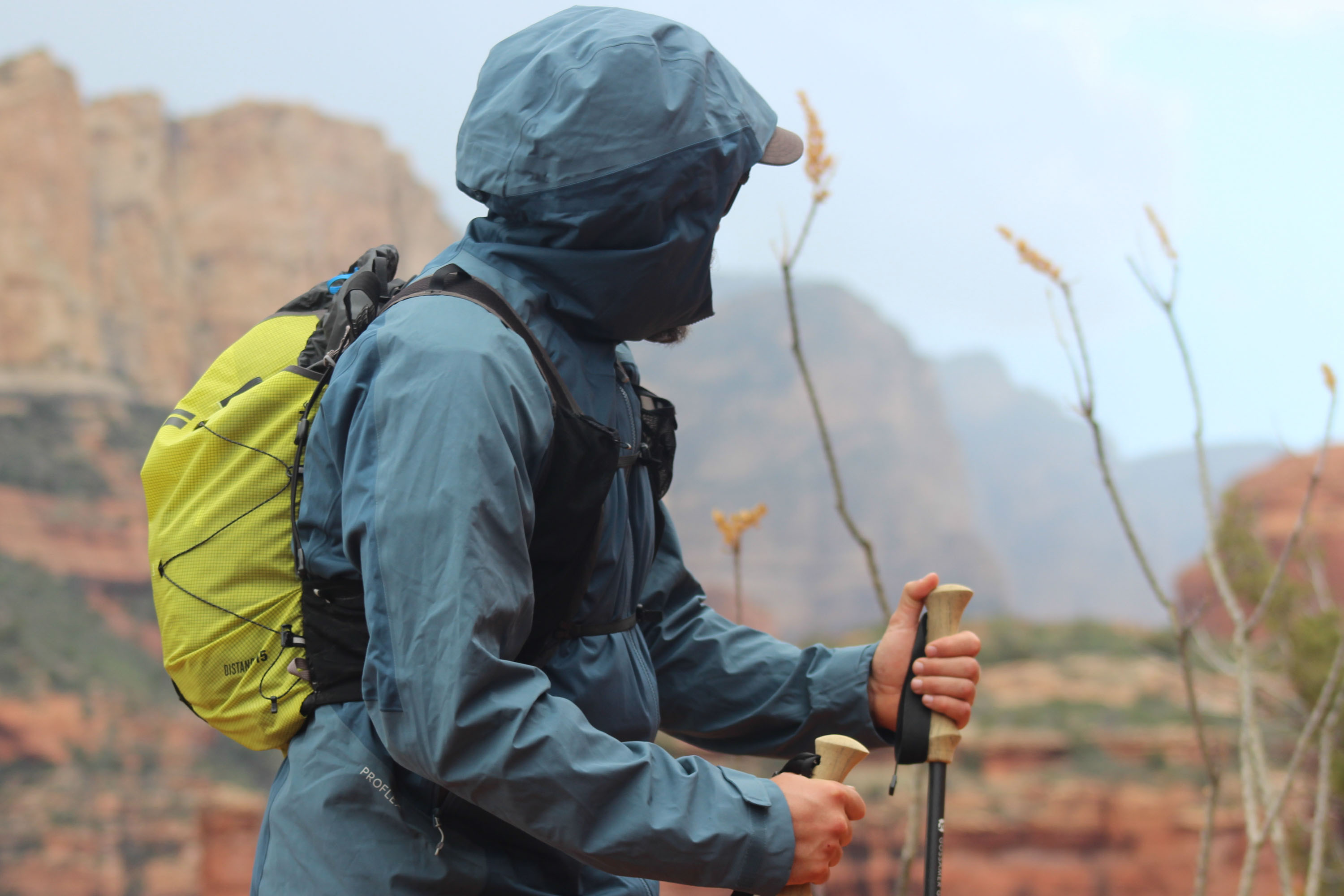
You’ll often see jackets sporting identifiers such as ‘2-layer’ or ‘3-layer’ construction, which relates to the liner and face fabric surrounding the waterproof membrane. These layers are necessary to both protect the membrane, as well as help it pass moisture out of the jacket (and stop it from getting to the membrane in the first place).
The style of liner is what decides the layer construction, with 2-layer jackets only using a membrane and a hanging liner — one that isn’t bonded to the jacket. These are typically budget-minded shells, and won’t be as durable as more robust designs.
2.5-layer shells bond a very thin lining to the interior of the jacket, which protects the sensitive membrane from your body oils. These jackets tend to be quite lightweight and packable (such as the Outdoor Research Helium), but are a bit more fragile in the long run.
3-layer jackets such as the Outdoor Research Foray use a more robust textile backer to line the shell, which aids in moisture wicking, and provides a soft touch against the skin. Most of all, this layer protects the membrane from premature wear, and make these the highest-performing jackets. You’ll typically pay the most for these designs, but there is value to be found in shells like the $179 Patagonia Torrentshell 3L.
Breathability is measured in a few different ways, and you’ll most often see this in grams per square meter, or ‘g/m²’. Aiming for a breathability above 15,000 g/m² will ensure that you don’t sweat out your jacket while building up some steam on trail. You may also see a RET score referenced, with <6 being extremely breathable, between 6 and 12 being highly breathable, and greater than 12 only being moderately breathable.
Durable Water Repellant & Seam Taping
The first line of defense for a rain jacket, a durable water-repellent finish (DWR) is a hydrophobic coating that gives it that “duck’s back” look of rain beading away harmlessly. This keeps water from overwhelming the waterproof membrane and prolongs its ability to stay waterproof.
DWR coatings also affect the ability of the jacket to breathe, as a wetted-out face fabric will inhibit the jacket’s ability to expel moisture. Abrasion, oils, and trail funk can all degrade the coating, so keeping your rainwear clean and re-waterproofed is the best way to ensure that your jacket continues to function at peak performance, as I discuss below.
Seam tape is used on the interior of the jacket to join fabric panels together, and ensures that water can’t entry through the stitch holes.
Zipper Ventilation
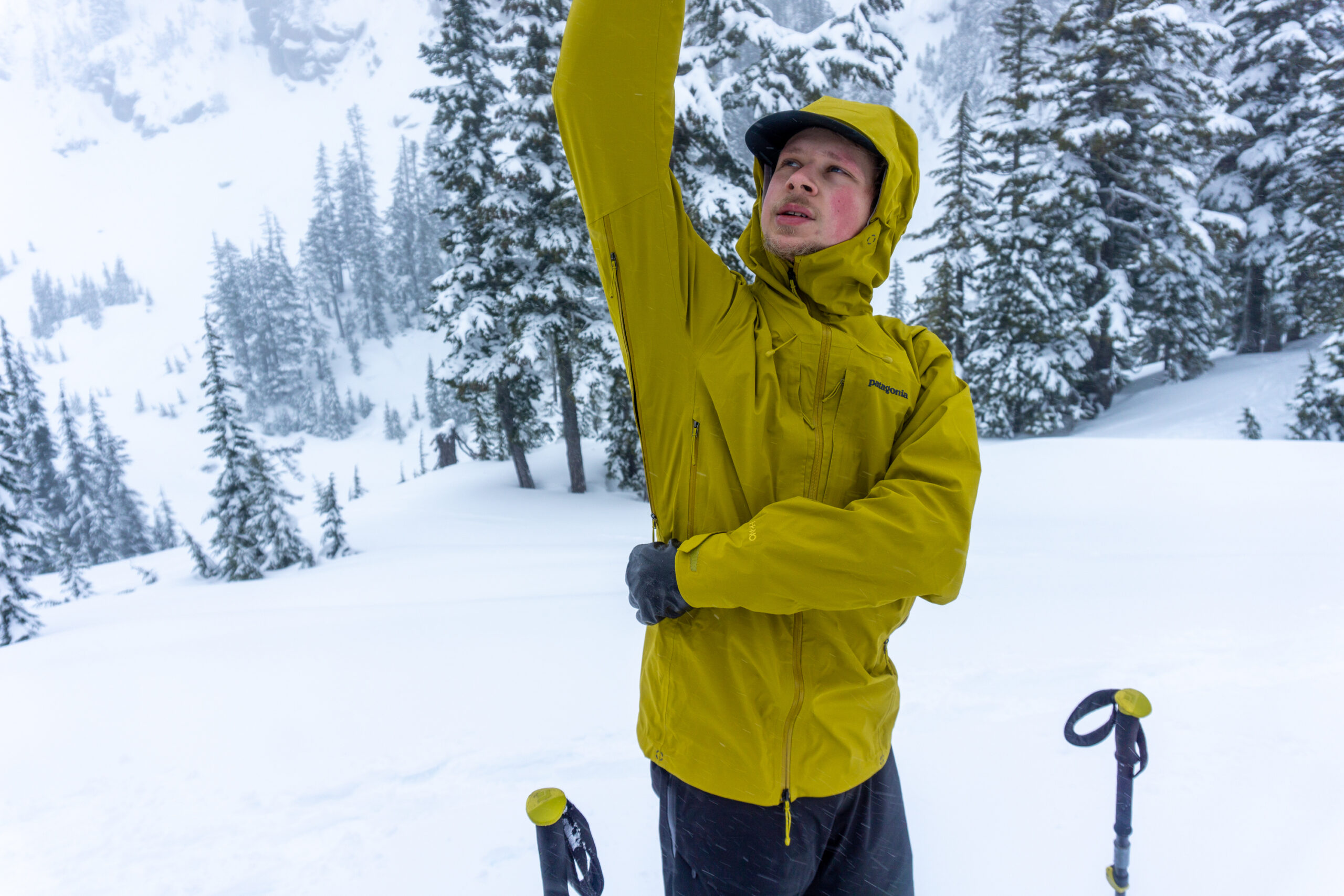
Rain jackets meant for vigorous outdoor use will require some type of added ventilation to move out excess body heat, and the most common are pit zips. These underarm zippers typically run from the center of the torso to near the elbow. Most rain jackets today will sport these zippers, with only the lightest options — like the The North Face Papsura — going without them.
Some novel ventilation zippers also exist. The hem-to-pits zippers on the Outdoor Research Foray 3L split the jacket up the sides, allowing for much more ventilation and the ability to differentially open the vents. These venting options all aid in moving perspiration and heat out quickly.
Comfort & Stretch
It’s important that your rain jacket moves comfortably with you and does not overly restrict your movement. A comfortable rain jacket will keep you dry without feeling annoying or cumbersome.
A growing trend has been incorporating built-in stretch into rain jackets, which greatly increases their abilities where high mobility is needed. Jackets reviewed like the Black Diamond Fineline Stretch and Mountain Hardwear Stretch Ozonic Jacket incorporate stretch and will move with you outdoors.
Small features usually define the overall comfort of a rain jacket. For example, a hood that fully blocks peripheral vision will not be comfortable to use. Ideally, your rain jacket will minimally limit your range of motion, and the interior lining will feel good against your skin.
Weight & Packed Size
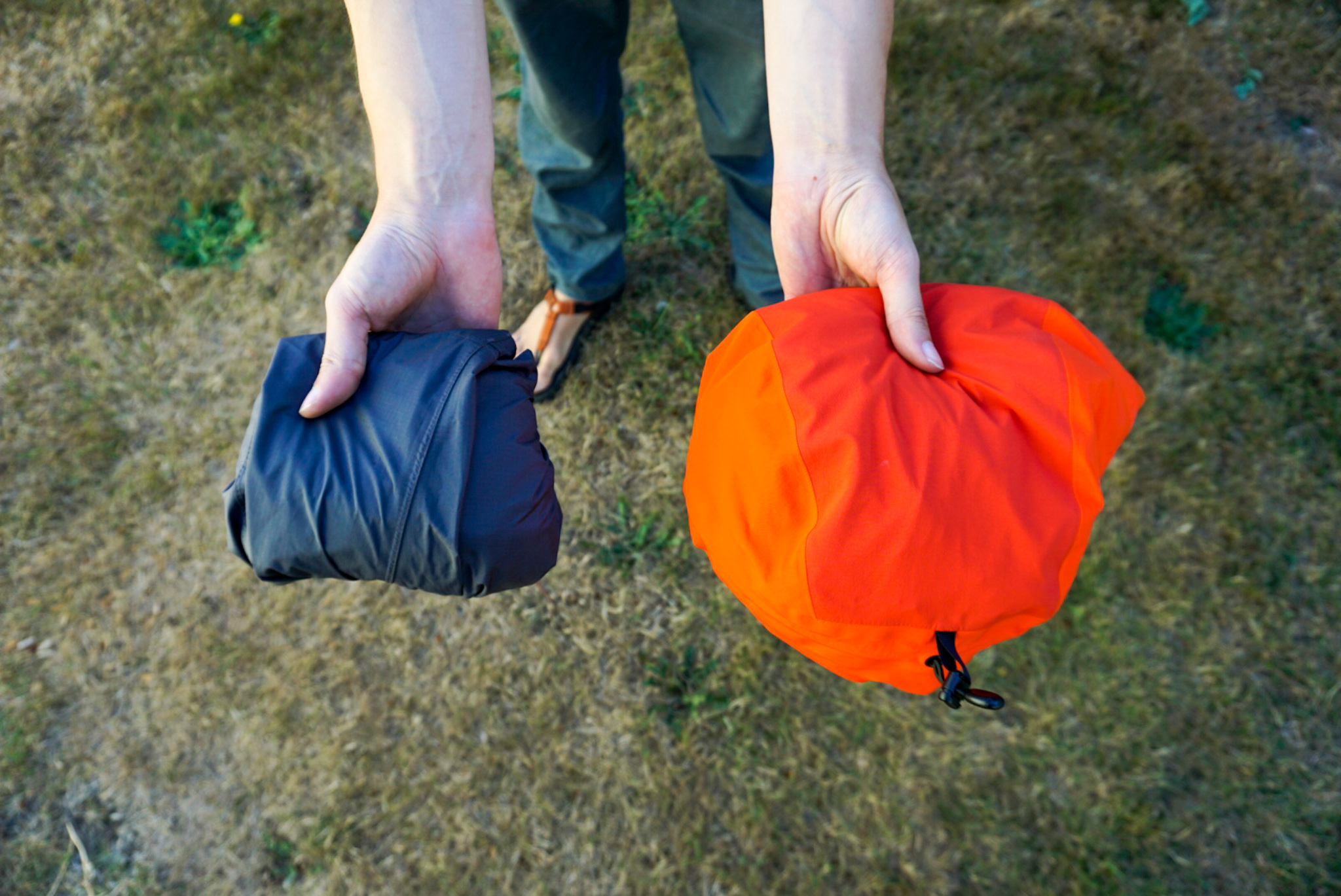
Most people agree weight is an important consideration for any piece of outdoor gear. If you’re going to be carrying your rain jacket in a pack when it isn’t in use, you want it to be as light and compact as possible — without sacrificing usability. Many lightweight rain jackets, like the Montbell Versalite or The North Face Papsura, weigh less than a pound without sacrificing durability and functionality.
Many rain shells stuff easily into their own pockets and become barely larger than a baseball. Once packed down, it’s nice to have an external clip-in loop on the stuff sack — especially for multi-pitch rock climbing or backpacking. If your rain jacket packs down conveniently, you’re more likely to bring it along and have it when it’s needed most.
Pockets
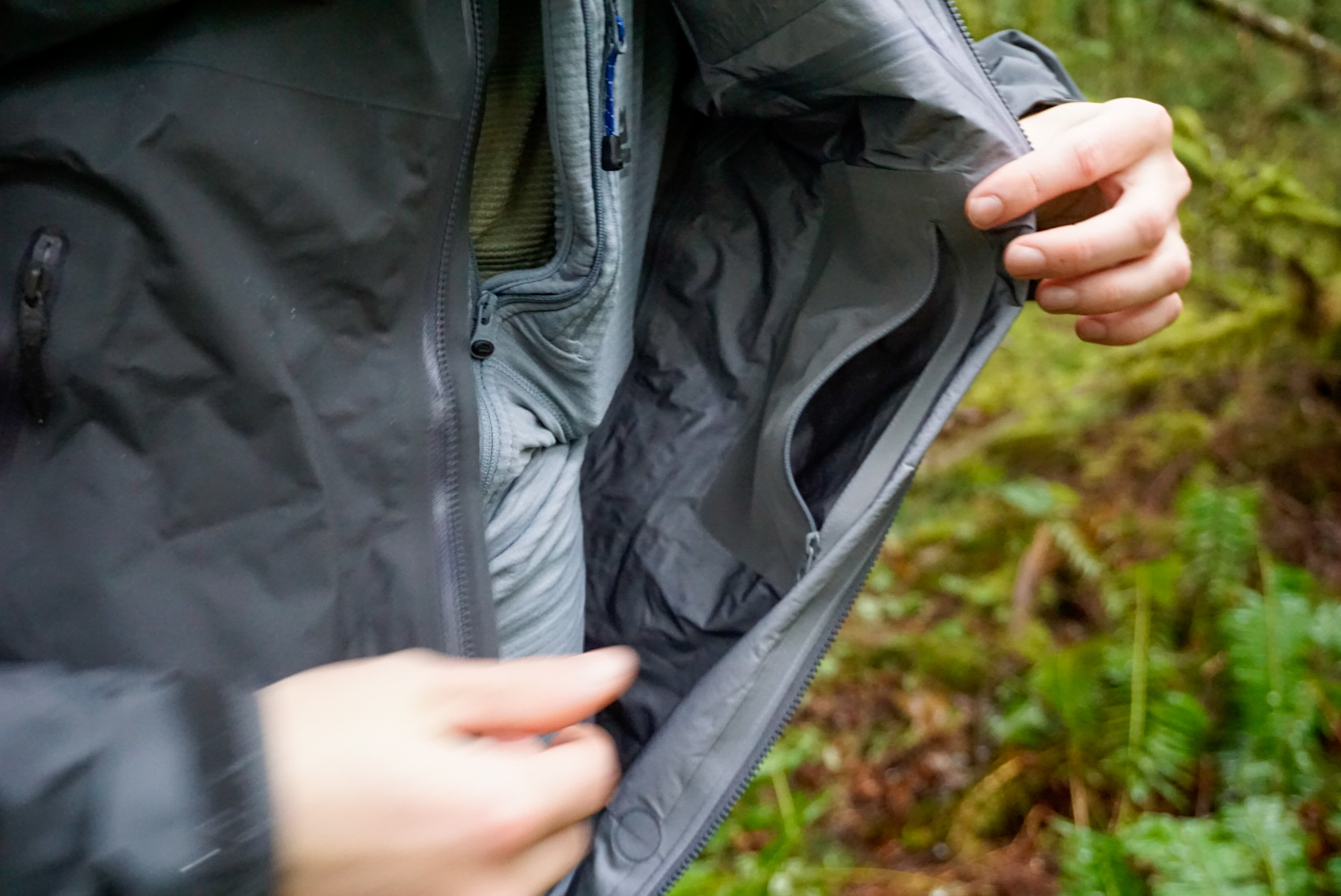
It’s nice to have a well-placed pocket or two in your rain jacket. However, more pockets mean more material, and more material means increased weight and decreased packability.
Pockets also create seams that may decrease the waterproof capability of the jacket. Still, it’s nice to at least have two hand pockets to keep your hands warm and dry in a storm. Waterproof zippers on pockets and front zippers can add increased water resistance and protect your valuables inside. Also, rain jackets will often incorporate underarm zippers to increase ventilation.
Hoods
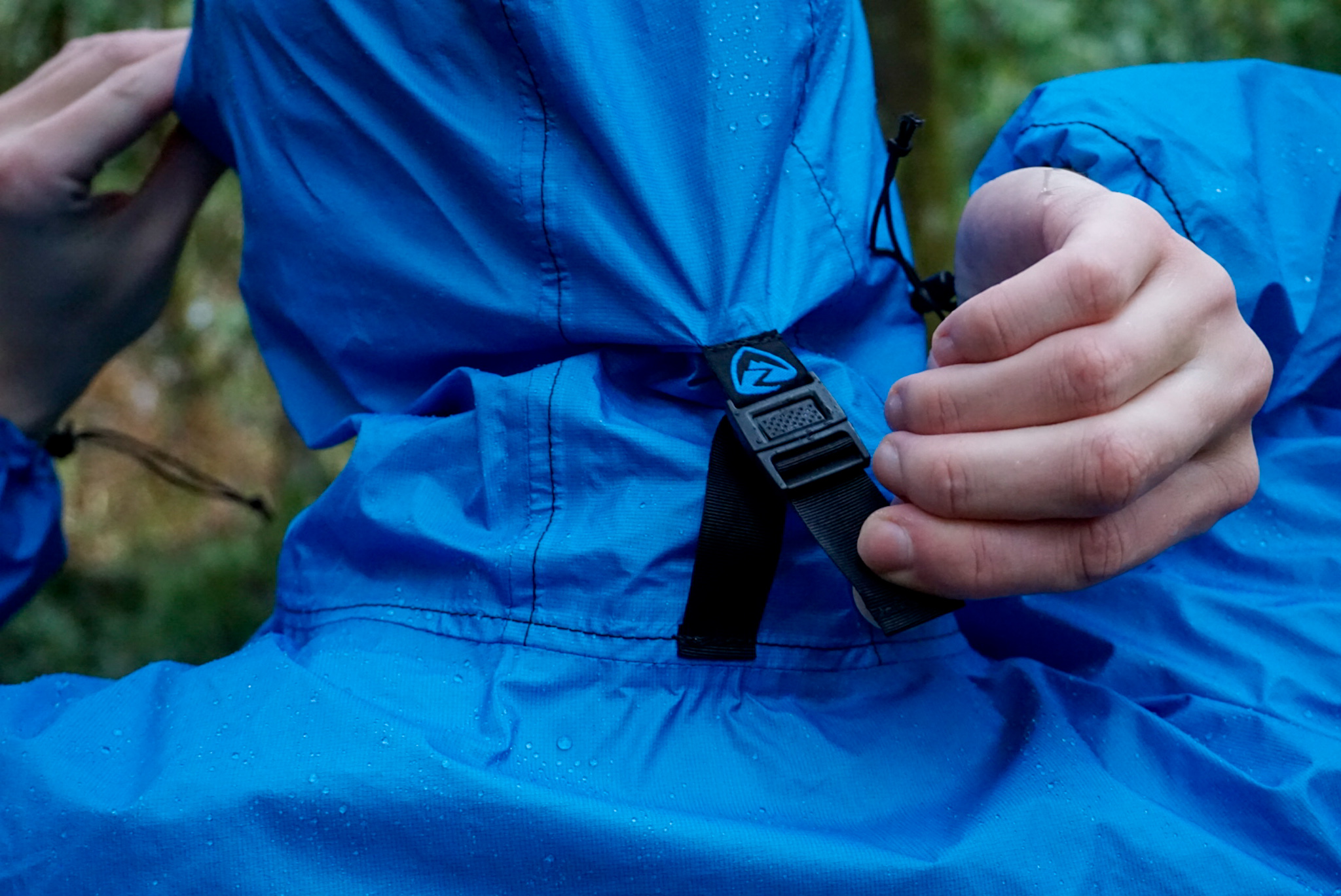
Some rain jackets have hoods that double as a convenient stuff sack. Generally, if it’s raining hard enough to warrant a rain jacket, you’ll probably also have the hood up.
A well-designed hood should be strategically designed to offer full protection without limiting peripheral vision. Adjustments can include a simple drawstring at the rear of the hood to pull the crown out of your eyes, as well as side profile adjustments for peripheral coverage, and wire-stiffened brims to keep rain from draining into the hood.
Finally, it’s also important to ensure that your hood will fit over any helmet you may be wearing. Typically seen in more sport-specific or hardshell jackets, helmet-compatible hoods provide a bit of extra internal space to accommodate your protective headwear.
Sustainability
In striving to create the most waterproof membrane, the outdoor industry created a number of unsustainable practices which are slowly beginning to be rectified: using recycled materials, PFC-free DWR finishes, and ensuring sustainable practices are used during production.
Being Bluesign certified means that the fabric used in the jacket has passed an independent approval process to ensure that they are safe for the environment and consumers. A similar process is used in being Fair Trade Certified, where producers must ensure sustainable livelihoods for textile workers.
The most sustainable rain jacket in our review was the Patagonia Torrentshell 3L Jacket, which utilizes a 100% recycled face fabric, is Fair Trade Certified sewn, and is Bluesign-approved.
Durability and Caring for Your Rain Jacket
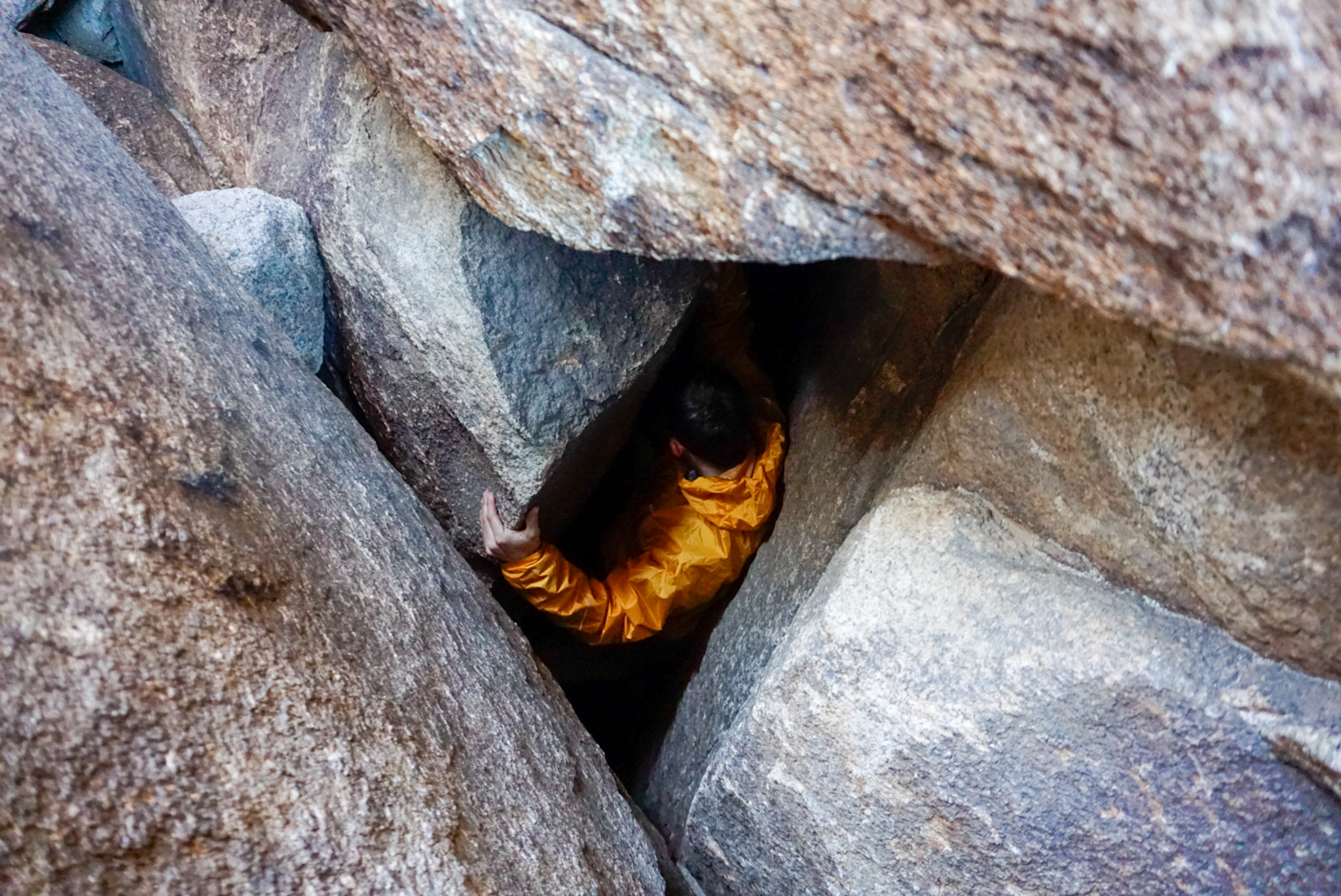
A rain jacket is designed to be exposed to the elements, and a good one will do its job without falling apart. As rain jackets become lighter, users should expect a dip in durability, too.
However, on this list, I’ve included rain jackets that are both lightweight and reliable. A jacket that is abrasion-resistant will have much greater overall longevity. Purchasing a shell that utilizes a higher denier face fabric, such as the Arc’teryx Beta Jacket, will greatly increase its durability over time.
Often overlooked, regular upkeep of your rain jacket is essential to keeping the waterproof membrane happy and working as it was designed. When body oils and grime clog the interior pores, the breathability suffers, and a worn-away DWR finish does little to keep a jacket from wetting out. A quick and easy way to breathe some life into your DWR is a brief cycle in the dryer on medium heat.
When a more thorough cleaning is in order, begin by washing your rain jacket with a detergent that is made for waterproof fabrics, such as Nikwax Tech Wash. I’ve found that this will cleanse the waterproof membrane and allow it to function as designed.
Price & Value
Rainwear can be pricey, and often rightfully so — little else has as much depending on it. Staying dry certainly has a price, but it isn’t always clear what exactly you’re getting for the money. When it comes to rain jackets, the breakdown is as such:
Budget
Sometimes you just need a shell to get the job done — or you’ve already splurged on your big three camping kit. Either way, there are thankfully a number of great rain jackets on the market today that won’t rob your pockets too harshly and tend to slide in between $100 and $200. These shells are more often 2- or 2.5-layer jackets with in-house membranes, which are cheaper to produce, but also won’t hit as high performance metrics.
When it comes to the best bang for your buck out there, I always circle back to the REI Co-op Rainier Rain Jacket ($100), which uses an REI proprietary membrane to keep its price low but still comes in flush with all of the features I’m after in a rain jacket. The Patagonia Torrentshell 3L ($189) is another notable value, and bumps up the protection for a bit more out of pocket.
Mid-Tier
The meat and potatoes of rain jackets typically gain more protection over their budget counterparts, and this is where you’ll see third-party membranes such as Pertex or GORE-TEX being used. Three-layer jackets are the standard here, and you also begin to see more special use-case jackets, such as ultralight shells or burly mountain-ready jackets. Expect to pay north of $200 and up to $400 for these rain jackets.
Ultralight shells like the Montbell Versalite ($260) and Patagonia Storm Racer ($299) trade some protection for weight savings, and climbing shells like The North Face Papsura ($350) are ready to be clipped to a harness.
Premium
Nearing the protection offered up by hardshell jackets, premium rain shells are more often than not going to be a 3-layer GORE-TEX offering, and will hold out the longest when it comes to rain protection. Look to these shells to command from $400 and on up, with additional features and extra burly materials commanding more dollar signs.
The Arc’teryx Beta AR is undoubtedly the most protective rain jacket on our list and is made from GORE-TEX Pro material, but it also costs $650 for the privilege. It’s not the only jacket from the brand to occupy this level of rainwear, either, with the more all-around Arc’teryx Beta SL Jacket going for $500. It’s easy to label these as overpriced, but after many seasons of use, the durability and protection of these jackets are undeniable.
You can go a step further by reapplying a fresh coat of DWR such as GEARAID Revivex Durable Water Repellent Spray, and then turning the jacket inside out and drying it on high heat to set. This is a common fix and with frequent reapplication, it will keep water beading off your jacket when it counts.
Frequently Asked Questions
The best waterproof jacket is one that fits well, meets your needs, and provides reliable waterproofing. On this list, I have included several high-quality rain jackets.
When deciding which one to purchase, consider factors including the jacket’s waterproof rating, weight, durability, and extra features.
GORE-TEX is the gold standard for waterproof fabric. When undamaged and in good shape, GORE-TEX-treated fabrics will keep out any liquid water that lands on the surface.
However, over time, the quality of the waterproofing of GORE-TEX will degrade, and it will no longer perform like new. Most GORE-TEX materials have a waterproof rating of 28,000 mm.
It’s wise to always go into the outdoors prepared with a rain jacket. Many rain jackets are light and packable, so you’ll hardly notice them in your pack during the hike. In wet and cold conditions, a good rain jacket can keep you comfortable and safe.
Waterproof membranes in rain jackets degrade slowly, but are sensitive to becoming dirty and clogged with sweat and dirt. Often, a jacket still retains much of its original waterproof ability, and only needs to be cleaned with a waterproof fabric-safe detergent and re-waterproofed with a new DWR finish.
Wetting out occurs when the face fabric of a rain jacket becomes overwhelmed by water from the outside, saturating the outer face and limiting the ability of the waterproof membrane to do its job.
This can occur when a DWR finish has worn out, or external pressure from a heavy pack presses the moisture into the fabric. Frequent washing and re-waterproofing is the best bet to avoid wetting out.
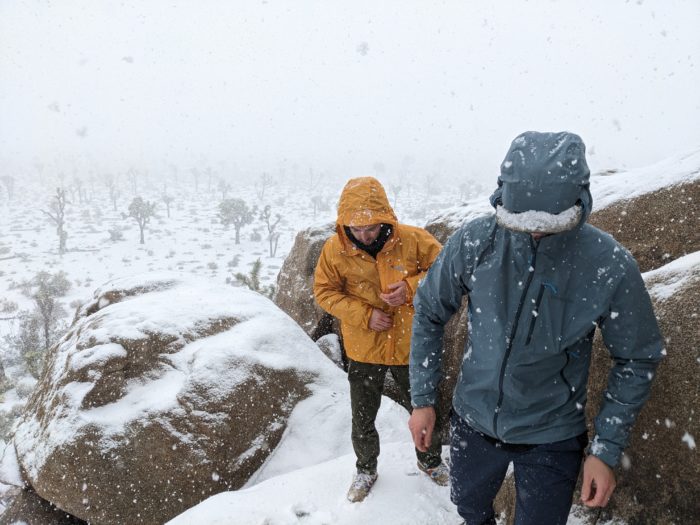
Rain jackets are designed to keep water out while still allowing your body’s moisture to escape as vapor. Unlike a trash bag or plastic poncho, rain jackets are semipermeable and designed to keep you both cool and dry at the same time.
Still, a rain jacket is certainly less breathable than other kinds of layers, and you can expect some heat and moisture to get trapped underneath.
Strictly speaking, rain jackets are not usually designed with insulation. Most of the jackets I’ve recommended on this list are not insulated. The main job of a rain jacket is to protect you from rain, snow, wind, and other adverse weather. While rain jackets will add a little warmth, other layers such as fleece jackets and puffies provide much more and can easily be worn underneath a rain jacket.
Read the full article here
