



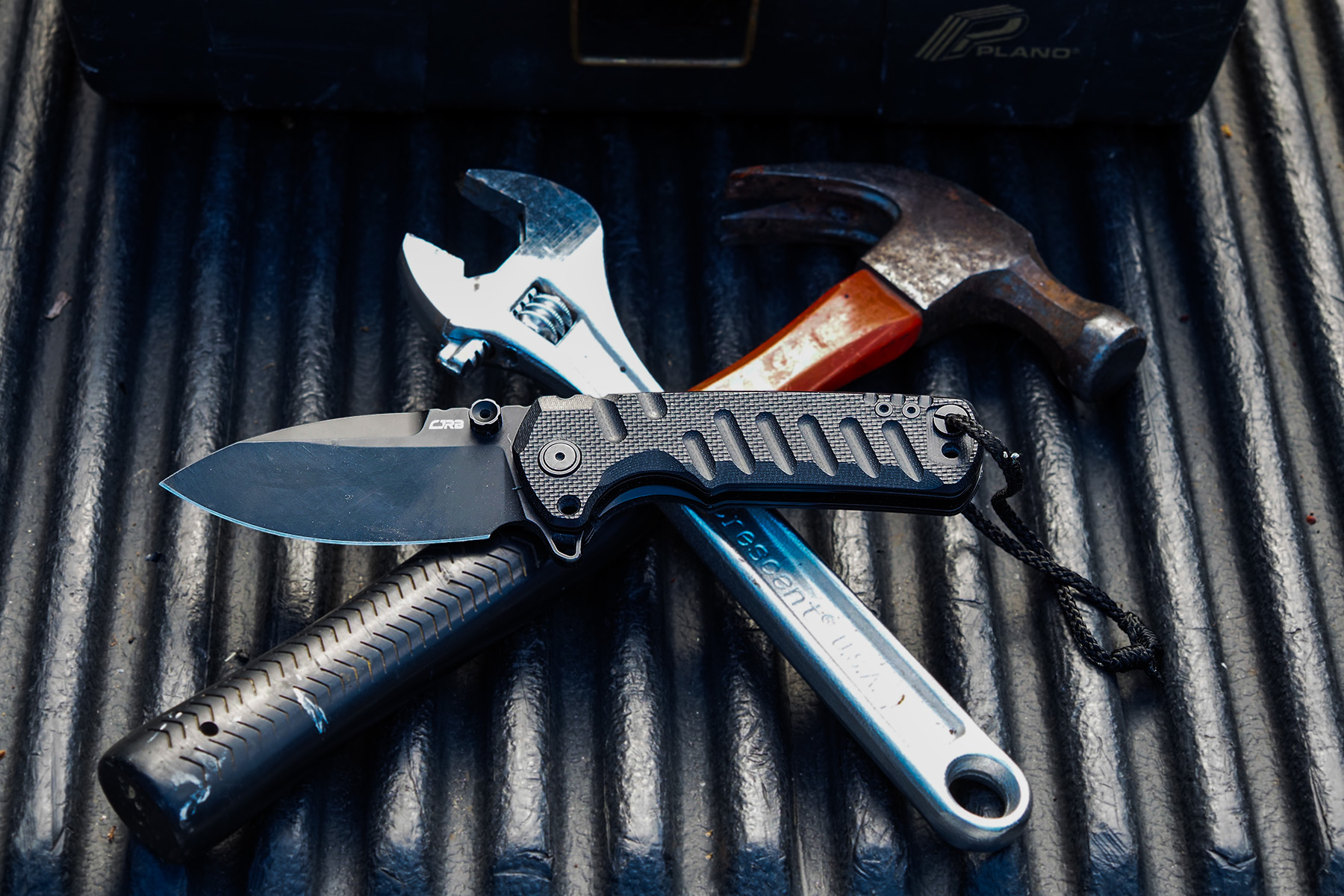

It won’t disappear in your pocket, it’s not “barely noticeable,” and weight weenies will hate it. And that’s just the beginning of what I love about the CJRB Tundra — a fist-filling folding knife with a blade damn near the size of a shovel.
While I’ve tested and can appreciate lightweight, low-profile EDC blades for the people and uses for which they’re designed, I prefer my daily carry to feel like a heavy-duty, ultra-reliable tool. At damn near half-a-pound and nearly 9 inches in overall length — and with its big, beautiful belly — the Tundra is easily the largest folder in my lineup.
Not to mention, it’s the most regularly used.
In short: The CJRB Tundra ($94) is less a wolf in sheep’s clothing than a bear in wolf’s. It’s large and substantial, which lends confidence for serious tasks. It’ll look ridiculous in a pair of light summer shorts, but it’s right at home in denim and sturdy workwear. This is not for delicate or precise tasks. But as a trusty all-conditions blade, the CJRB Tundra is the best friend a calloused palm could ask for.
Check out all the best knives in our guide to Best Pocket Knives.
-
Extremely durable construction -
Bushcraft capable -
Full-hand grip -
Very reasonable price
-
Heavy and big for a pocket knife -
Don’t lose locking pin
CJRB Tundra Tactical EDC Review
It’s important to frame up how to look at this knife, given there’s a universe of pocket knives, and comparing them is like asking, “What’s the best car?” It all depends on a variety of factors: your budget, typical use case, and which performance and aesthetic characteristics you value most.
If you take the car analogy further, then carrying the CJRB Tundra is like getting behind the wheel of an H1 Humvee. It’s large, heavy, and built for hard use. Like a Humvee, the Tundra is widely adaptable and capable in many environments, though it’s not ideally suited to precision tasks or to situations where a low-profile or lightweight knife is needed.
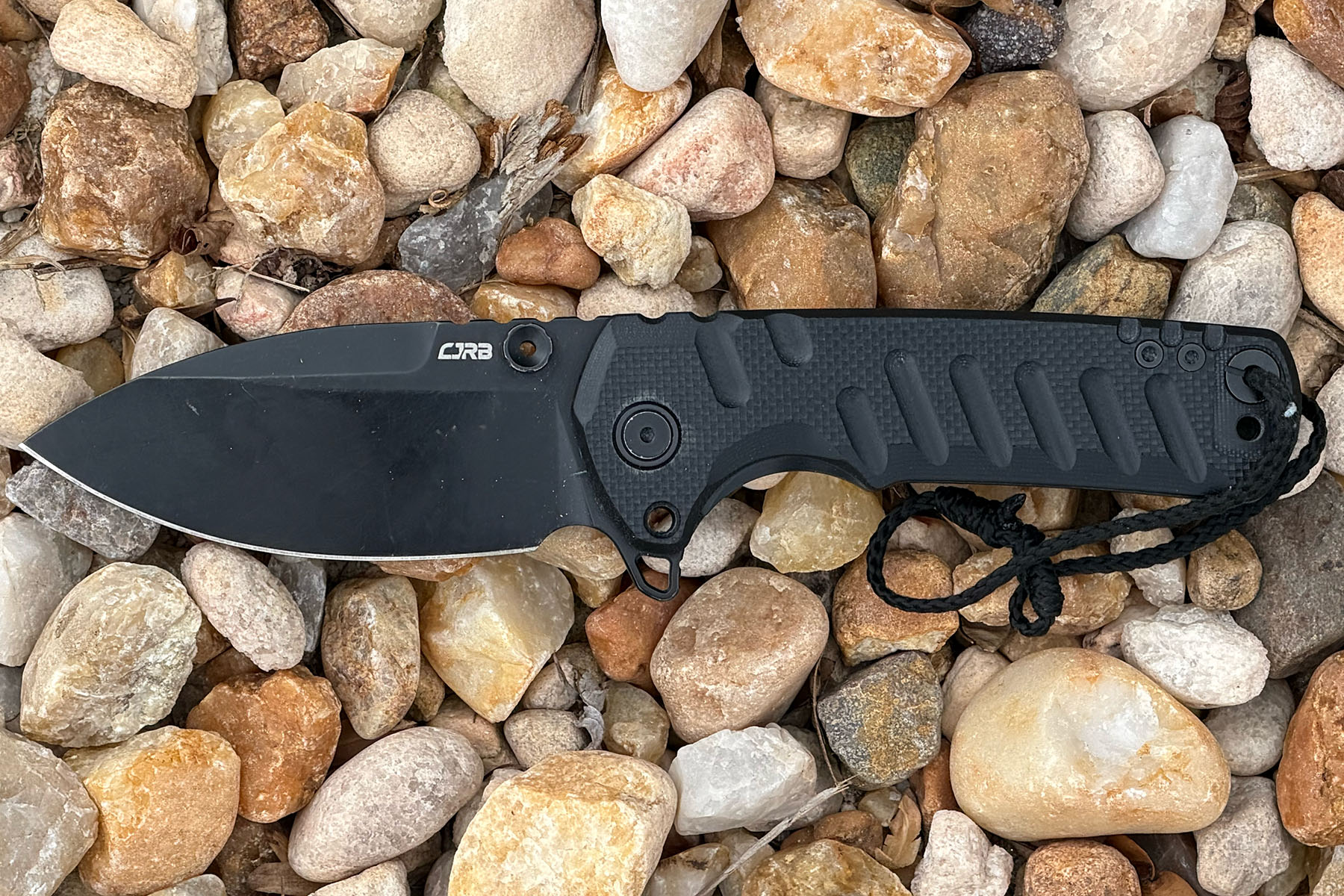
Design & Materials
The workhorse starts with D2 steel — the prototypical “tool steel.” It has great edge retention and respectable corrosion resistance, while being comparably more affordable than super steels. I opted for the black PVD finish for added corrosion resistance, but you can also find the Tundra in a stonewashed finish.
Some jimping along the spine and toward the front of the handle adds control. Although with a full-hand grip, control is rarely an issue.
The drop-point blade shape reinforces the Tundra’s universal capability. I shudder every time I use a knife to pry, but if you have to do it, a drop point is generally capable. Further boosting its resilience is the Tundra’s thickness — at 0.19 inches, it’s almost twice as thick as a typical EDC folder (yes, I’m talking about the Bugout). It’s not a crowbar, but this knife is a heck of a lot closer than almost any other pocket knife you’ll find.
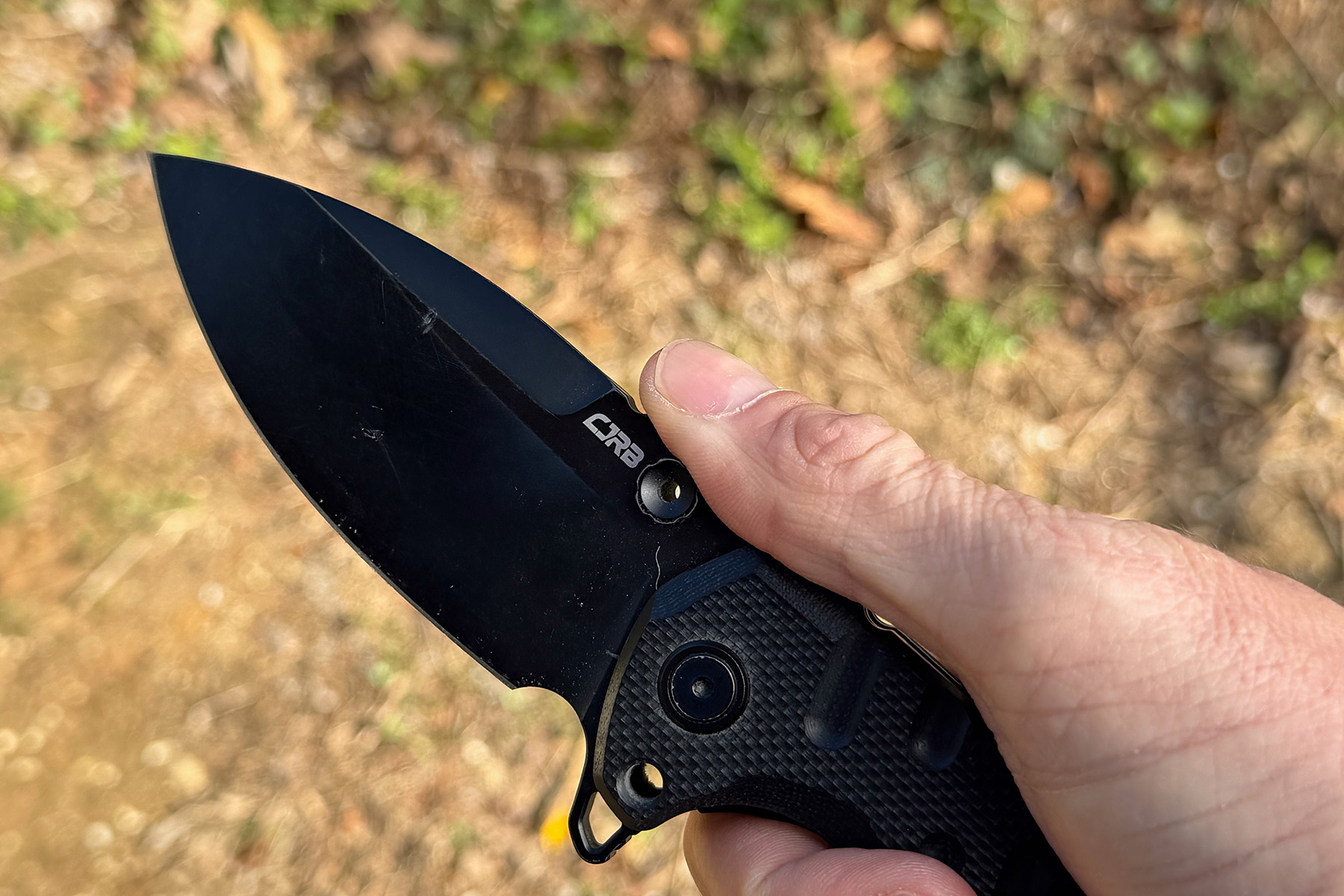
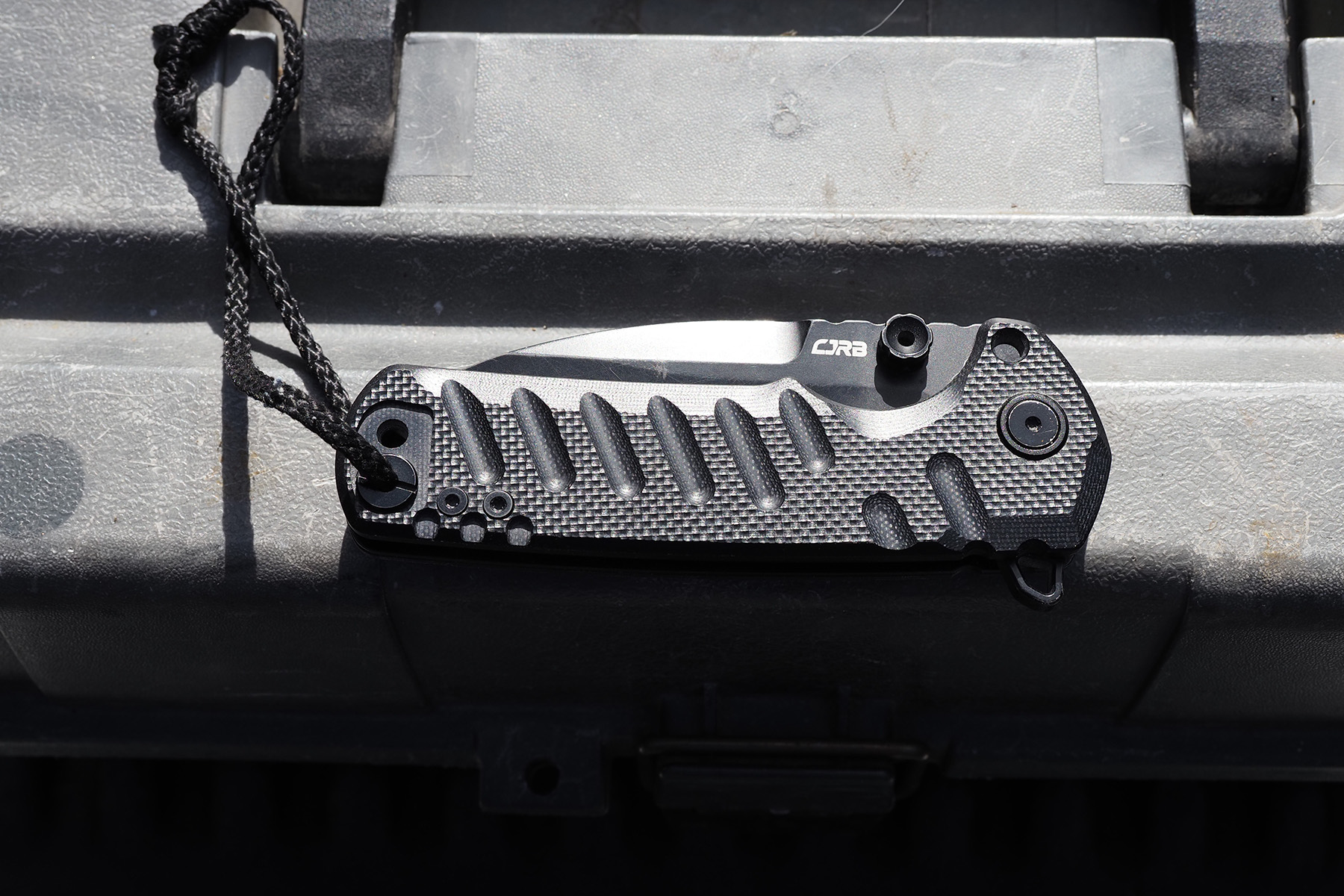
The G-10 handle scales are unremarkable, but very well executed here. I prefer a tacky canvas micarta for its wet-condition grippiness, but the deep diagonal grooves on the Tundra’s handle give your fingers solid purchase. Couple it with the full palm’s worth of material — more than 5 inches — and this knife handles more like a fixed-blade belt knife than a folder.
This is a standard liner lock with both thumb studs and a flipper tab. I appreciate this — different strokes for different folks — though I find the flipper irresistible. That owes to a small touch of class: ceramic bearings. These provide a smooth, reliable opening action and offer another weather-impervious feature.
Field Testing
I’ll be honest, the sheer heft of the Tundra took some getting used to. When the weather gets nice, I adopt the “less is more” fashion ideology; the lighter and more breathable the material, the happier I am. That doesn’t discount carrying a knife, but it definitely rules out the Tundra for pocket carry in a pair of running shorts.
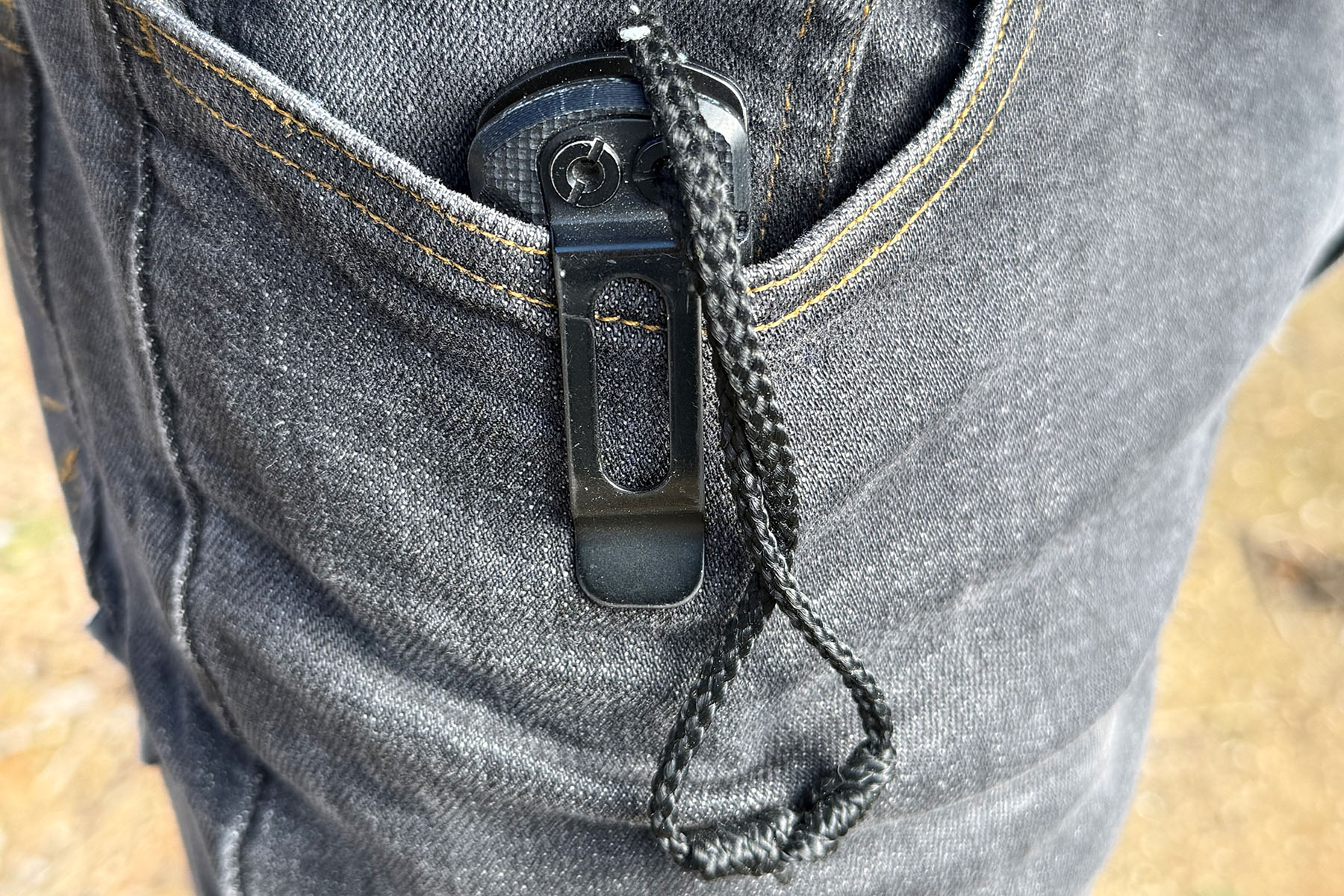
Fortunately, I also carry a backpack or hip pack just about everywhere, so when pants aren’t tough enough, a pack certainly will be. Once I started to handle the Tundra regularly, and became acquainted with its swooping, deliberate action and familiar with its mass, I fell in love.
Where most pocket knives feel like package openers and food slicers, this one feels and behaves like a real tool. Out of the box, I gave it a few passes on the honing side of a rolling sharpener. Once it glided through paper, I put it to work on corrugated cardboard. Its size and full grip let me bear down — no snags processing packages.
I also used it to dig and pry some rocks out of my yard — not boulders, just anything up to about palm size. Not only did this give me a chance to do a little prying, but I had to see if the thing dug as well as it looked like it would — the big, fat blade looks like a garden trowel’s little brother. Sure enough, it easily gouged out big chunks of earth in little time. And the black PVD wiped clean on my jeans.
The round, fat belly made paring an apple easy and satisfying. And the Tundra was quick to slice some pesky sleeves off an old long-sleeve T-shirt, giving it a second life as a workout top.
Bushcraft Super Power
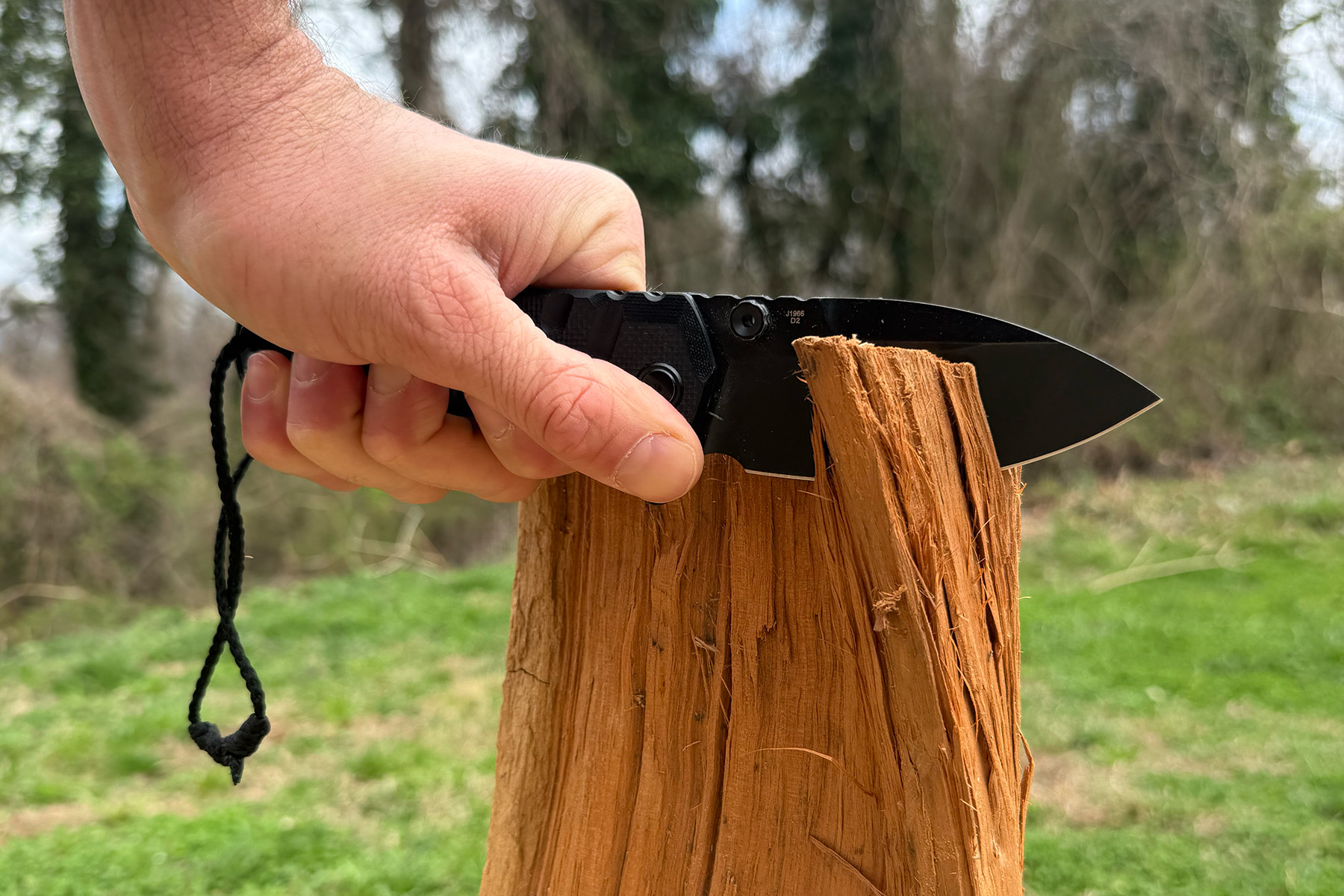
The real test I looked forward to, though, was batoning. Ordinarily, hammering through logs to make kindling is a no-no for folders. But the folks at CJRB thought of this and added a lock pin that screws in just in front of the liner lock, behind the pivot. This further reinforces the blade, acting like a deadbolt to keep it locked out.
And I’ll be damned, it works! It’s an awesome feature that adds plenty of utility … with one minor drawback.
Don’t Lose the Pin
That locking pin is a small piece. So to help you not lose it, CJRB threads the included lanyard through it at the factory. You don’t ever have to remove it; just let it do its thing.
Of course, if you’re like me and you want your lanyard to loop instead of dangle loose, you might undo the knot, remove the pin, and promptly forget where you set it. If that happens (it did), you’re not completely outta luck, so long as you bought from the official site, authorized dealer, or Amazon. Contact CJRB or its parent, Artisan Cutlery, directly for a replacement.
Conclusion: Who’s It For?
While I’m not convinced the CJRB Tundra is a replacement for a standard multitool, I do think it’s far superior to damn near every pocket knife in terms of sheer versatility and durability. Its size and thoughtful design make it a capable bushcraft blade as well as a daily-carry taskmaster. Dig, pry, slice, baton, stab — it’s a truly useful outdoor implement.
And while its D2 steel won’t wow EDC hipsters, it’s a workhorse steel that puts function and utility at the forefront. CJRB calls it a “pocket beast,” and it is that. If you want a blade for simple tasks that’s only noticeable when you want to use it, look elsewhere.
But if you find a handful of steel a reassurance and not a nuisance, the sub-$100 Tundra is a tremendous value. Especially when it’s covered by the CJRB lifetime warranty.
Read the full article here
