



![Ryan Phillippe, C. Thomas Howell on ‘One Mile’ Tactical Realism [Exclusive]](https://gunusaallday.com/wp-content/uploads/2026/02/caption_sheet_onemile_still1.jpg_l_-_r_ryan_phillippe_as_danny_and_amelie_hoeferle_as_alex.jpg "Ryan Phillippe, C. Thomas Howell on ‘One Mile’ Tactical Realism [Exclusive]")

Ryan Phillippe understands that portraying a former Special Forces operator isn’t just another action role — especially for an audience that includes active-duty service members and veterans.
In One Mile and its follow-up chapter, Phillippe plays Danny, a combat-trained veteran attempting to reconnect with his daughter before a violent confrontation with an off-grid survivalist community forces him into a brutal fight for survival. Both films, which debut on Digital on Feb. 20 via Republic Pictures, lean heavily into grounded tactics, hand-to-hand combat, and moral complexity rather than spectacle.
Exclusive Interview | Military.com | ‘One Mile’
Ryan Phillippe and C. Thomas Howell discuss tactical realism, military accuracy and survival in One Mile: Chapter One and One Mile: Chapter Two.
In this exclusive interview with Military.com, the actors break down the Special Forces background behind Phillippe’s character, the role of military advisors on set and why the action in One Mile avoids glossy gunplay in favor of gritty, close-quarters combat.
Both films release on Digital February 20 via Republic Pictures.
One Mile: Chapter One follows a former special forces operative trying to reconnect with his daughter during a college road trip when she is abducted by a secretive off-grid community.
One Mile: Chapter Two continues the story as he is forced back into conflict when the community retaliates.
While the premise delivers high-stakes action, the actors and filmmakers made a deliberate choice: keep the tactics grounded, keep the violence personal and respect the reality of military service.
That authenticity was intentional.
Anytime you play someone who was meant to be enlisted or served, there’s an extra sense of responsibility and duty to get those elements right. Ryan Phillippe/Military.com
Action, Thriller, Suspense film, ONE MILE: CHAPTER ONE & ONE MILE: CHAPTER TWO. Photo courtesy of Daniel Power
Ryan Phillippe on Playing a Former Special Forces Operator
Phillippe approached the role with both professional preparation and personal awareness.
“I’ve had a lot of tactical and military training based on other projects I’ve been involved with,” Phillippe said. “I also come from a military family.”
The character of Danny differs from many action protagonists in a critical way: he operates largely without firearms. Much of the conflict unfolds through close-quarters combat, improvised traps and situational awareness rather than long-range engagements.
“It’s a lot about his wit, his intelligence, his tactical awareness,” Phillippe said.
To ensure credibility, the production worked closely with technical advisors who monitored everything from movement to decision-making under pressure.
“We had great tech advisors on set to make sure all of his decision-making and how he would approach each situation was as authentic as we could possibly make it,” Phillippe said.
For him, the obligation extended beyond performance.
“Anytime you play someone who was meant to be enlisted or served, there’s an extra sense of responsibility and duty to get those elements right — for it to be authentic and to pay proper respect to the men and women who have served,” he said.
That emphasis on respect is likely to resonate with our readership, many of whom are quick to spot inaccuracies in uniforms, tactics or chain-of-command behavior.
–
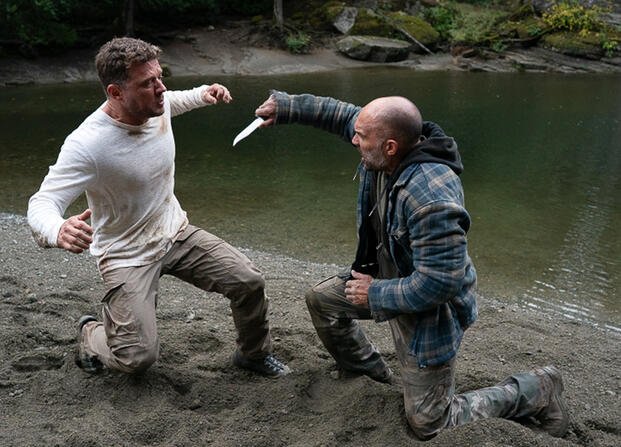
R) Ryan Phillippe as “Danny” and James Michalopoulos as “Vince” in the
Action, Thriller,
Suspense
film,
ONE MILE: CHAPTER ONE & ONE MILE: CHAPTER TWO. Photo courtesy of Republic Pictures (a Paramount Pictures label).
No Glossy Action: ‘One Mile’ Embraces Grit and Close Combat
The filmmakers intentionally stripped away much of the conventional gunplay that defines modern action films. The result is a more intimate — and often more uncomfortable — portrayal of violence.
“It feels kind of like a throwback to a ’70s movie,” Phillippe said, referencing films such as Walking Tall and Death Wish. “It’s one man against impossible odds.”
By limiting firearms, the film brings combat closer.
“Eliminating gunplay for the most part draws that action closer,” Phillippe said. “It’s face-to-face. Mano a mano. Hand-to-hand.”
C. Thomas Howell, who plays Stanley — the leader of an isolated survivalist village — agreed that realism was central to the production’s approach.
“It was gritty. It was dirty. It was real,” Howell said. “You don’t see that a lot in movies.”
Nothing in the film comes easily. Every confrontation carries weight. Every fight extracts a cost.
“Nothing was convenient,” Phillippe said. “Every fight, everything was hard-earned.”
That philosophy extended to the physical production. Phillippe endured hard impacts against stone and rock and scenes in icy water. He credited both the stunt team and co-star Amélie Hoeferle, who plays his daughter, for committing fully to the physical demands.
“I think you feel that when you watch the film,” Phillippe said. “You get a sense of that authenticity.”
Nothing was convenient. Every fight, everything was hard-earned. Ryan Phillippe/Military.com
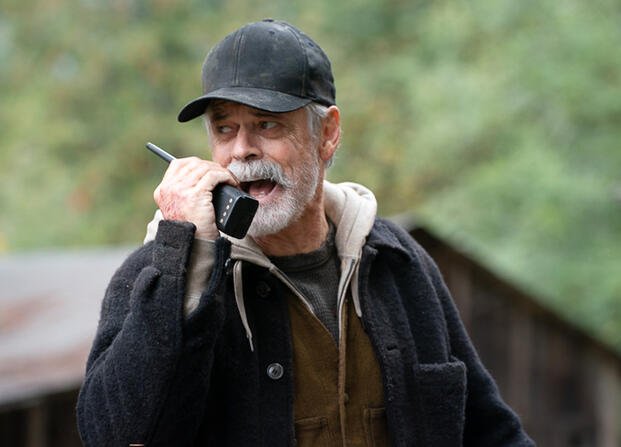
C. Thomas Howell on Playing a Morally Gray Survivalist
While Danny’s background is rooted in formal military training, Stanley operates from a different philosophy: survival at any cost.
“The two characters have a lot in common, even though they’re completely different,” Howell said. “They’re both fighting for the people they love. And survival.”
Stanley leads a small, off-grid community facing extinction. His decisions — including kidnapping — push him into ethically fraught territory. But Howell does not view the character as a villain in the traditional sense.
“He’s not socially homicidal,” Howell said. “He’s really approaching it from the good of the whole, even though it’s a despicable act.”
That complexity intrigued Howell when he first read the script.
“I found that interesting — to play somebody doing bad things who isn’t necessarily a bad person,” he said.
The clash between Danny and Stanley becomes a study in contrasting tactical worldviews: trained military operator versus self-taught survivalist hunter.
“He is tactically trained with a military background,” Howell said. “My character is a survivalist, a hunter. Even though their approaches are very different, they’re both pretty lethal.”
Throughout much of the film, bows, knives and close-quarters fighting dominate. Only later does heavier weaponry enter the equation.
They’re both fighting for the people they love. And survival. C. Thomas Howell/Military.com
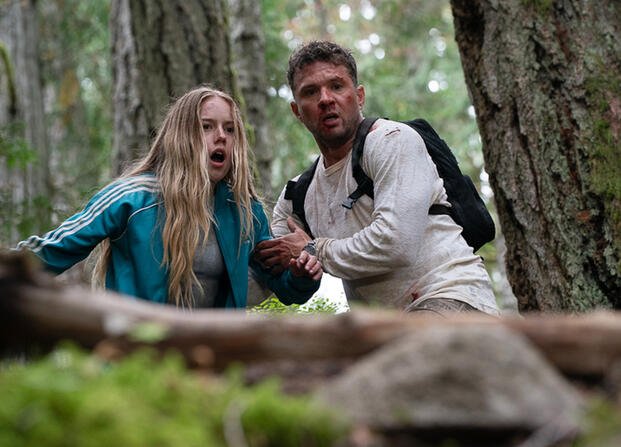
The Role of Military Advisors on Set
Authenticity in military storytelling often hinges on the presence — and authority — of experienced advisors. Phillippe emphasized that such guidance was integral to shaping Danny’s portrayal.
“You pretty much always do when you’re playing someone who’s in the military,” he said. “You have someone there to make sure it’s not BS — the choices the character makes and how they approach situations.”
Actors work closely with advisors not only on technical movement but also on mindset: when to escalate, when to observe, when to hold back.
“You work pretty intimately with that person. You rely on them,” Phillippe said.
For him, the personal connection to service members raised the stakes.
“Especially someone like me, who has a lot of military in the family, I want to make sure I’m getting it right,” he said. “It’s a lot of attention paid to that. We were in good hands.”
That collaboration helped shape a film that prioritizes grounded behavior over cinematic shortcuts — a distinction that seasoned viewers often notice immediately.
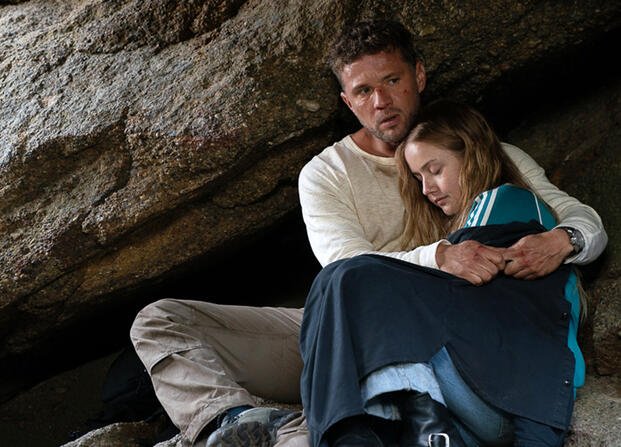
Emotional Stakes Beyond the Action
While the action sequences are central to the marketing, One Mile is anchored by Danny’s fractured relationship with his daughter. Before violence erupts, the story frames a veteran attempting to reconnect — a dynamic familiar to many service members navigating the strain between duty and family.
Phillippe believes that the balance between adrenaline and emotional weight is what ultimately defines the film.
“I think it’s an action-packed thrill ride,” he said. “But you’re also drawn into the emotional aspects of the story.”
For Military.com readers — whether active-duty, veteran or family member — that intersection of tactical realism and personal consequence may be the film’s strongest element.
The violence in One Mile is not stylized fantasy. It is bruising, close and personal. The characters are not invincible. Their decisions carry consequences. Their bodies show the toll. In an era of increasingly digital spectacle, One Mile opts for something older — and arguably more familiar to those who have served: survival shaped by preparation, instinct and resolve.
Read the full article here
