



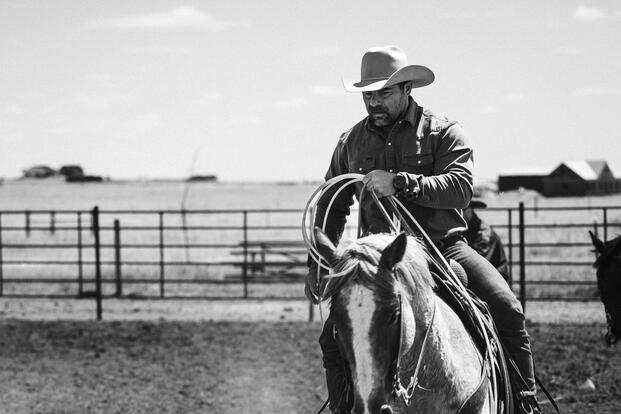

For many veterans, coming home isn’t the end of the fight. The uniform may come off, but the wounds of combat, physical, emotional and spiritual, often linger long after deployment orders expire. Some wrestle with traumatic brain injuries or chronic pain. Others battle anxiety, fractured identity, strained marriages or the quiet isolation that can follow years of high-tempo service.
For a growing number of veterans in Colorado and beyond, healing isn’t happening in a clinic. It’s happening in a saddle, on open pasture, or inside a rodeo arena.
Speaking with Military.com Mike and Sarah McCave, founders of Warrior Mission Ranch, described how his own recovery shaped the mission that now serves fellow veterans and first responders.
Warrior Mission Ranch (WMR), a Colorado-based nonprofit, is redefining what recovery can look like. Through horsemanship, leadership development, vocational ranch work, and deep community connection, the organization is helping veterans rediscover strength, belonging and purpose.
A Ranch Born From a Green Beret’s Recovery
Warrior Mission Ranch was founded by Michael “Mike” McCave, a former U.S. Army Special Forces officer whose own near-fatal accident became the blueprint for the organization.
After enlisting right out of high school, McCave served more than 17 years in the Army, including seven combat tours to Iraq. In 2014, during a HALO (High Altitude Low Opening) training jump, a parachute malfunction caused a catastrophic fall. The accident shattered multiple bones and left him with a traumatic brain injury.
He survived, but survival was only the beginning.
The months that followed were grueling. Surgeries. Rehabilitation. Pain management. The battlefield had been replaced by hospital corridors. The identity of “operator” was suddenly stripped away.
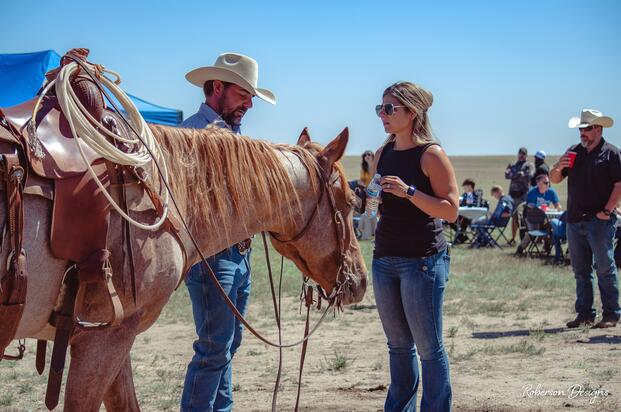
However, recovery wasn’t just his burden.
“Watching our family fight to help Mike recover in the hospitals for almost two years physically, mentally and emotionally changed us forever,” said Sarah McCave. “Recovery doesn’t just affect the Veteran. It affects the entire family. There were long days, longer nights, and moments where the weight of it all felt overwhelming.”
As the wife of a Special Forces soldier, Sarah understood sacrifice long before the accident.
“Military spouses learn early that we serve, just in a different capacity,” she said. “We hold down the home front, we carry the quiet burdens, and we stand steady when everything feels uncertain. We do it out of love, out of commitment, and out of an unshakable belief in the one we married.”
When Mike was eventually introduced to a therapeutic horse ranch during his recovery, something unexpected happened. Horses responded to authenticity, not bravado. They reflected his emotional state in real time. If he was anxious, they were restless. If he was grounded, they responded with trust.
“Working with horses helped me reflect inward, slow down and realize I needed to deal with what was inside me. That experience opened my heart again to love and joy.” Mike McCave
The experience reshaped his understanding of healing.
Out of that transformation, Warrior Mission Ranch was born.
When Mike asked Sarah to step into the mission alongside him to help other veterans navigating similar battles she understood the cost.
“I knew it would demand more time, more energy, and more sacrifice from our family. But I also knew I couldn’t say no,” she said. “Military spouses don’t always get recognized, but we are in the fight every single day, and I will continue to stand beside my husband not just as his wife, but as his partner in this mission, because no Veteran and no family should have to walk the road to recovery alone.”
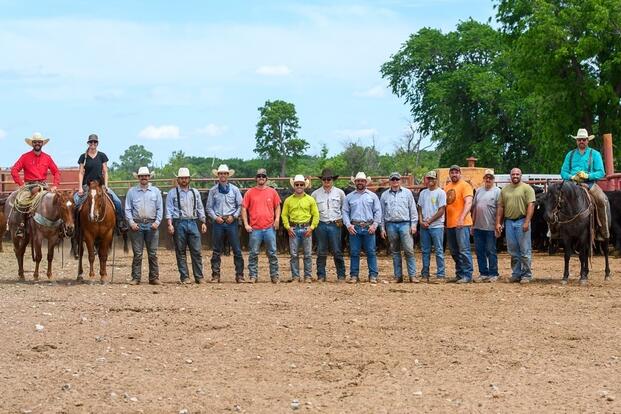
A Curriculum Built for Whole-Person Growth
At the heart of Warrior Mission Ranch is the CHAMPION Program, a structured, multi-phase curriculum rooted in holistic development.
The program is intentionally designed to address the whole person, physical, emotional, mental and spiritual, rather than isolated symptoms.
Phase One: Assessment and Individual Coaching
Participants begin with one-on-one coaching, career assessments and personal goal setting. Veterans examine identity beyond the uniform and explore where they want to grow both professionally and personally.
Phase Two: Immersive Ranch and Leadership Training
Participants travel to Colorado for hands-on horsemanship, leadership coursework and group coaching. They learn how to work with horses, build trust, manage livestock and operate within a team dynamic under real-world conditions.
Leadership modules focus on character, communication, responsibility and self-awareness. Participants confront fears, test limits and rediscover capability through action.
Phase Three: Commercial Ranch Immersion
Veterans spend time living and working on an operational ranch. This is not symbolic exposure. They check stock, mend fence, move cattle and contribute meaningfully to daily operations alongside seasoned cowboys.
Responsibility is real. Expectations are high. Accountability matters.
Phase Four: Post-Program Integration
After the ranch experience, continued coaching ensures lessons learned translate into daily life. Participants receive guidance on employment, entrepreneurship, relationships and long-term growth.
The curriculum blends physical challenge with leadership education and practical skill development. It emphasizes work ethic, resilience and ownership. Values deeply familiar to those who have worn the uniform.
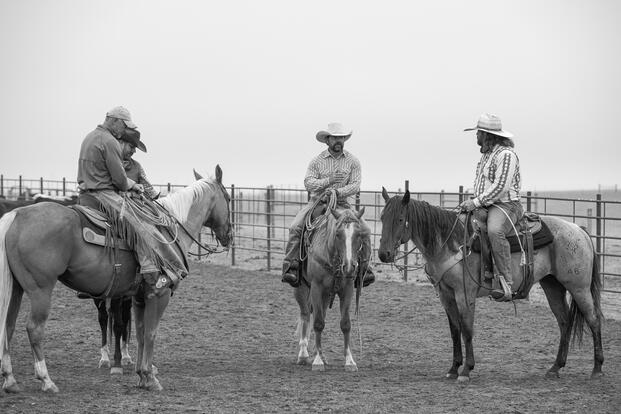
What Participants Are Saying
The impact of the program is best captured by those who have lived it.
One veteran described how the ranch environment stripped away fear and self-doubt.
“This program is helping me to regain confidence in myself,” he said. “Mainly, by not letting my fears stop me from accomplishing what I want to do.”
Another participant shared that the ranch restored something he thought was gone.
“For the first time since I got out, I feel like I’m part of a team again. Not just showing up, contributing.”
Veterans frequently cite the combination of meaningful work and authentic camaraderie as the turning point. Unlike clinical settings where they may feel labeled or evaluated, the ranch demands participation and contribution.
Here, they are not patients. They are teammates. They are cowboys.
They are leaders in development.
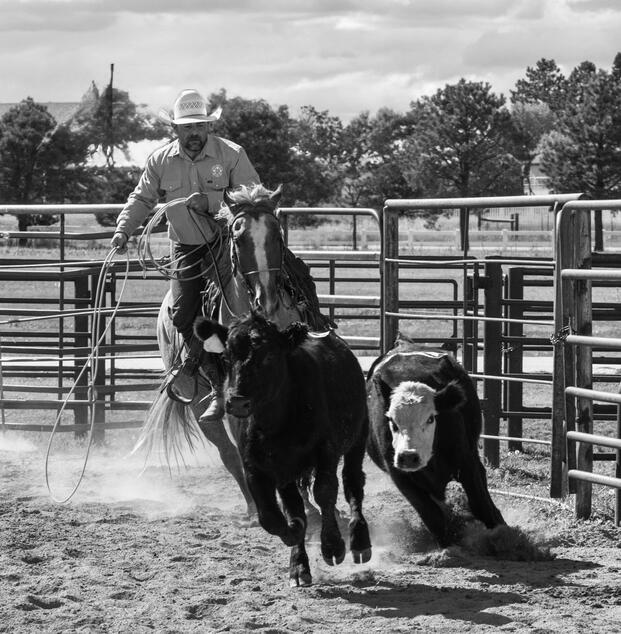
The Ranch Rodeo: Healing in Motion
“What we do here is the real deal. We’re teaching these guys how to be working cowboys, and helping veterans find purpose again after leaving the military.” Mike McCave
The Warrior Mission Ranch Annual Ranch Rodeo embodies that transformation in public view.
More than a competition, the rodeo highlights working ranch cowboys and veterans from the program competing side by side. Each team includes one veteran placed alongside seasoned ranch hands.
Trust is built in the chute before the gate opens. Communication happens quickly. Roles are assigned. Encouragement is constant.
The events reflect authentic ranch tasks emphasizing teamwork and coordination over spectacle.
What begins as friendly competition often evolves into something deeper.
Veterans who once doubted themselves step into the arena. Cowboys who may have never worn a uniform ride shoulder to shoulder with those who have served in combat.
The bonds formed are real, forged in shared effort and mutual respect.
For many veterans, the rodeo is a defining moment.
It is a public affirmation that they are not defined by injury, trauma or transition struggles. They are contributors to something bigger than themselves.
The event also draws the broader Colorado Springs community together. Families attend. Children cheer from the stands. Local businesses are sponsors. Generations gather to celebrate a family-centered Western tradition rooted in faith, freedom and service.
“This year we are hosting it at Norris Penrose Stadium in Colorado Springs on Sept. 12, 2026,” organizers said. “Join us for a great event.”
Held at one of Colorado’s most iconic rodeo venues, the setting underscores the symbolism: resilience is part of the Western spirit, and part of the warrior ethos.
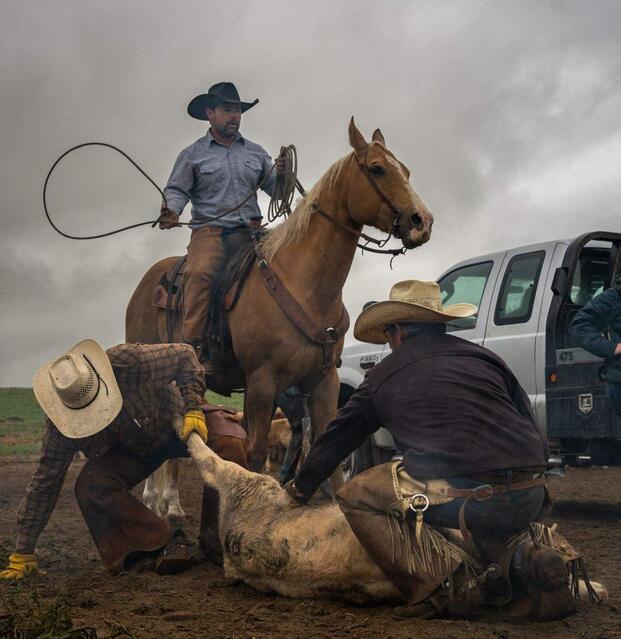
Strength Through Partnership
Warrior Mission Ranch’s impact is amplified through strategic partnerships, including its collaboration with the Green Beret Foundation.
“The partnership between Warrior Mission Ranch and the Green Beret Foundation exemplifies our unwavering commitment to serving those who have selflessly served our nation,” said Charlie Iacono, CEO of the Green Beret Foundation. “Together, we forge a path toward healing and resilience, empowering our veterans to reclaim their lives through community, support, and purpose.”
The partnership reflects a shared understanding: healing requires community. It requires long-term commitment. It requires purpose.
Heart of a Warrior Gala: Fueling the Mission
The rodeo is not the only major event on the ranch’s calendar.
On Feb. 21, 2026, Warrior Mission Ranch will host its annual Heart of a Warrior Gala at The Antlers Hotel in Colorado Springs. The fundraiser highlights participant stories, showcases program outcomes and raises funds to expand access for future veterans.
Through live and silent auctions, donor engagement and alumni testimonials, the gala reinforces the organization’s commitment to measurable impact.
Proceeds directly support scholarships, program development and outreach efforts.
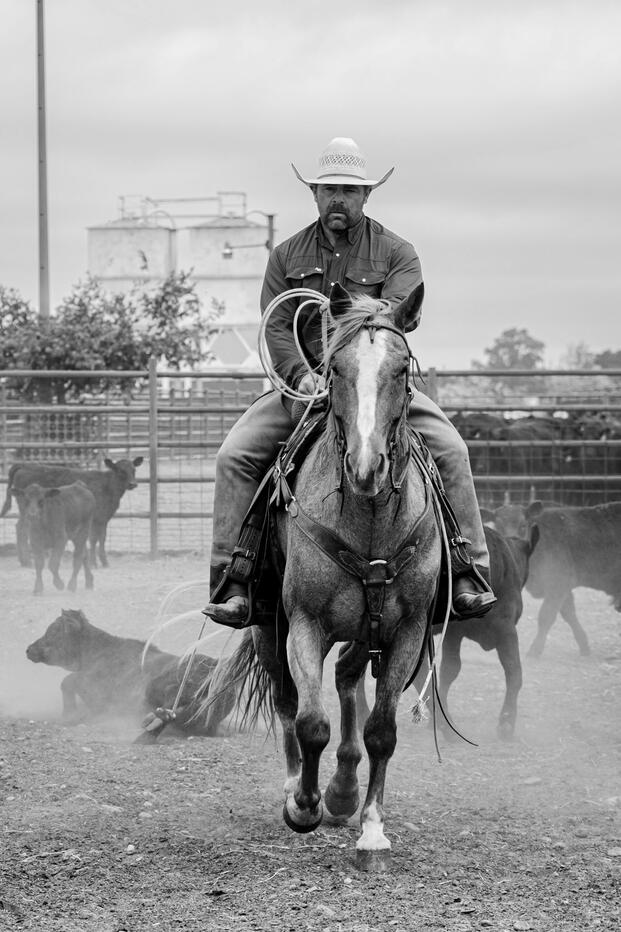
More Than an Event — A Movement
Warrior Mission Ranch began with wounded veterans in mind, but its definition of a “warrior at heart” has broadened. Today, it serves Special Operations Forces members, first responders and others navigating trauma or life transition.
The message is consistent: identity can be rebuilt through responsibility and connection.
Recovery is not linear. It is not solitary. As Sarah McCave emphasized, it is a family mission.
On Sept. 12, when veterans and ranch cowboys ride into the Norris Penrose arena together, the dust will rise and the crowd will cheer. But beyond the competition, something deeper will be visible.
Trust restored. Confidence reclaimed. Purpose rediscovered.
It won’t just be a rodeo. It will be healing in motion.
Learn more about Warrior Mission Ranch and its programs.
Read the full article here
