





I own several handguns that qualify as high-end—Les Baer, Dan Wesson, Langdon Tactical. They are excellent pistols, refined versions of familiar patterns. 1911s. Berettas. Even Glocks. The pistol illustrated here doesn’t resemble any of them.
The Daniel Defense H9 looks like nothing else on the shelf—except, of course, the Hudson H9. That’s no accident. Daniel Defense acquired the rights to the Hudson design and reworked it extensively. The result is not a cosmetic refresh, but a serious re-engineering of an idea that once showed promise yet failed to fully deliver.
I fired a Hudson H9 eight years ago. It was a neat trick—flat shooting, modest recoil, and undeniably innovative. Unfortunately, it was not completely reliable. It worked most of the time, but sometimes it didn’t. Striker reset could become an issue. Accuracy varied with certain loads. Other examples displayed similar problems. I test a lot of handguns. The Hudson was not one I kept.
The Daniel Defense H9 is a different animal.
Daniel Defense manufactures this pistol in-house. The original Hudson relied heavily on outsourced components and assembly. That distinction matters. The H9 now reflects Daniel Defense’s production standards and quality control—standards built on a strong reputation in the AR market. It would be uncharacteristic for the company to release a handgun that tarnishes that standing.
The question is whether the H9 corrects the Hudson’s shortcomings. Based on my experience, the answer is yes.
H9 Details
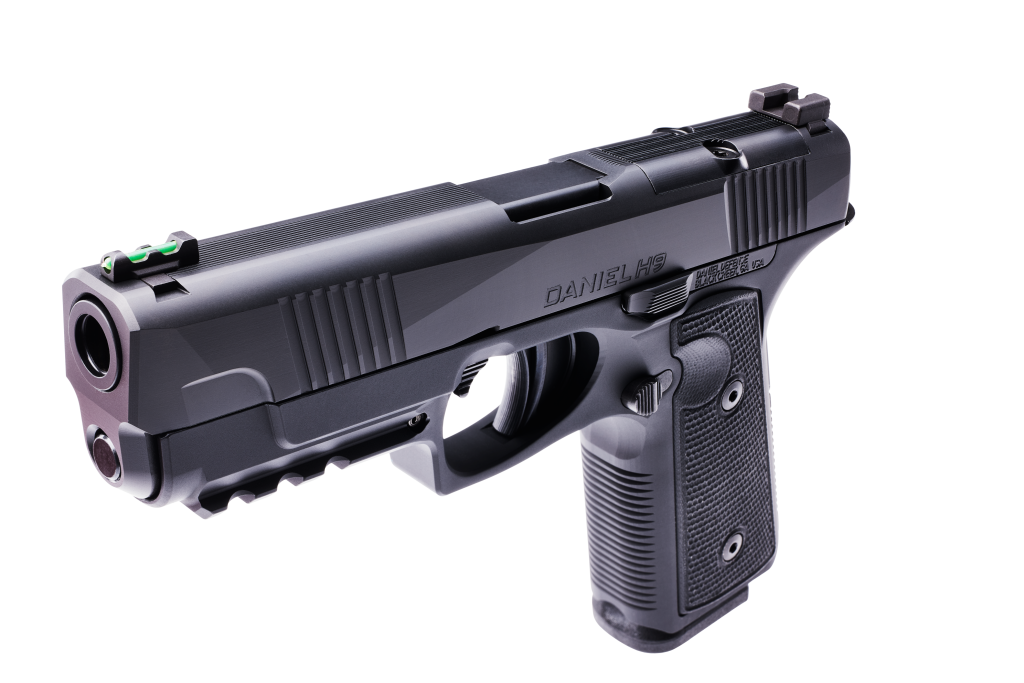
The current H9 uses an aluminum frame rather than the original steel frame. That reduces weight without meaningful penalty in recoil control. The takedown system has also been modernized. The Hudson’s method was awkward. The Daniel Defense version is simple and intuitive.
The pistol is striker-fired with a single-action trigger. It is sometimes described as a hybrid between a 1911 and a Glock. That comparison misses the point. The H9 is its own design. The grip angle and feel may remind some shooters of a Hi Power or 1911, but the ergonomics are distinct—and, in my view, superior.
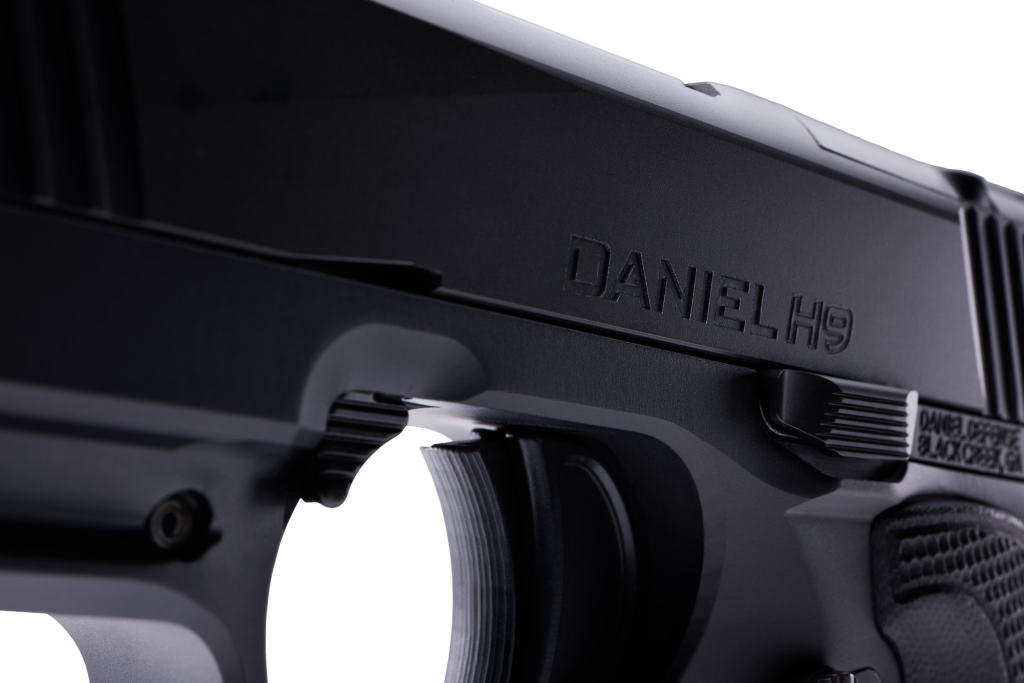
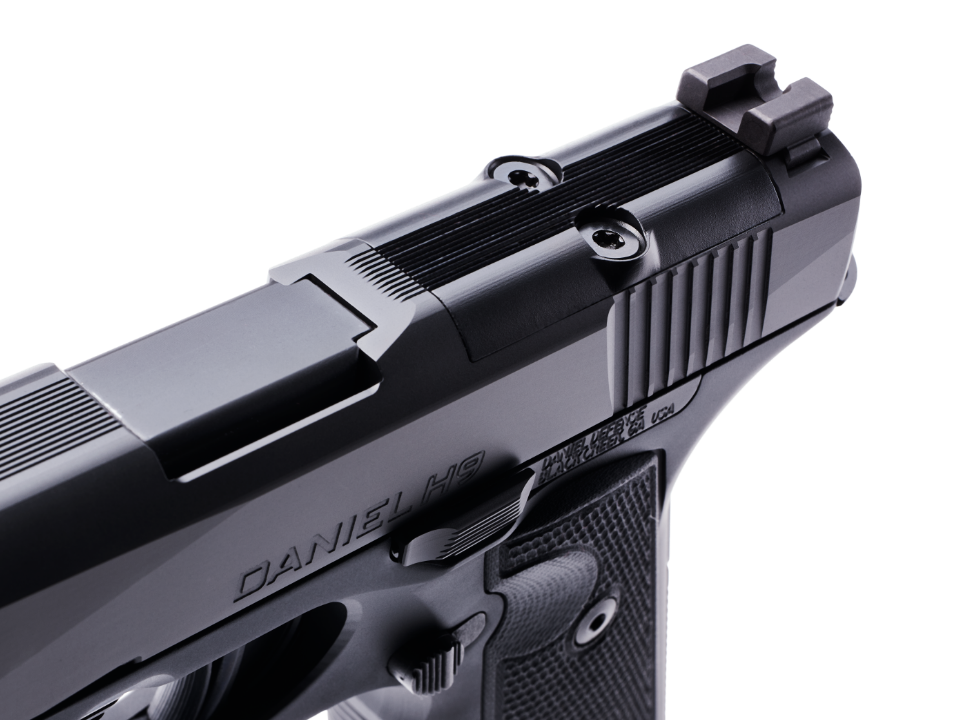
The upswept beavertail guides the hand naturally into position. Controls are positive. The magazine well is slightly beveled, aiding reload speed. The trigger breaks at a clean 4.5 pounds, measured on an RCBS gauge. It is crisp, consistent, and features a short reset. Shooters accustomed to a traditional striker-fired DAO system may need an adjustment period. Those familiar with a 1911 will feel at home.
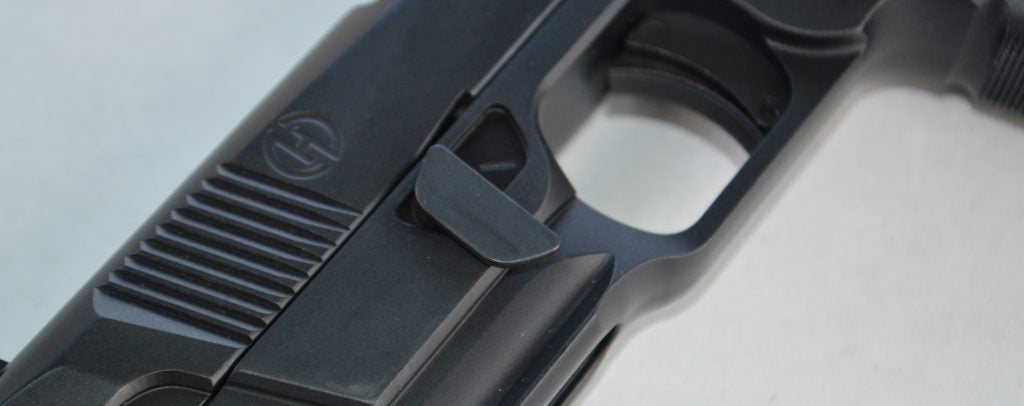
Takedown is straightforward. Verify the pistol is unloaded. Remove the magazine. Retract the slide slightly and pull down the dual takedown levers—similar in concept to a Glock, but executed cleanly. The slide comes off easily. The recoil spring and guide rod remove as a unit, and the barrel lifts free.
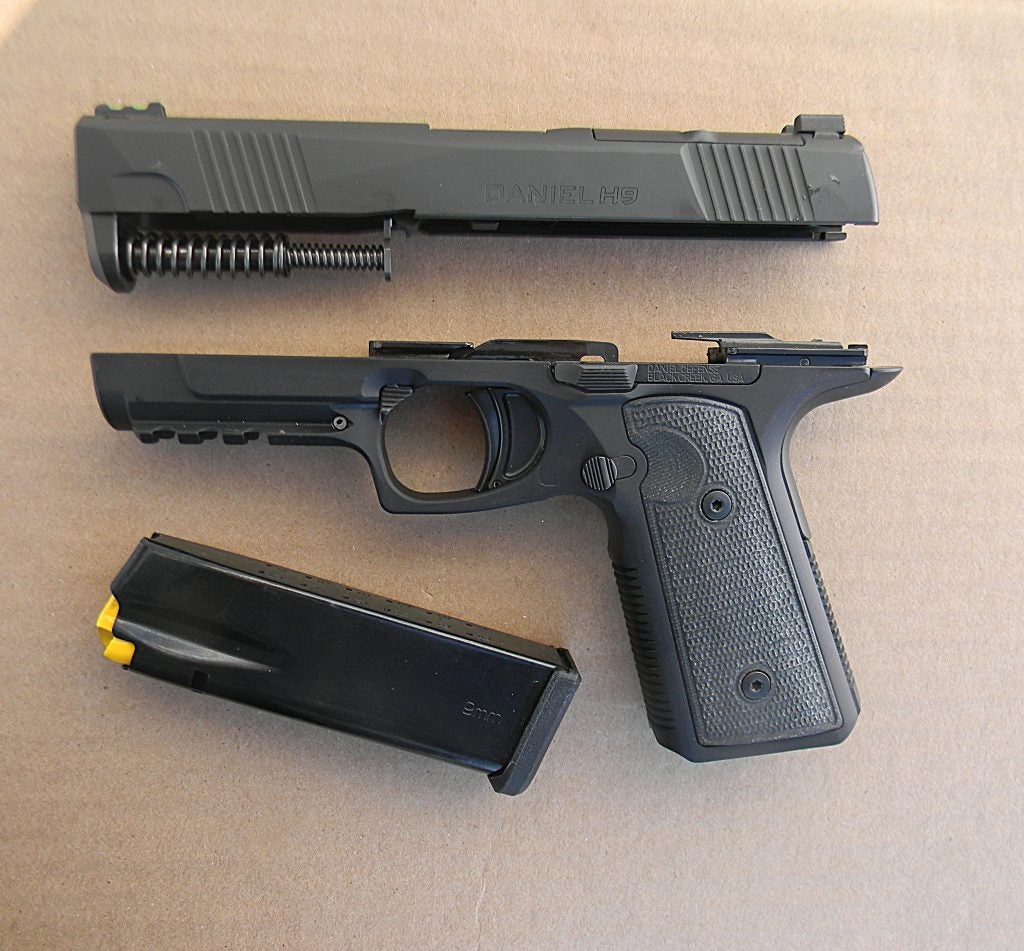
The defining characteristic of the H9 is its low bore axis. The recoil spring rides low beneath the slide, nesting deep in the dust cover. This places the bore centerline closer to the shooter’s hand. The result is reduced leverage for muzzle rise. Less muzzle flip. Faster recovery. In a 29-ounce 9mm, recoil is already manageable. The H9’s geometry makes it even more so.
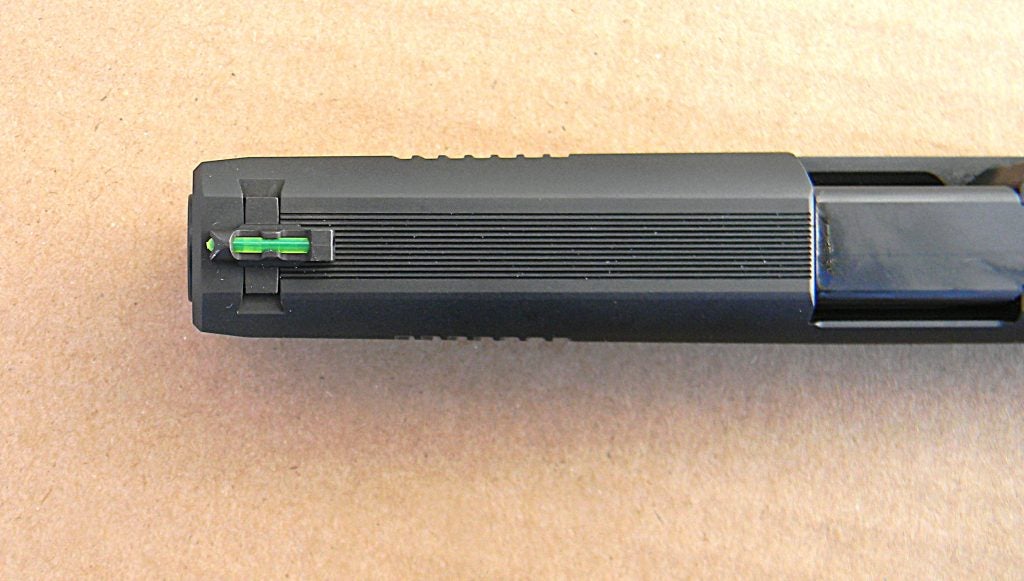
Sights consist of a drift-adjustable rear with a U-notch and a serrated face, paired with a fiber-optic front. The pistol is optics-ready and includes a coupon for a free mounting plate from Daniel Defense. A robust light rail is standard. G10 grip panels provide a good balance of adhesion and comfort, with additional front and back strap serrations aiding control. Three magazines are included.
Firing Impressions
I assembled a broad mix of ammunition for testing. Reliability with only a narrow selection of loads is not enough. Ammunition availability fluctuates. A defensive handgun should run what you can find on the shelf.
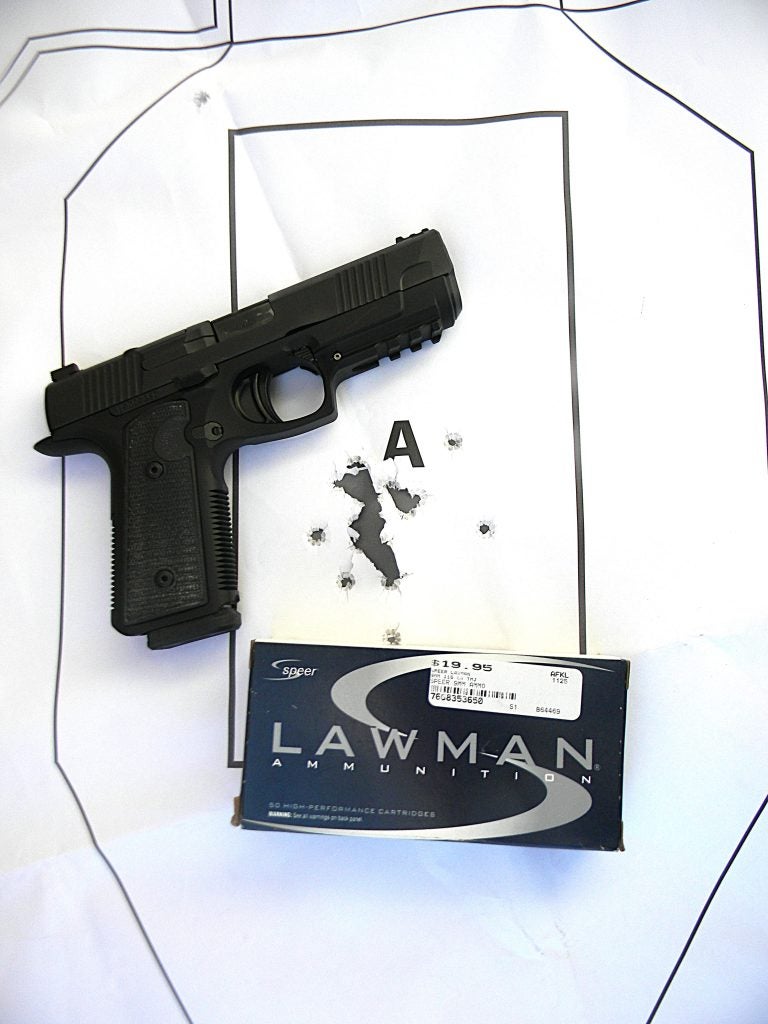
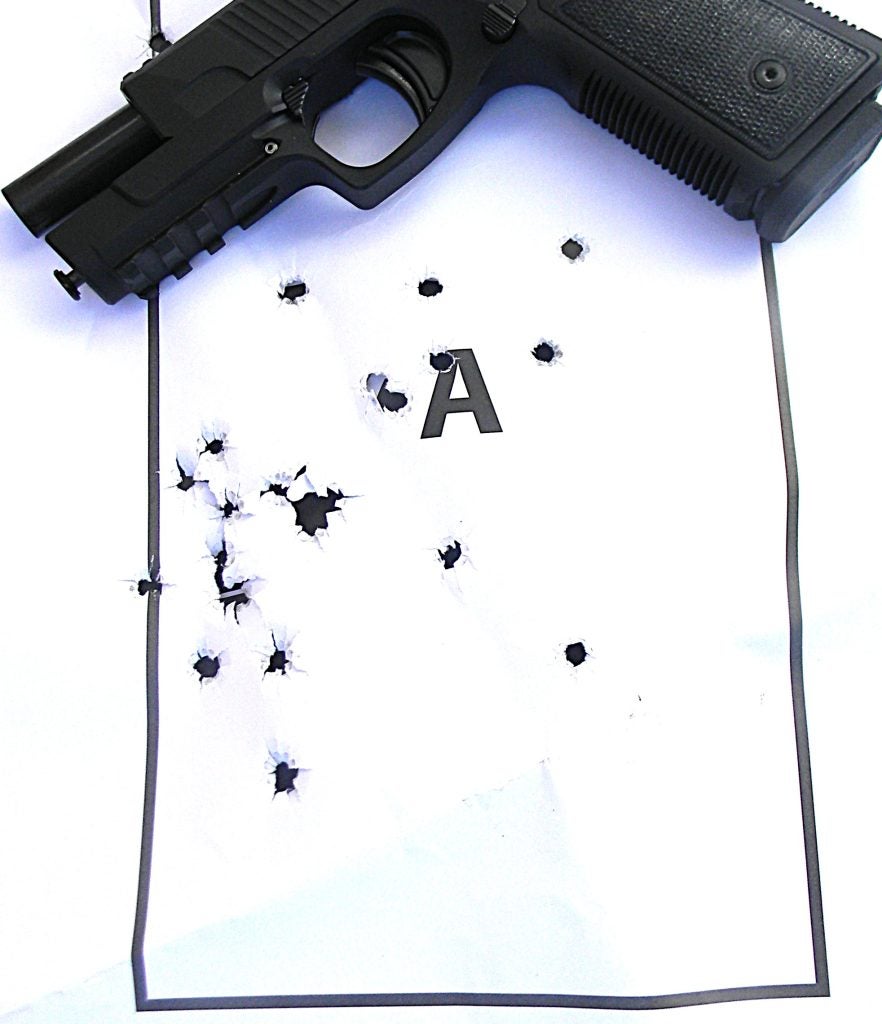
Over several months I fired Black Hills, Blazer, Federal, Hornady, Remington, Speer, and Winchester ammunition. I began with a 300-round session during the first week, then continued testing over the following weeks. I cleaned the pistol at 600 rounds. I lost count after 800. I am now past 900 rounds.
There have been no failures to feed, chamber, fire, or eject.
The H9 is exceptionally comfortable to shoot. A steel-framed 9mm can feel similar, but the H9’s low bore axis gives it an edge. It returns to target quickly. Follow-up shots are fast. The sights are well regulated for 124-grain ammunition when using the fiber-optic dot as the primary aiming reference. Speed to a first accurate hit is excellent.
From a benchrest at 25 yards using a Birchwood Casey rest, five-shot groups were impressive:
- Hornady 135-grain FlexLock Critical Duty – 1.75 inches
- Hornady 115-grain Critical Defense – 2.25 inches
- Federal 124-grain Syntech – 2.5 inches
- Federal 147-grain HST – 2.0 inches
- Remington 147-grain FMJ – 2.7 inches
- Speer 124-grain Gold Dot – 2.0 inches
The pistol is clearly capable of excellent practical accuracy.
Conclusions
My Daniel Defense H9 has proven accurate and completely reliable through extended testing. It allows a trained shooter to capitalize on its low bore axis, clean trigger, and solid ergonomics.
It is not a budget pistol. MSRP is listed at $999, though many dealers ask closer to $1,300. There is currently no threaded barrel option and limited aftermarket support. Holsters exist, though choices are not abundant. Magazines are reasonably priced.
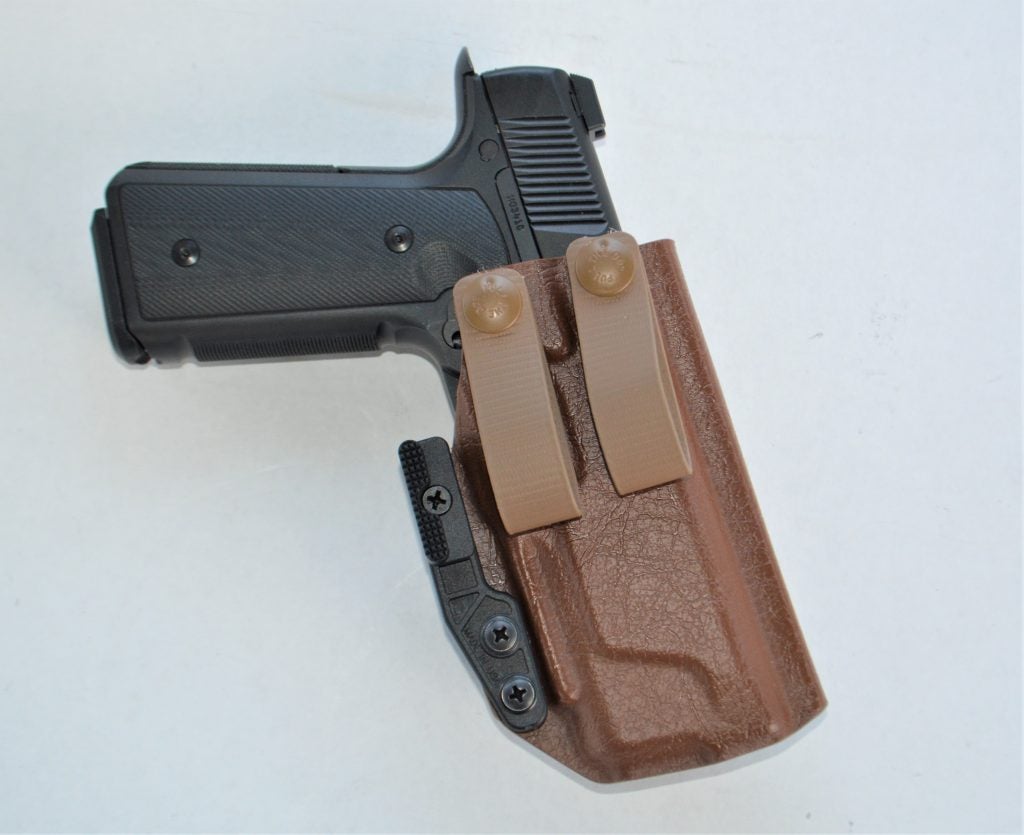
The H9 is not for everyone. It is different. It does not follow the well-worn path of established service pistols. But it works—and works well. Daniel Defense has taken an innovative concept that once stumbled and turned it into a viable, modern defensive handgun.
Read the full article here
