



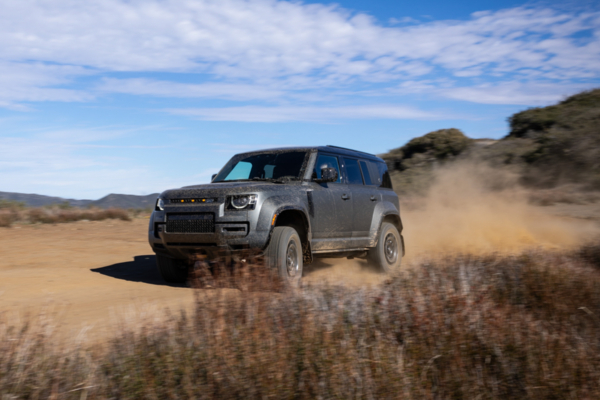

Recently, test-driving the Land Rover Defender’s new hardcore Octa variant sent me into a tailspin about off-road suspension. The Octa adds nearly $100,000 to the price of a base Defender, and the wild BMW powertrain alone justifies much of that jump.
But Land Rover also developed a hydraulic roll control system for the Octa, too, in place of traditional sway bars. Unlike, critically, the rest of the lineup that pairs sway bars with air suspension.
And then there’s the Defender D7X-R, which raced at the Dakar Rally, with another fully custom suspension setup. After the D7X-R’s domination at Dakar, the Defender lineup gets even more confusing.
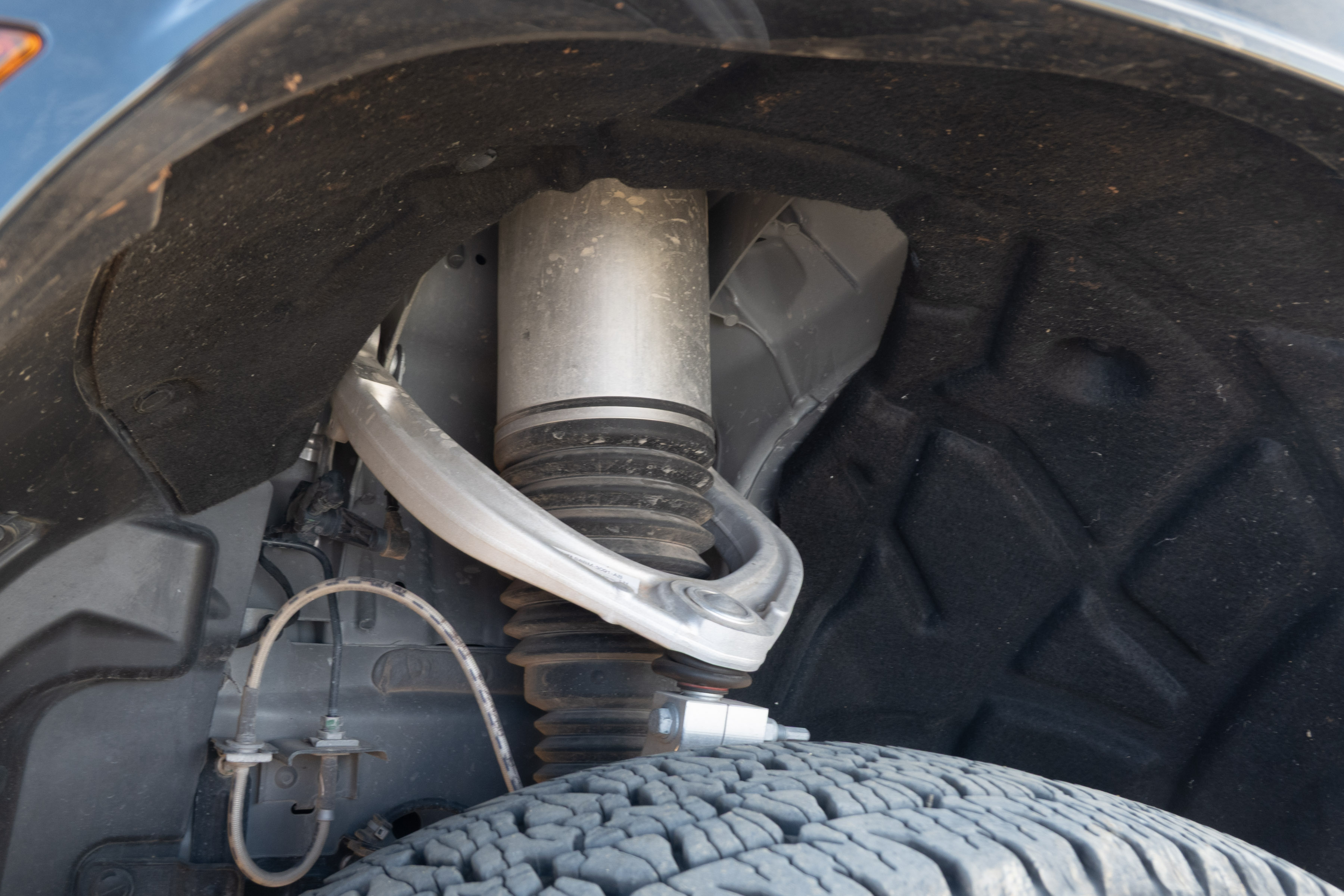
Especially the Octa, which, due to that hydraulic system, rides incredibly stiff and firm both on-road and off. Given my history with leafsprung solid-axle trucks, simpler coilsprung vintage 4x4s, and all kinds of modern off-road suspension solutions, Land Rover’s decision seemed like the worst of all worlds. Fully understanding why, though, required going back in time.
Compensating for Independent Suspension
Grab a glass of your favorite beverage, as the history of off-road suspension in road cars isn’t a short read. And as a preface, I’m only going to talk about the big changes over the years, and how they relate to how we got to where we are today.
But as I revisit the general trends of off-road suspension for production vehicles, culminating in the Defender Octa, the story largely comes down to efforts to compensate for the inherent pros and cons of independent suspension.
Hydraulic Roll Control
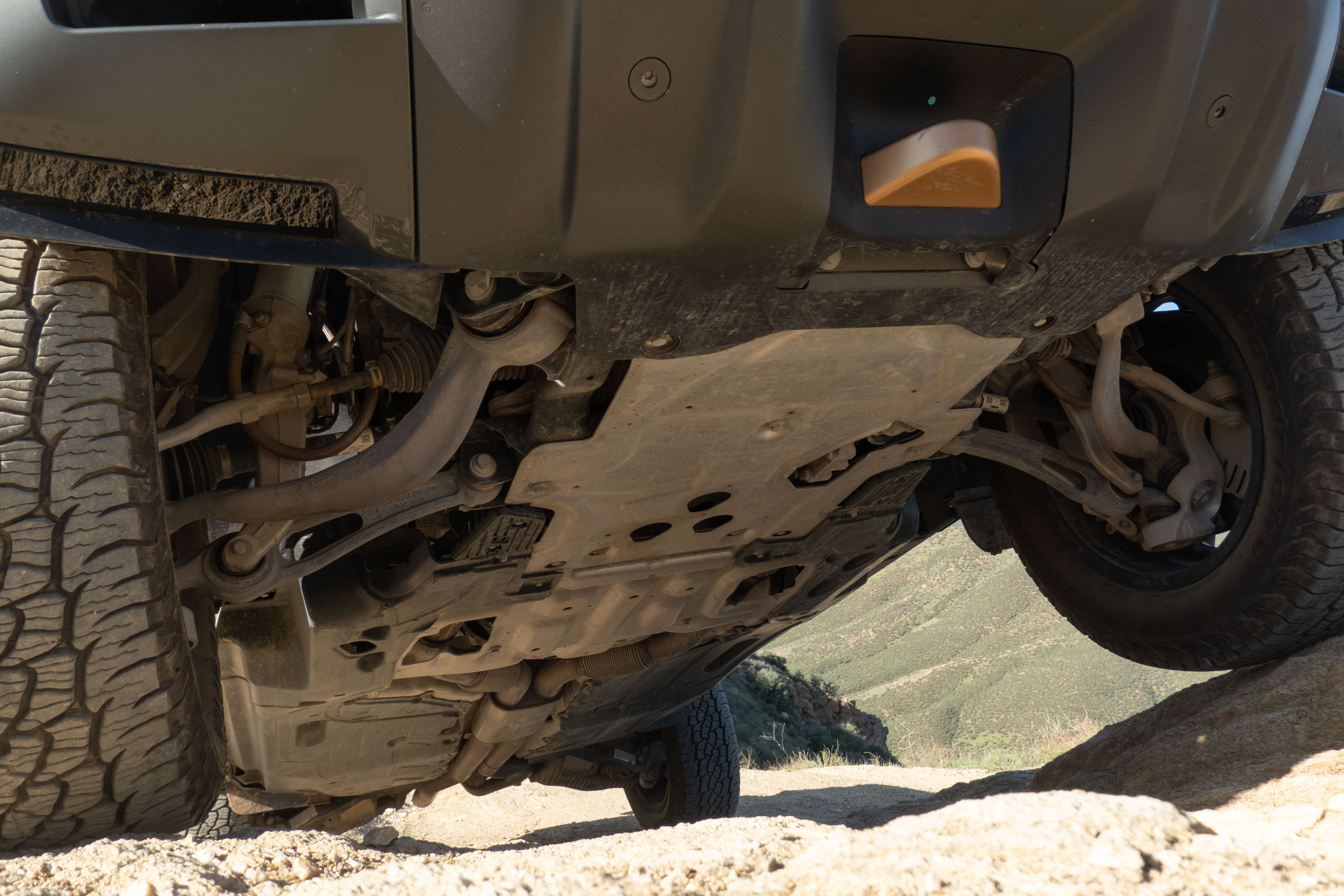
Let’s start with understanding the hydraulic roll control, which is most famously included in McLaren supercars. Essentially, hydraulic fluid routed side to side prevents body roll.
Unfortunately, there’s a big difference between a six-figure supercar that weighs nearer to 3,000 pounds than any SUV. Yet Rivian also uses a similar system in their huge electric vehicles, so maybe the Defender Octa can split the gap?
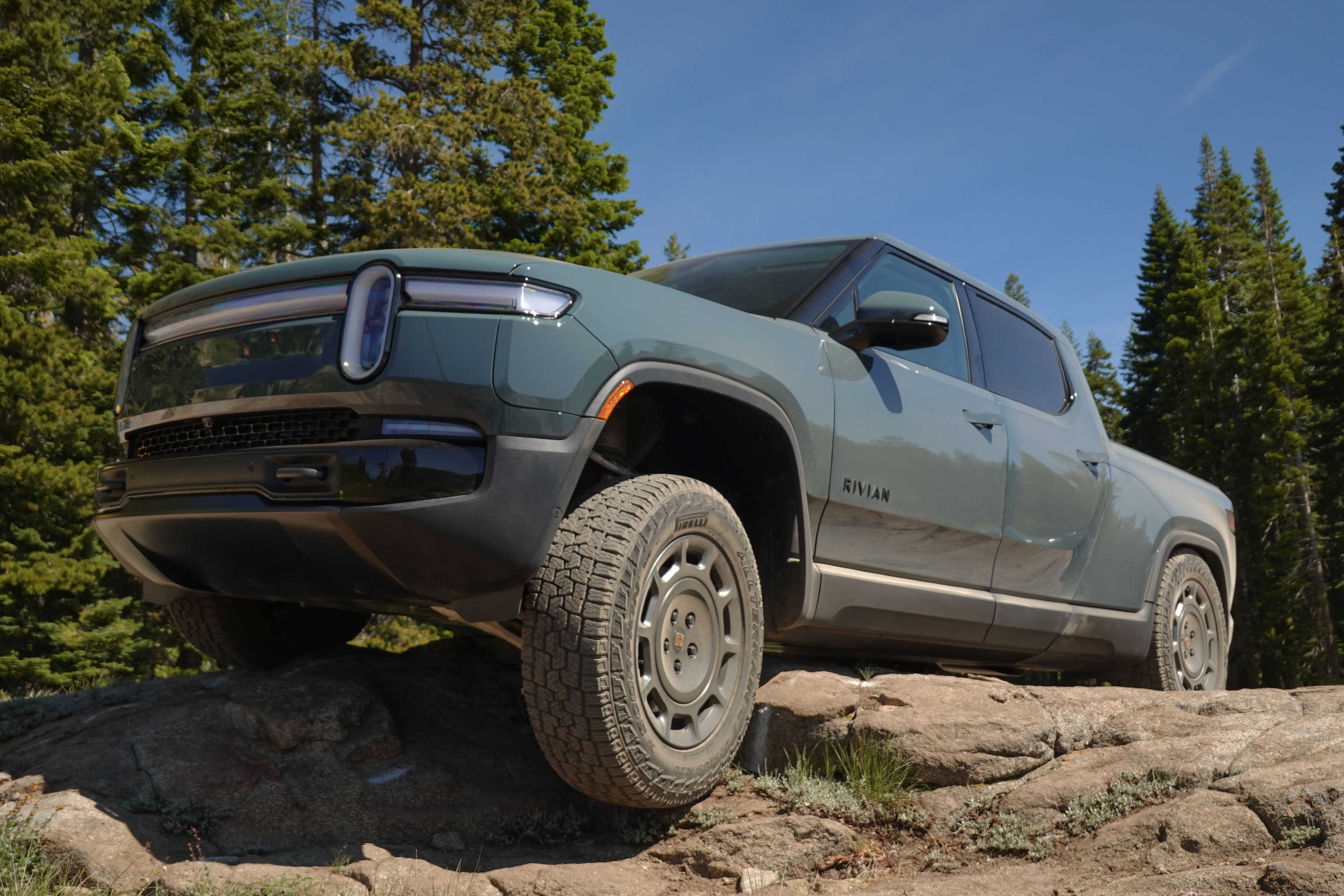
Instead, Land Rover’s “off-road supercar” winds up fairly comparable to the 7,000-pound Rivian. The suspension gets the job done, but because body roll is managed by highly pressurized hydraulic fluid, any semblance of ride quality goes out the window.
On the road, I felt every tiny crack and pebble in the asphalt. Speed bumps caused the whole interior to clunk and rattle. And off-road, the whole chassis appeared to flex and groan while straining over obstacles. Not a great noise in a $150,000-plus vehicle!
Pros & Cons of Independent Suspension
Managing roll control with a hydraulic system isn’t all bad, though. At least the Defender Octa corners extremely flat, which helps to make the obscene 626 horsepower from BMW’s twin-turbo V8 seem somewhat more reasonable.
For buyers accustomed to modern crossovers or sports cars, the ride will probably feel somewhat familiar at first. And then punch the gas, and the Octa will just about wheelie while squatting under hard acceleration.
Yet anybody with a sensitivity for weight, tire grip, and build quality will likely wind up disappointed. The cornering and acceleration capability largely comes about thanks to the independent suspension, since each corner’s control arms can move completely independently of each other. That’s a totally different experience, for example, than in a classic Defender equipped with front and rear solid axles.
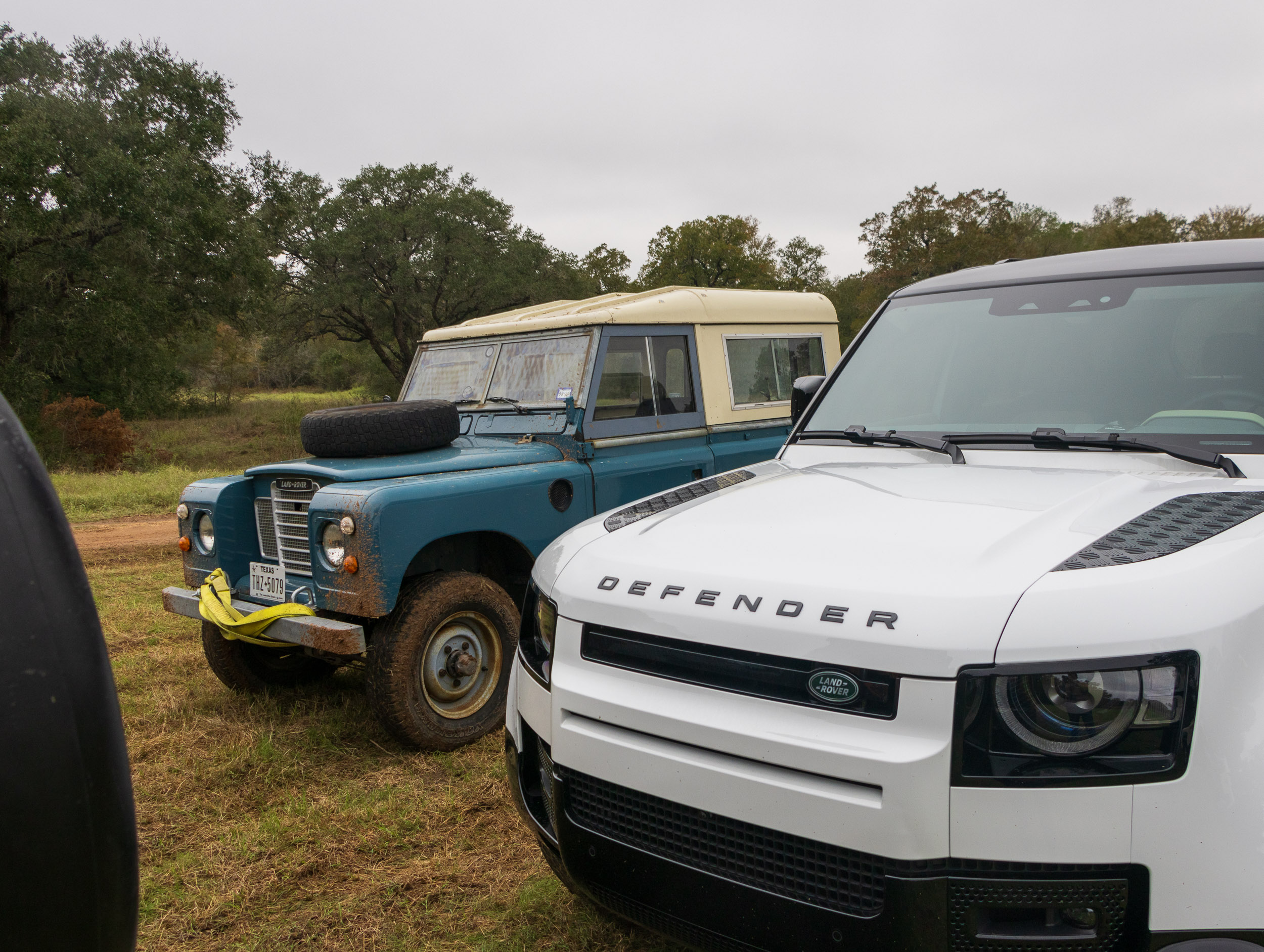
Once upon a time, all trucks and early SUVs came with solid axles and leafsprings. This beefy setup maximizes durability and reliability, with the added benefit of impressive articulation for low-speed grip while off-roading.
But even with shock dampers and sway bars, a solid axle truck still rides relatively rough all the time. So, has the Octa taken a big step backward?
Moving Away From Solid Axles
Eventually, as consumers began driving more trucks and SUVs more regularly, automakers started to move away from solid axles. Especially for the front wheels, where independent suspension helped improve steering dynamics and smoothness at higher speeds. This applied to on-road driving, as powerful engines, better transmissions, and improved tires led to escalating highway speeds.
Off-road, a rig with independent front suspension will similarly ride and drive more comfortably on smoother, faster terrain. The tradeoff comes in the form of reduced front wheel travel and increased likelihood of damaging the CV axles, tie rods, or the ball joints that connect the control arms to the wheel hubs. Especially while rock-crawling, or when running larger tires, the torque on these components leads to more frequent failures.
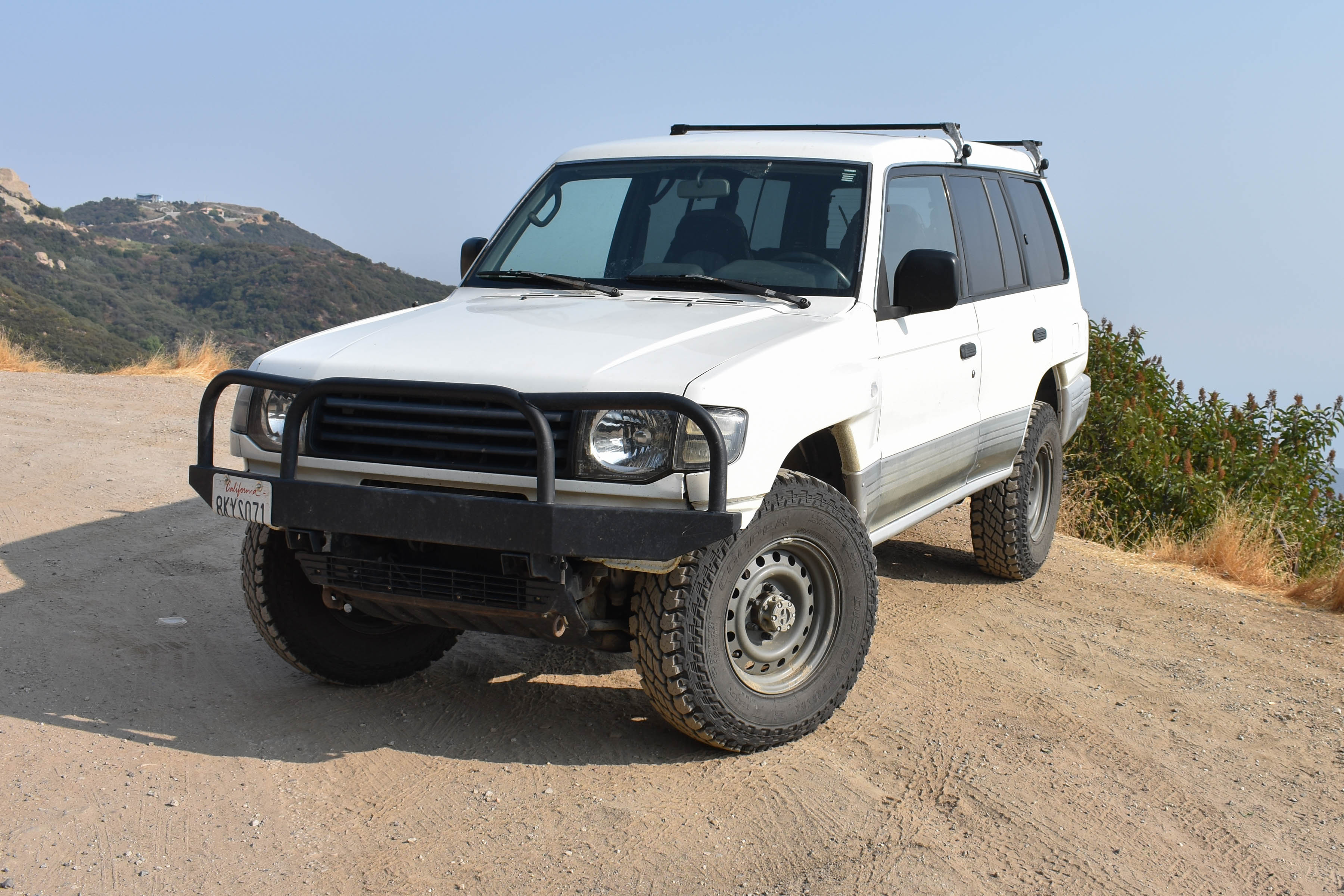
At the same time, to match the development of independent front suspension, more and more 4x4s swapped out rear leafsprings in favor of coilsprings. A Mitsubishi Montero SR, for example, in the early 1990s, used independent front suspension with torsion bars for the front end. The rear featured a beefy five-link solid axle with a big 9.5-inch rear differential supported by coilsprings.
Electronic Shock Dampers: The Next Step
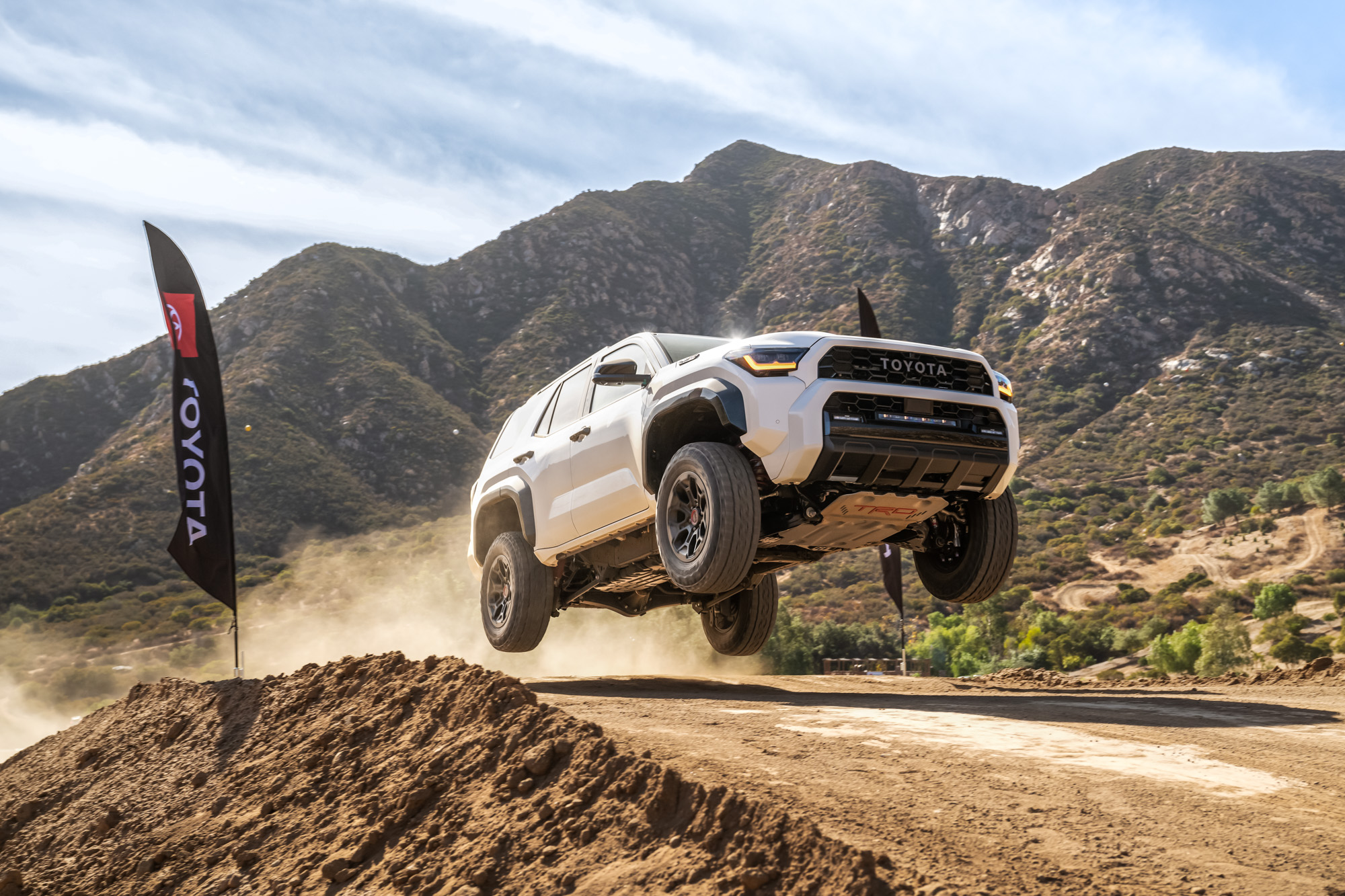
Mitsubishi also offered electronically adjustable shock dampers with this package. Hilariously, all of the above applies to the latest generation Toyota Tacoma and 4Runner for the first time nearly 30 years later — including the TRD bouncy seats.
Reliability became questionable for Mitsubishi’s early electric shocks first, of course. And despite being overbuilt, the Montero’s front tie rods, ball joints, and CV axles still struggle with all-out flex and durability when running tire sizes larger than 33 inches.
But that’s precisely because Mitsubishi aimed to make a semi-luxury SUV capable of more typical driving, rather than hardcore off-roading. The Montero drove great in-period for an upright SUV, which led automakers like Toyota to consider coilsprings and independent front suspension more often — the former on the 80 Series Land Cruiser and then the latter on the 100 Series.
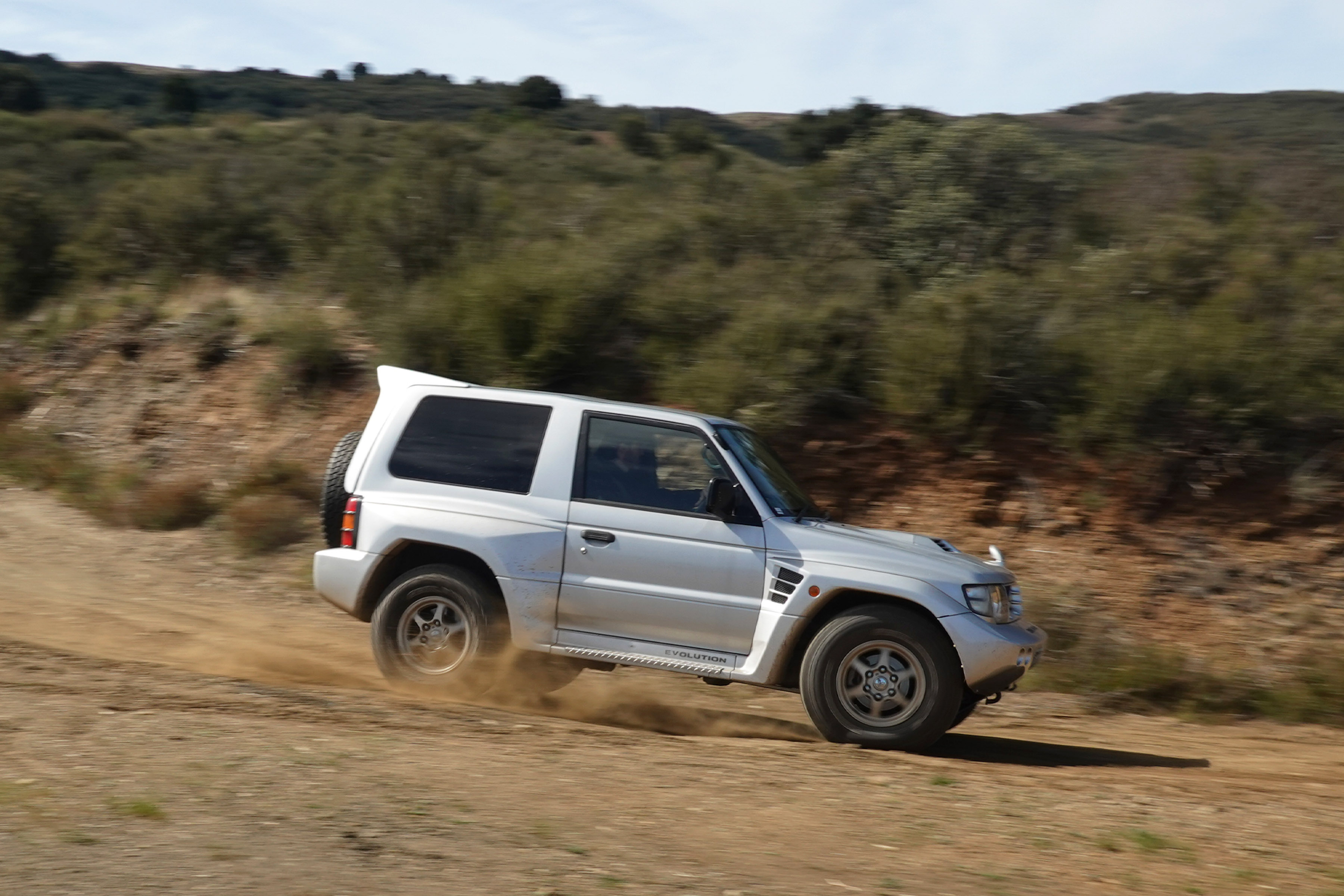
Eventually, American OEMs even caved for half-ton, and then even 1-ton, pickup trucks. But that’s getting ahead of the story. For high-speed performance, Mitsubishi then converted the Montero to a fully independent suspension in the Dakar homologation special Pajero Evo.
This was followed by the Gen 3 Montero, which also adopted a monocoque chassis and further luxury trappings. The tradeoff between a consumer car and an off-roader could only go so far.
Real-World Liveability vs. Off-Road Capability
By the late 1990s, Land Rover entered the mix with the Discovery. This alternative to the more primitive Defender still featured solid front and rear axles. But Land Rover tried to improve both on and off-road comfort and capability with a novel air spring system for the rear.
Personally, I’ve never driven a Series II “Disco” (as fans call them), but by all accounts, they’re pretty great. When they work properly, that is, which is apparently not very often.
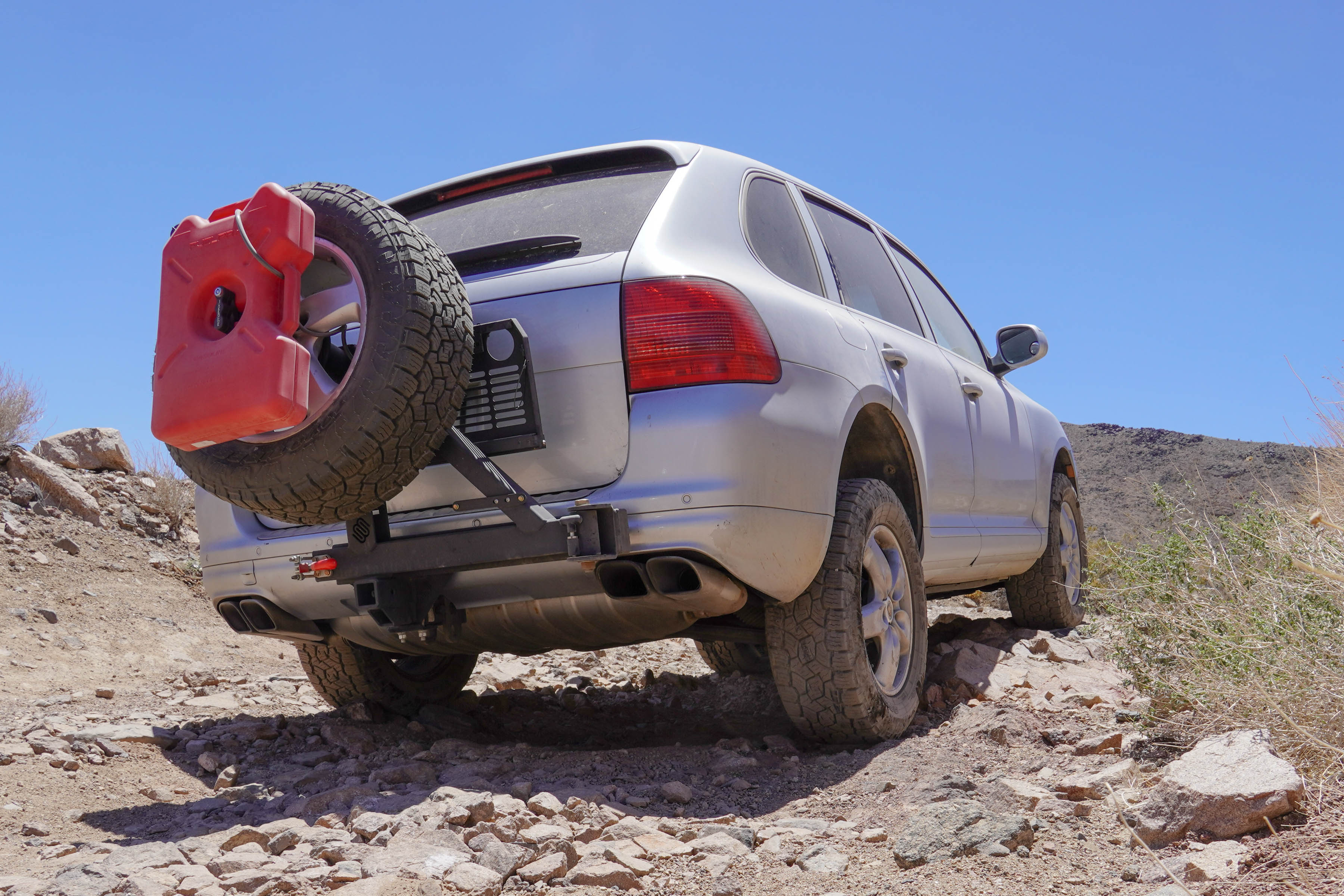
I did, however, own a 2006 Porsche Cayenne Turbo equipped with air suspension. And the Cayenne deserves special mention in any tale of off-roading suspension development. It wasn’t by any means the first SUV to feature four-wheel independent suspension — the Lada Niva, surprisingly, takes that honor.
BMW with the X5, Mercedes-Benz with the ML-Class, and Jeep with the Grand Cherokee all beat Porsche to the sporty SUV punch. But Porsche built the Cayenne to put both the Sport and Utility back in SUV.
Underneath, the Cayenne’s powertrain looks fairly serious. A huge transmission and transfer case, enormous differentials, CV joints, and axles. The control arms, sway bars, and ball joints all look capable of taking a serious beating.
Probably because even for such an early SUV, the Cayenne Turbo S maxed out at an absurd 514 horsepower and 531 pound-feet of torque. Its Touareg sibling, when equipped with the turbo-diesel V-10, upped that torque figure to an ungodly 553 pound-feet — the VW came with some fun off-road features, too.
Air Suspension on the Rise
The handling for this 5,200-pound SUV almost rivaled a contemporary 911. And all while offering that air suspension system capable of lifting the chassis by more than 4.5 inches, to a max of nearly 11 inches of ground clearance.
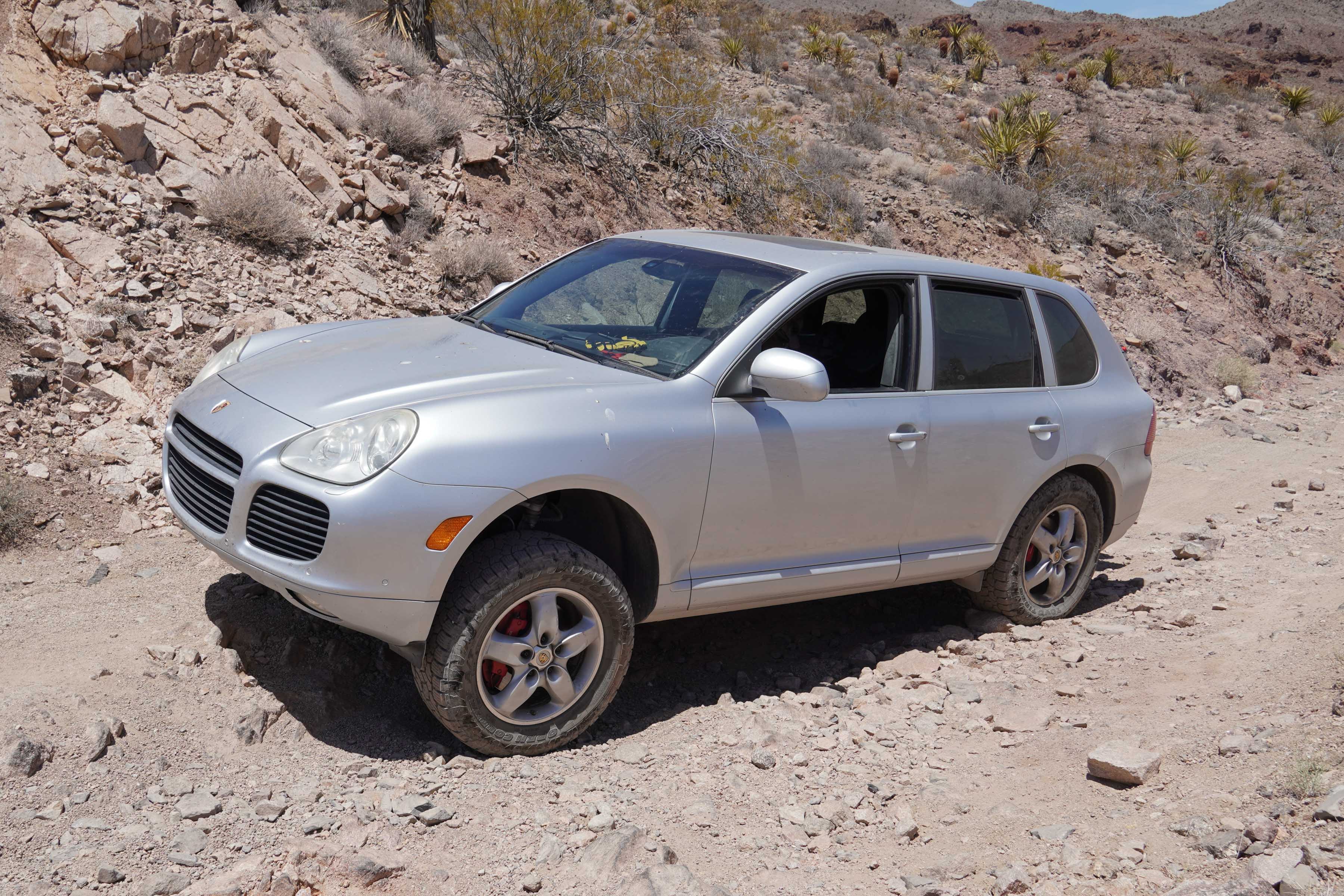
I took my own Cayenne up far more difficult trails than I ever thought an independent-suspension SUV might ever manage — even though my example lacked the double-disconnecting sway bars and rear locker the Advanced Off-Road Package offers.
Then, while driving home on the highway, I struggled to think of anything more comfortable to cruise at 80 mph. Talk about a world of difference versus a Montero or Discovery!
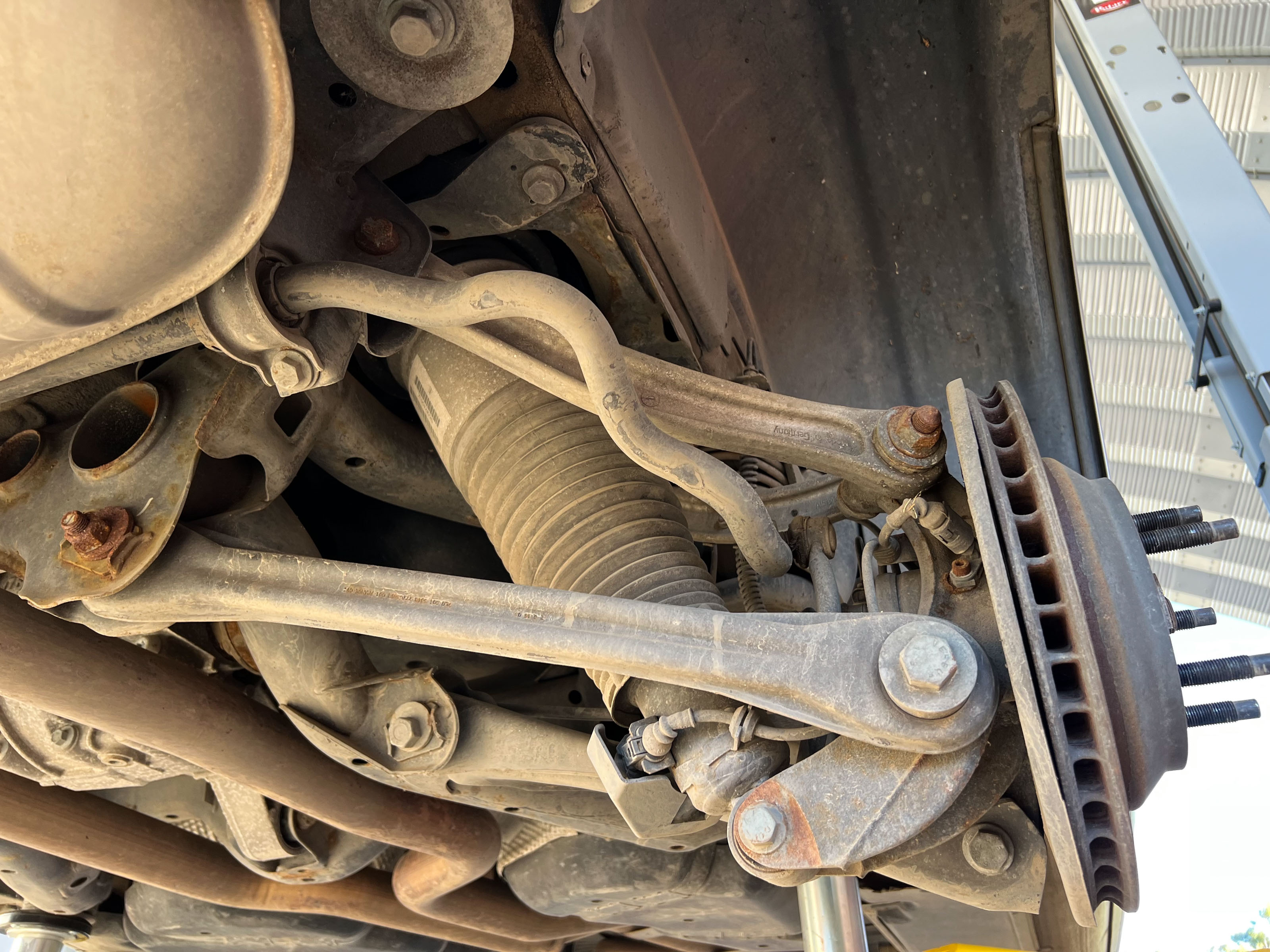
So for those scoffing at the idea of a Cayenne with air suspension, remember that’s how the Transsyberias ran that 4,000-plus–mile rally. And one Porsche technician I trust told me he saw more mechanical failures from “normal” steel coilspring suspension than the airbags.
The air suspension apparently fails most often when a sensor goes on the fritz, telling the computer to pump until the airbags explode. This typically kills the compressor while doing so, too.
Fun fact, though: the Cayenne’s on-board air compressor can also help while airing tires back up with an included inflation hose.
The Discovery Series 3 soon similarly switched to fully independent suspension front and rear to mimic the articulation of a solid axle. Though, Land Rover adopted a cross-linked air bag system that could push an opposing tire down toward the ground when one lifted. Of note, most modern Defender models, other than Octa, still do something similar.
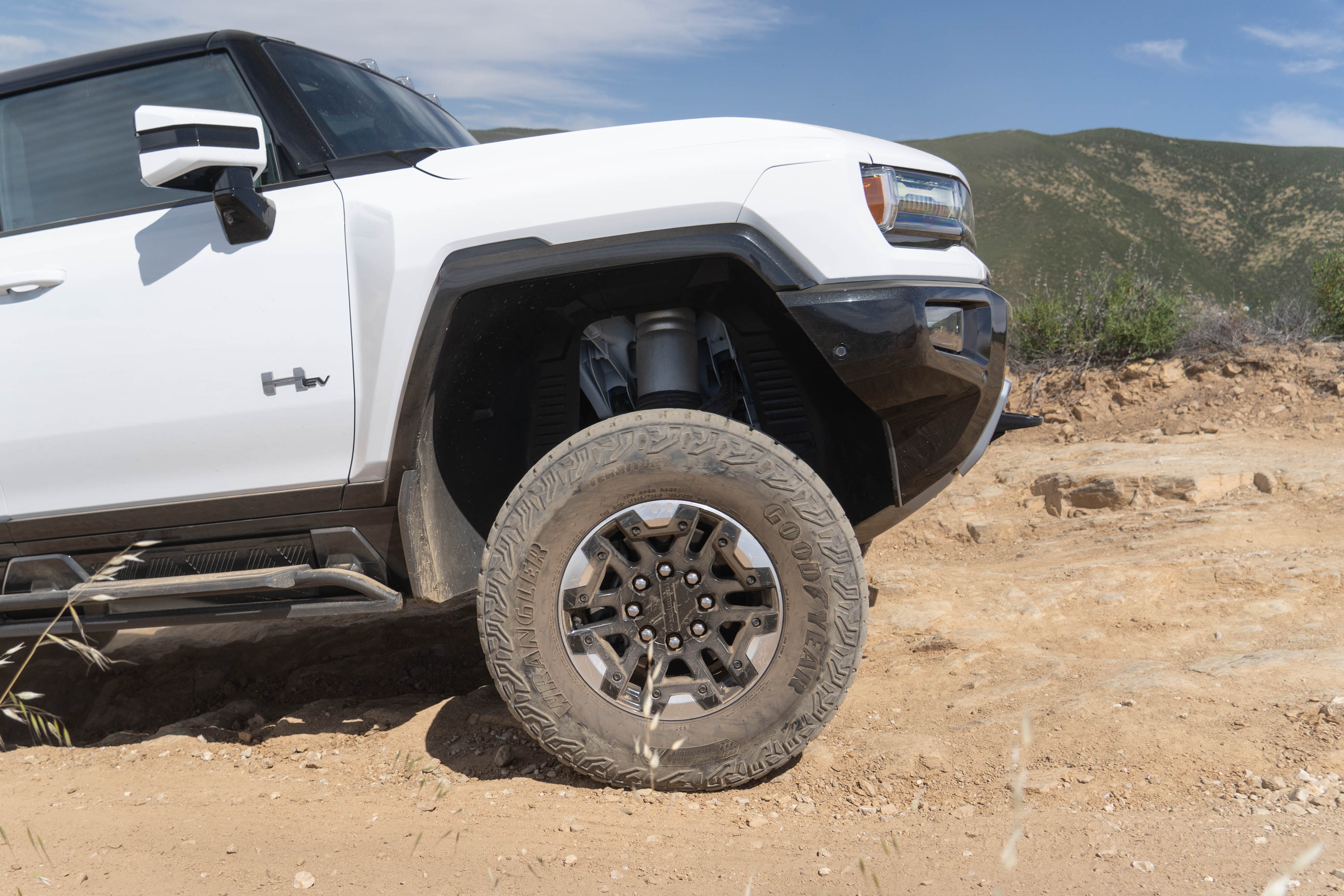
And as an even more extreme example, the airbags on a Hummer EV work shockingly well — even in a truck that weighs north of 10,000 pounds.
A Change in the Tides
Alongside early experiments with air suspension, automakers also increasingly played with electronically controlled dampers à la the Montero SR. GM’s MagneRide popularized using magnetorheological fluid, but most featured simpler adjustable valving. For example, again, the Cayenne’s dampers allowed for three stiffness settings alongside the ride height adjustments.
Independent suspension, coilovers, electronics, tighter steering, and higher speeds became the norm. But along the way, SUVs and trucks arguably got worse at off-roading. Or at least, less reliable while attempting to counteract the inherent weaknesses of independent suspension.
Eventually, SUVs in particular simply stopped catering to true four-wheeling enthusiasts. A modern Cayenne still uses air suspension, but with reduced height adjustment, and no more four-low transfer case. In GTS form, the Cayenne turned into a true sports car — just lifted. Then came a little off-roading boom, and automakers started to focus on the good stuff again.
The UTV Revolution
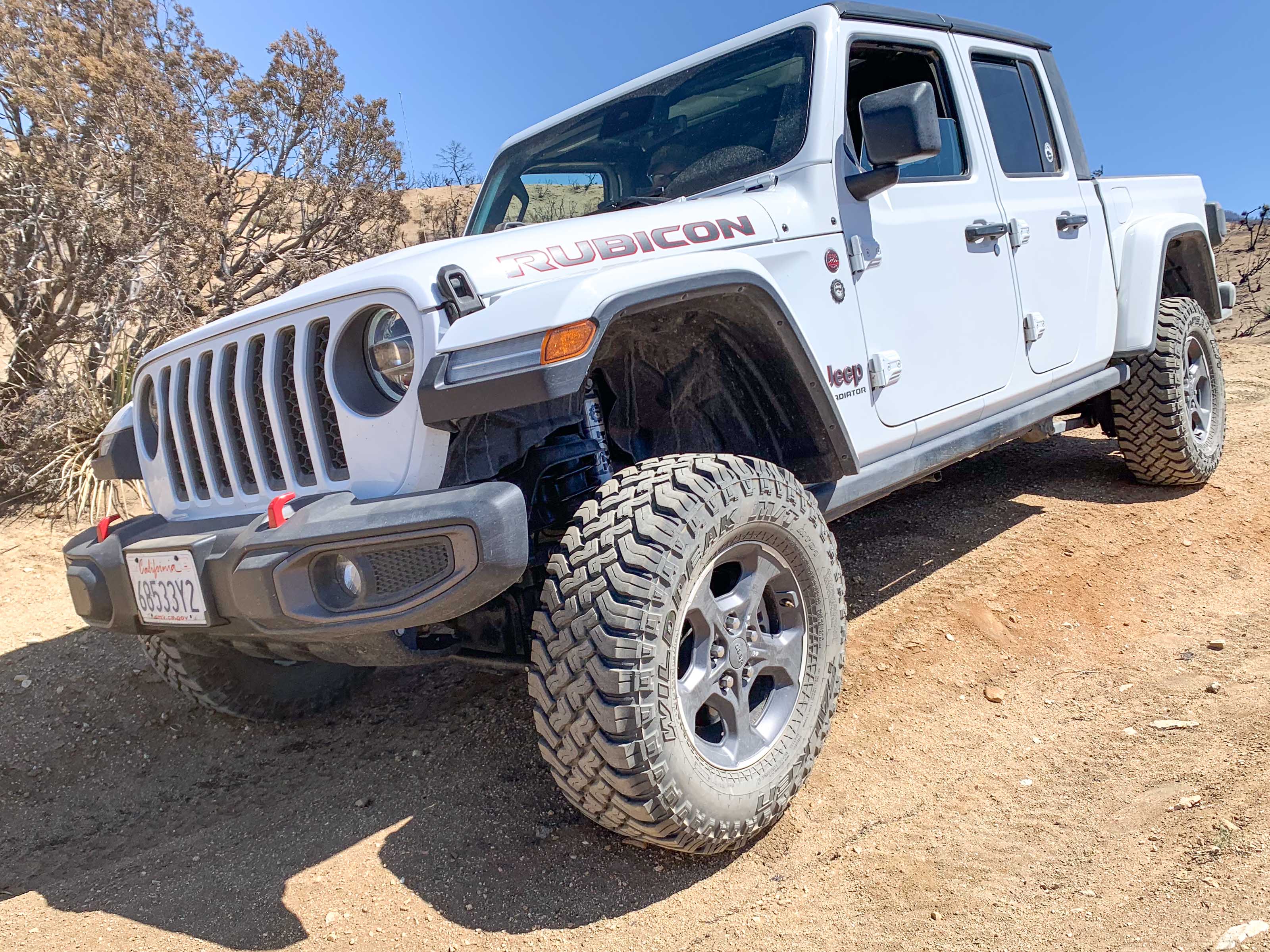
In fairness, Jeep forever stuck with the solid axles for the Wrangler and eventually its Gladiator sibling. For better or worse, this meant retaining all the old-fashioned driving dynamics.
And just a few years ago, a British startup called Ineos similarly tried to revive the glory days of the classic Defender. But part of the more recent swath of dedicated off-roading options from Ford, Chevrolet, and Ram can be attributed, in many ways, to the rise of UTVs.
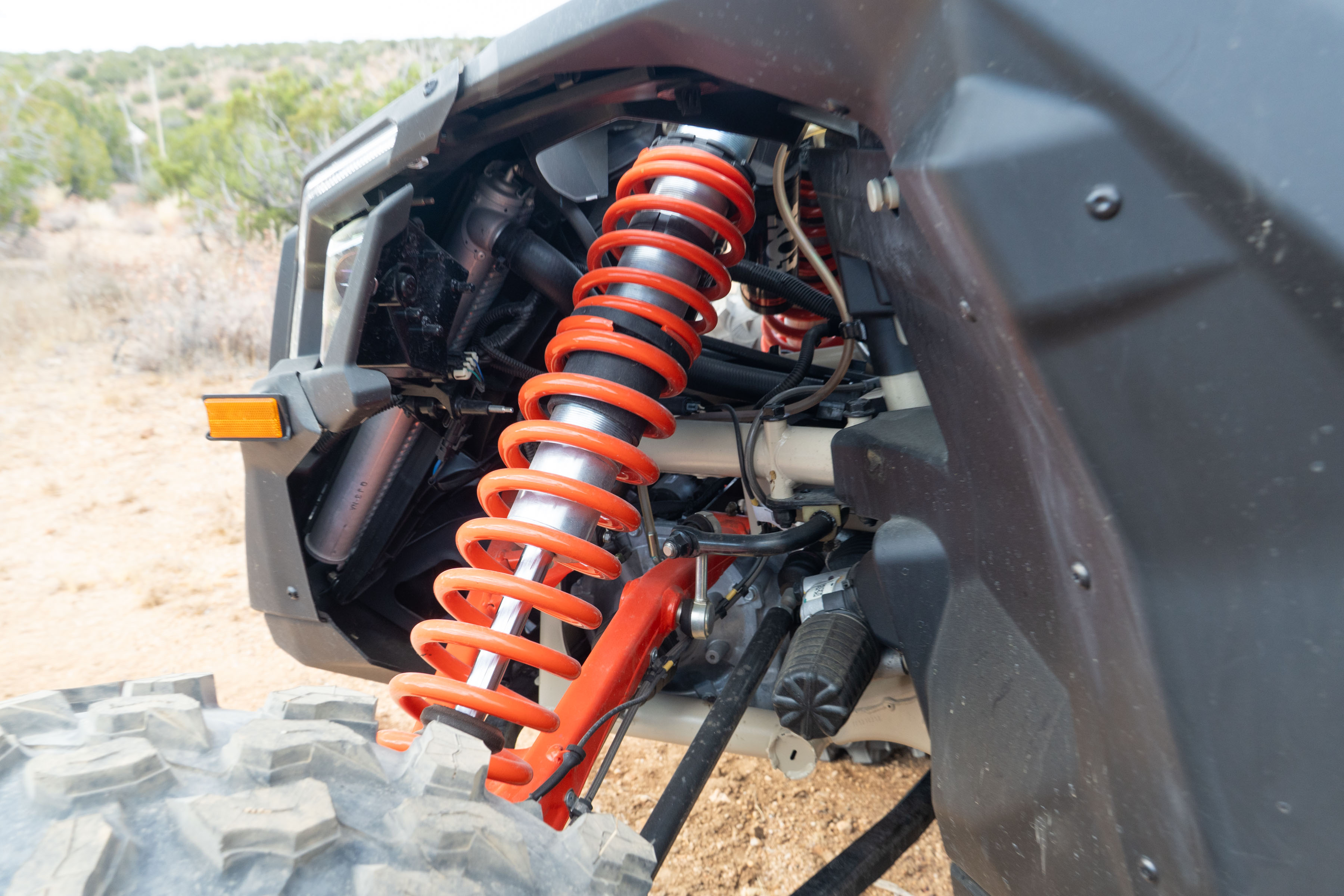
UTVs took off-roading to a whole new level of performance over the past decade-plus. What started as little more than golf carts now borders on trophy truck and Ultra4 levels of capability — all with independent suspension at all four corners.
By staying lightweight, a UTV can minimize the chance of tearing CV axles or popping ball joints and tie rod ends — to an extent, anyhow. But the shock damper industry only dove deeper into the realm of wheel travel and electronic valving.
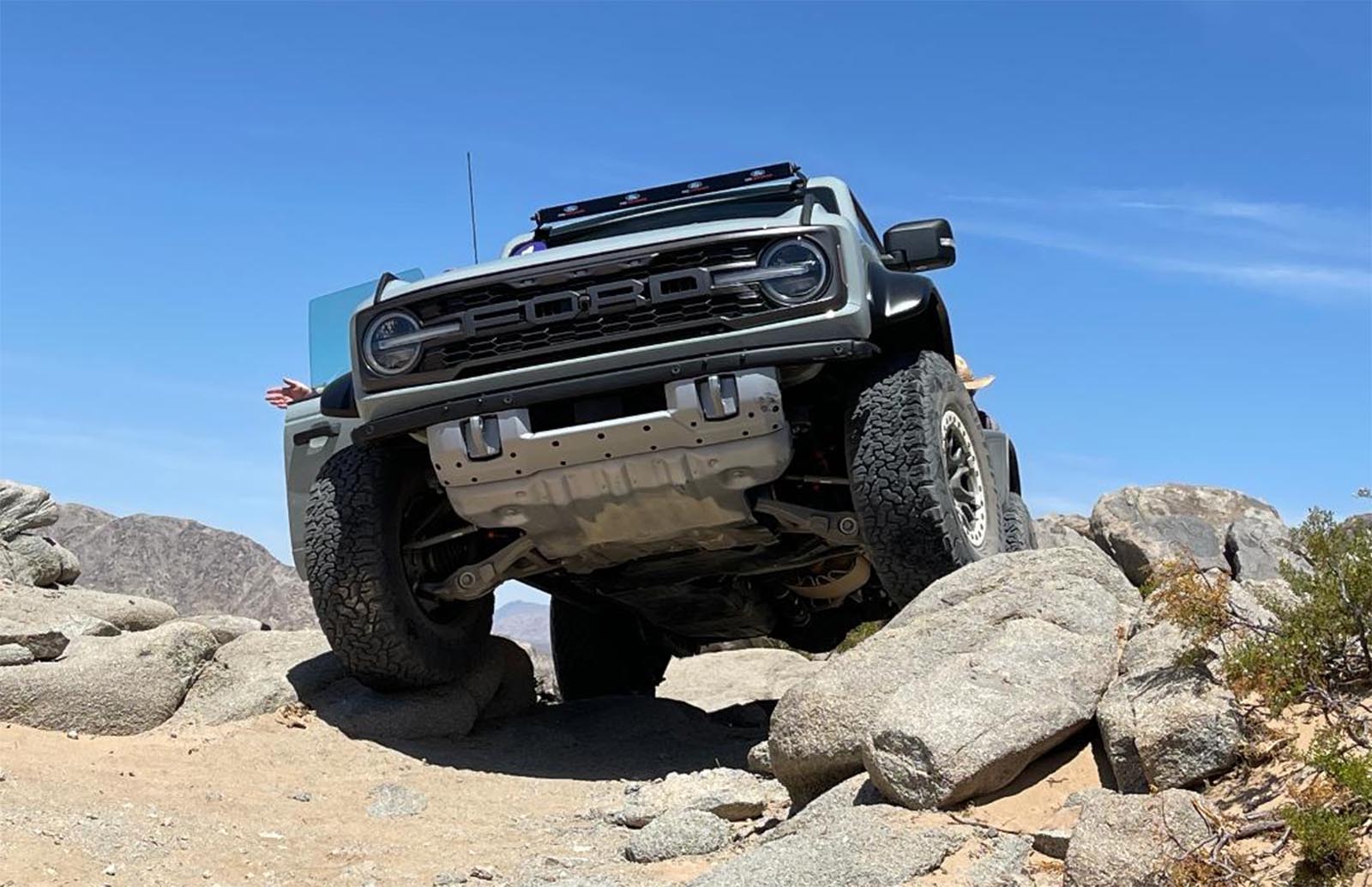
Same for production, primarily on-road, trucks and SUVs, especially Ford’s infamous Raptor series. No joke — the first time I drove a Bronco Raptor on-road with that spectacular Fox Live Valve suspension, I hopped out and looked under the rear end to make sure Ford hadn’t snuck a secret sway bar on there. Fox’s racing technology had arrived for the road in a newly capable SUV.
To ensure the Braptor could handle hardcore off-roading with IFS, Ford borrowed the ball joints and more from an F-150. And then upped the capability with more wheel travel made possible by wild shocks and a disconnecting sway bar.
What Do Sway Bars Do?
This brings us to a discussion of disconnecting sway bars, one of my favorite pieces of technology. Sway bars on any car attempt to mitigate body roll by linking the up-down motion of wheels across from each other. Again, this is an attempt to at least somewhat mimic the directly connected wheel movements of a solid-axle vehicle.
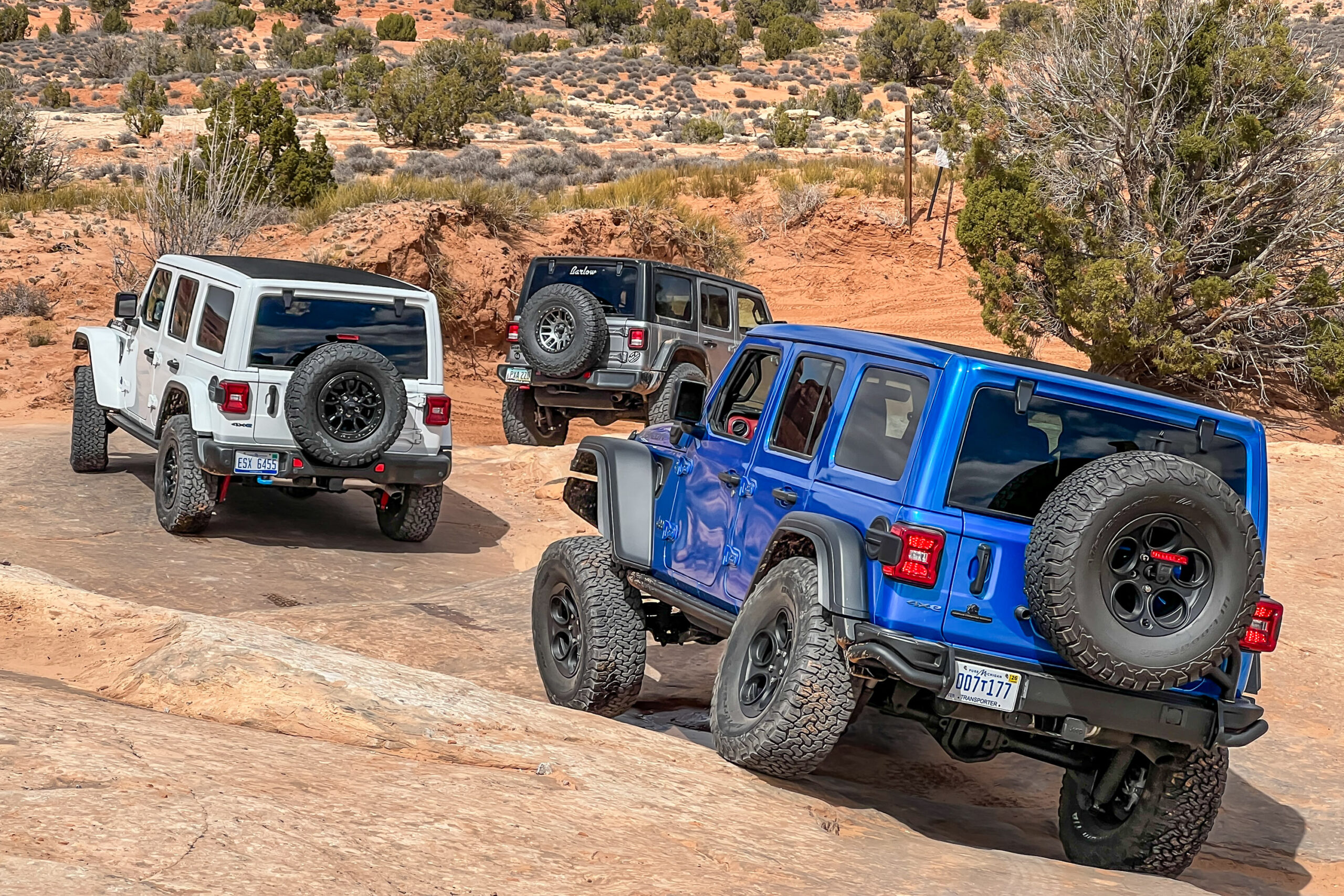
But sway bars therefore reduce that articulation. Hence, this is why Jeep added the first electronically disconnecting sway bar to the Wrangler Rubicon way back in 2007. When disconnected, the wheel travel increases significantly, which improves traction over rough terrain.
But, Jeep then automatically reconnects the sway bar at around 17 or 18 mph, precisely because the Wrangler and Gladiator struggle with excessive body roll while driving fast. Unlike an independent suspension vehicle, critically.
The Jeep system works by moving a small motor that unclamps the front sway bar from the frame, allowing more rotation. It’s not truly a full disconnect. The Cayenne system that debuted as part of the Advanced Off-Road Package used a similar hydraulic actuator to decouple the two halves of both the front and rear sway bars.
The Bronco Raptor, which has independent front suspension, stuck with only a front sway bar that’s able to disconnect up to 50 mph. Instead, Ford relied on the excellent Fox dampers to control body roll. Along the way, Toyota also introduced a semi-active sway bar disconnect system called KDSS, which even now includes predictive trail response.
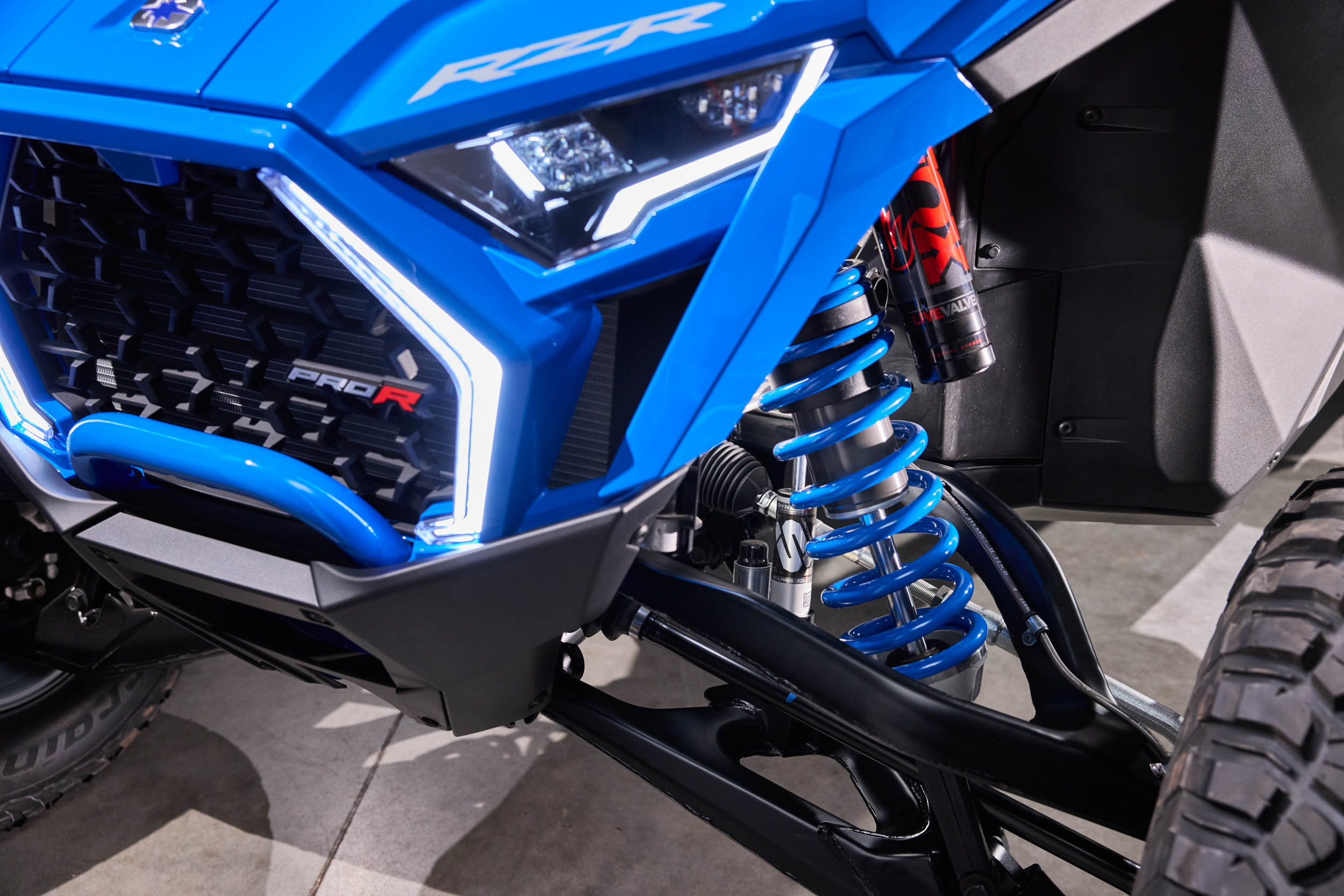
And, in an unexpected turn, the tech even crossed back over to the UTV industry. Polaris recently announced that the RZR now has an industry-first active sway bar option, even as General Motors stays out in the cold by refusing to offer either active shock dampers or a disconnecting sway bar in the Colorado ZR2 or Canyon AT4X.
Taking the Sport Out of SUV
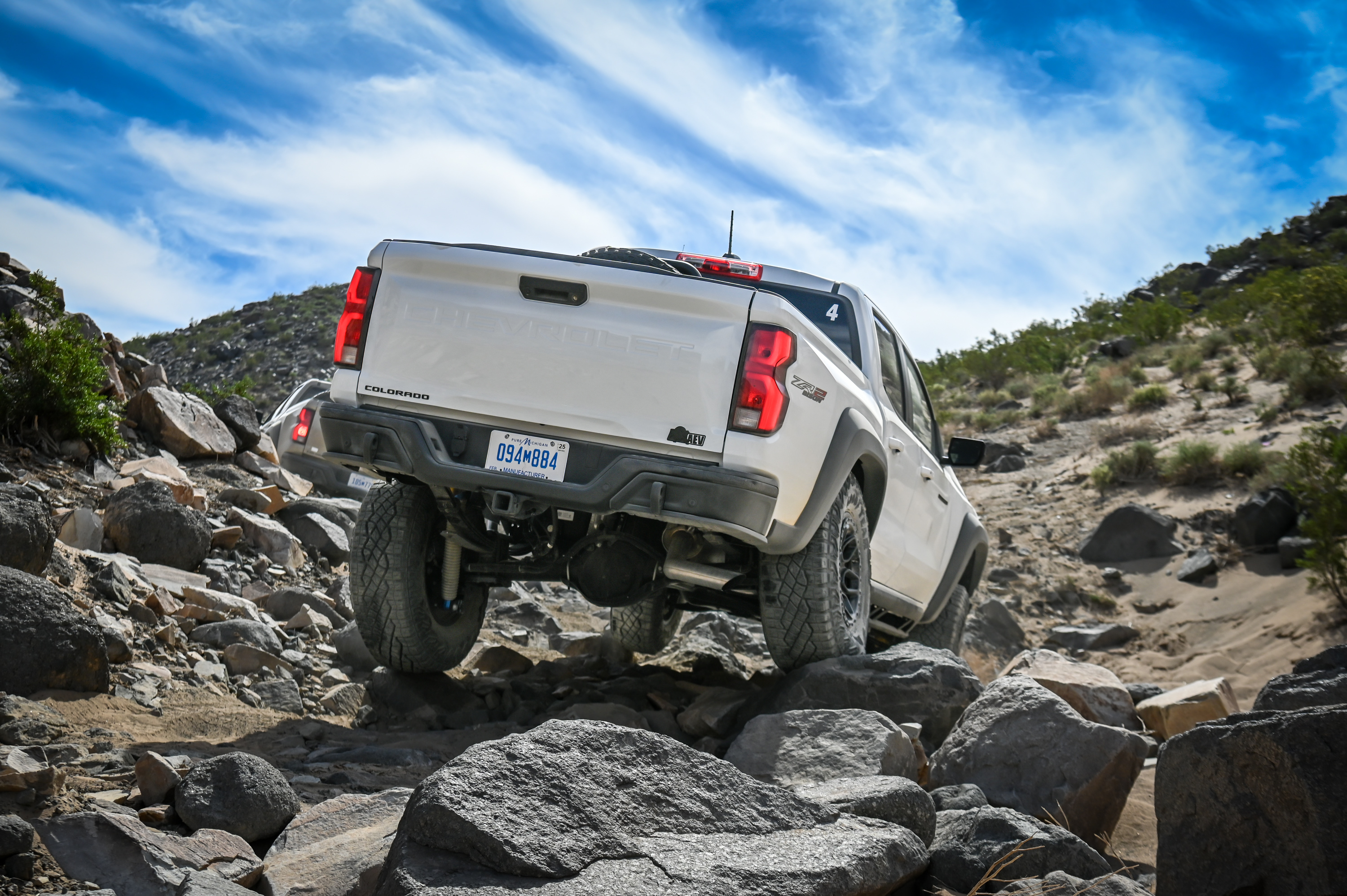
In a way, GM’s decision actually makes sense. And the Multimatic spool valve dampers in the ZR2 and AT4X ride well both on road and off without any fancy electronics. True off-roaders will debate endlessly, but everybody can agree that more complexity is always a bad idea.
For ultimate reliability while four-wheeling, there’s no doubt about old-fashioned solid axles and leafsprings. The sacrifices come when trying to blast home on the freeway — taking the Sport right out of SUV.
So why did Rivian and then Land Rover add another level of complexity with a hydraulic roll control system derived from supercars? For Rivian, the answer makes more sense: sway bars and end links take up space that could be used for more batteries. This packaging consideration directly affects range, the single most critical factor for potential EV buyers. Fair play, then.
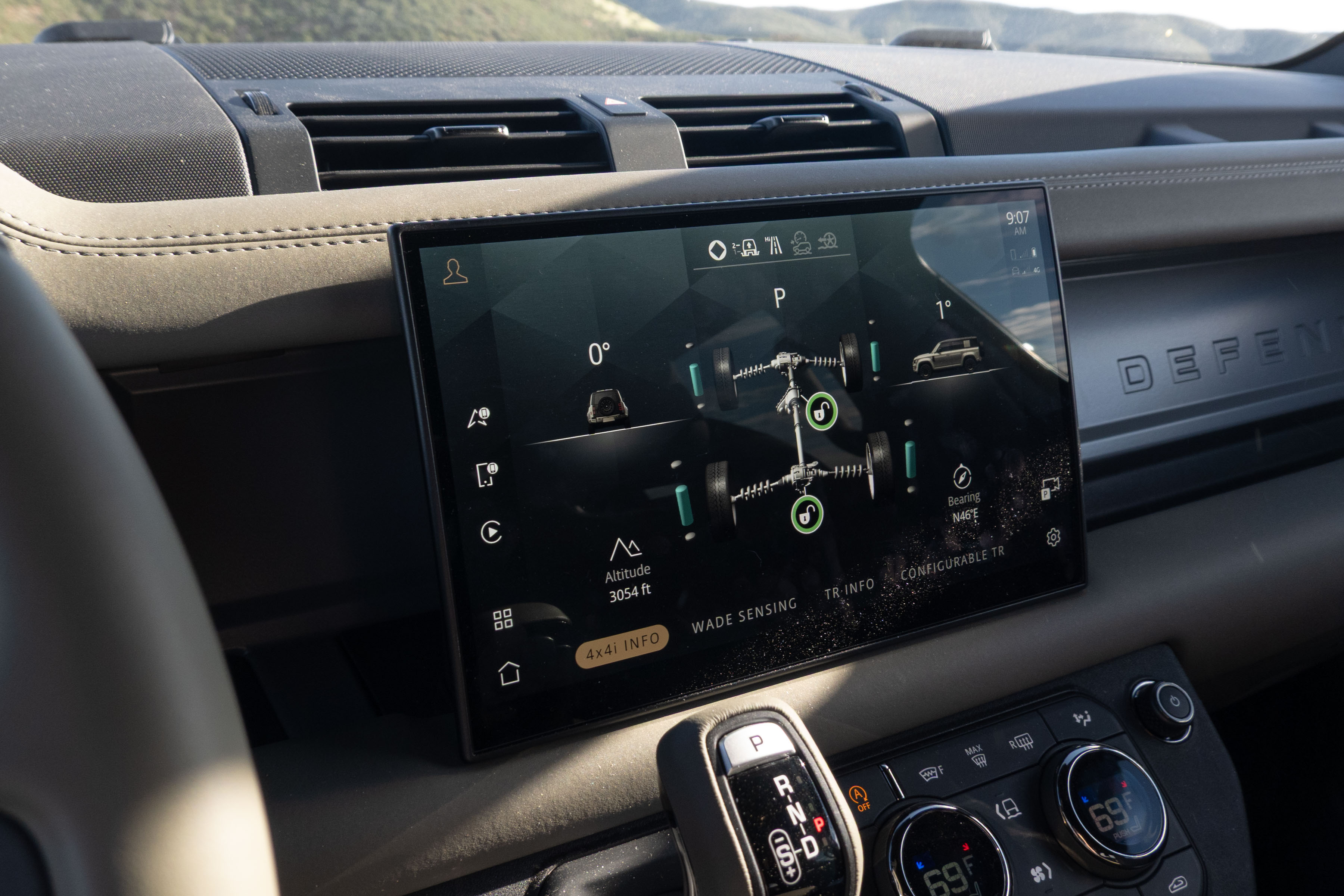
For Land Rover, the decision makes much less sense. On paper, an SUV with 626 horsepower, independent suspension, and hydraulic roll control can double as a supercar on the pavement while maximizing articulation off-road. The measurable performance metrics do bear out the concept.
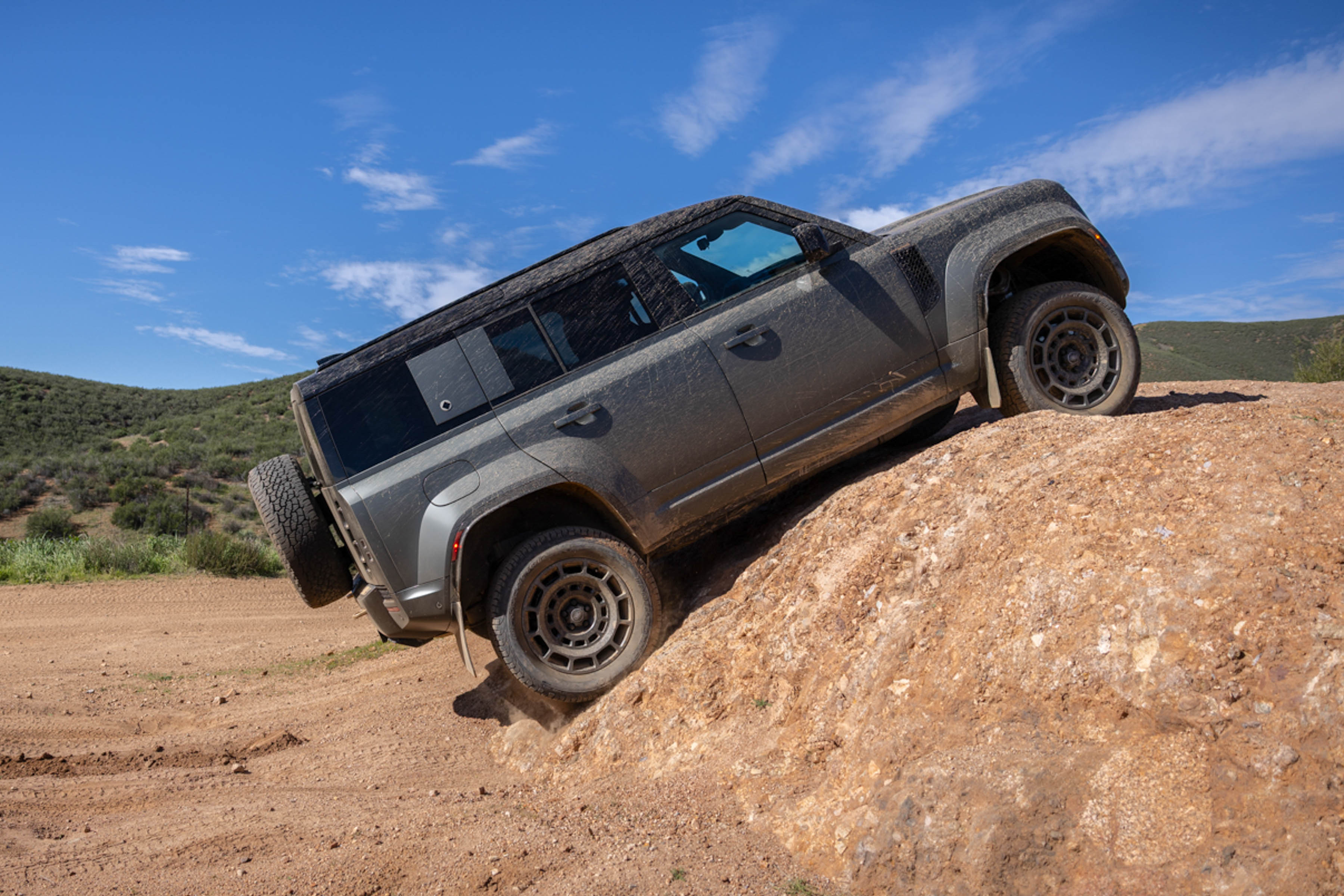
I drove the Octa hard up some of my favorite canyons, only really struggling with traction control settings. And off-road, the big SUV with excellent wheel travel and ground clearance climbed up a fairly tough trail with relative ease. At least, once I found the right settings.
The Clear Cons of Hydraulic Roll Control
But the harshness of hydraulic fluids ruins any semblance of smoothness while driving aggressively on pavement. A lack of connection between the front-to-rear pitch control and side-to-side weight transfer also creates a somewhat discombobulating effect while canyon carving. This only fooled the traction control even more — all as I still jounced around in my seat with every slight pavement imperfection.
Another recent SUV deleted sway bars while adding electric height and roll control simultaneously: Ferrari’s Purosangue. But Ferrari bills this SUV as just a supercar that happens to have four doors and a slightly lifted ride height. So I can forgive some of the harsh ride — and forget off-roading entirely.
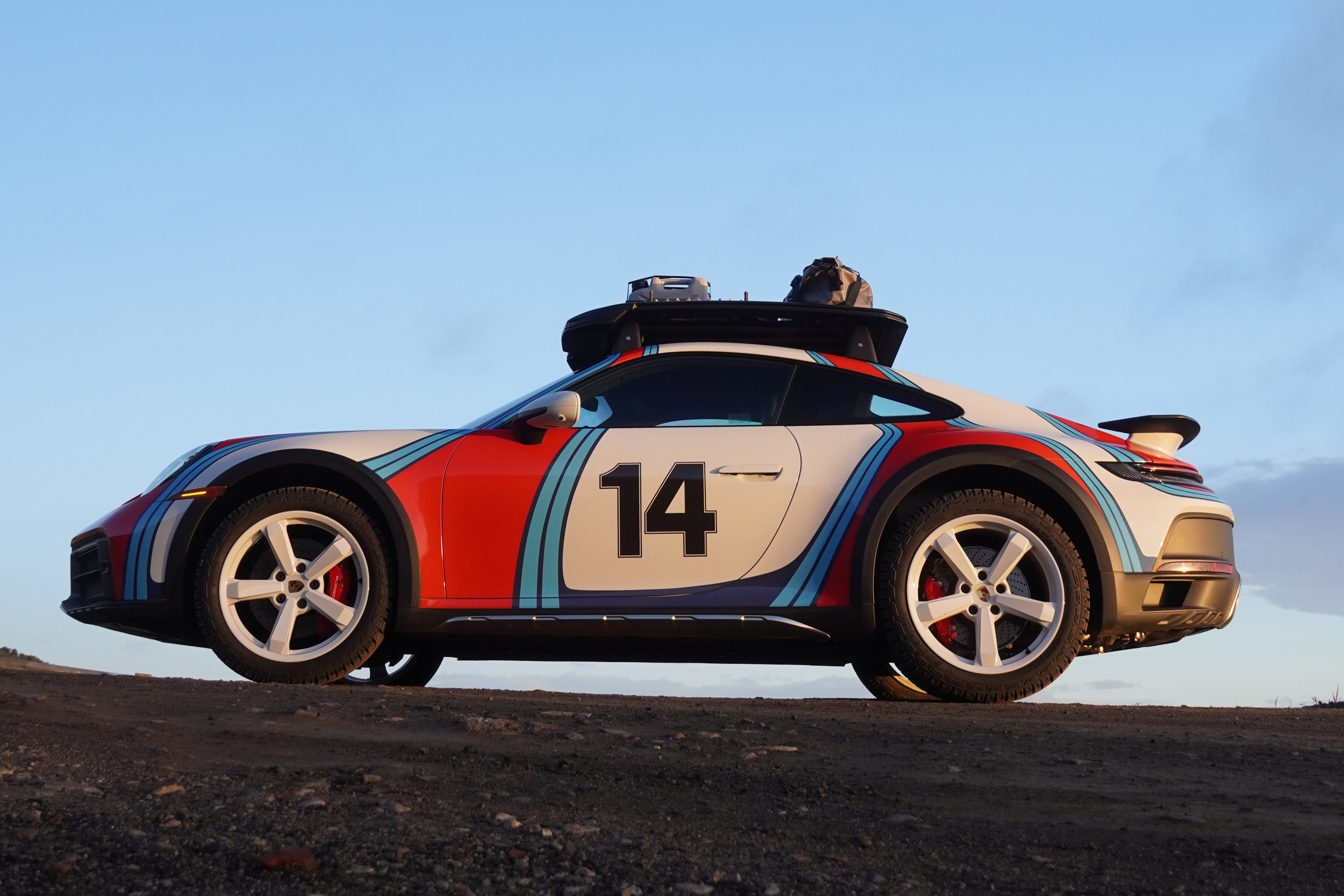
Porsche’s 911 Dakar also comes to mind. For the Dakar, Porsche essentially added a front-axle lift system at the rear. This runs on hydraulic fluid, too, pumped up to a whopping 1,958 psi.
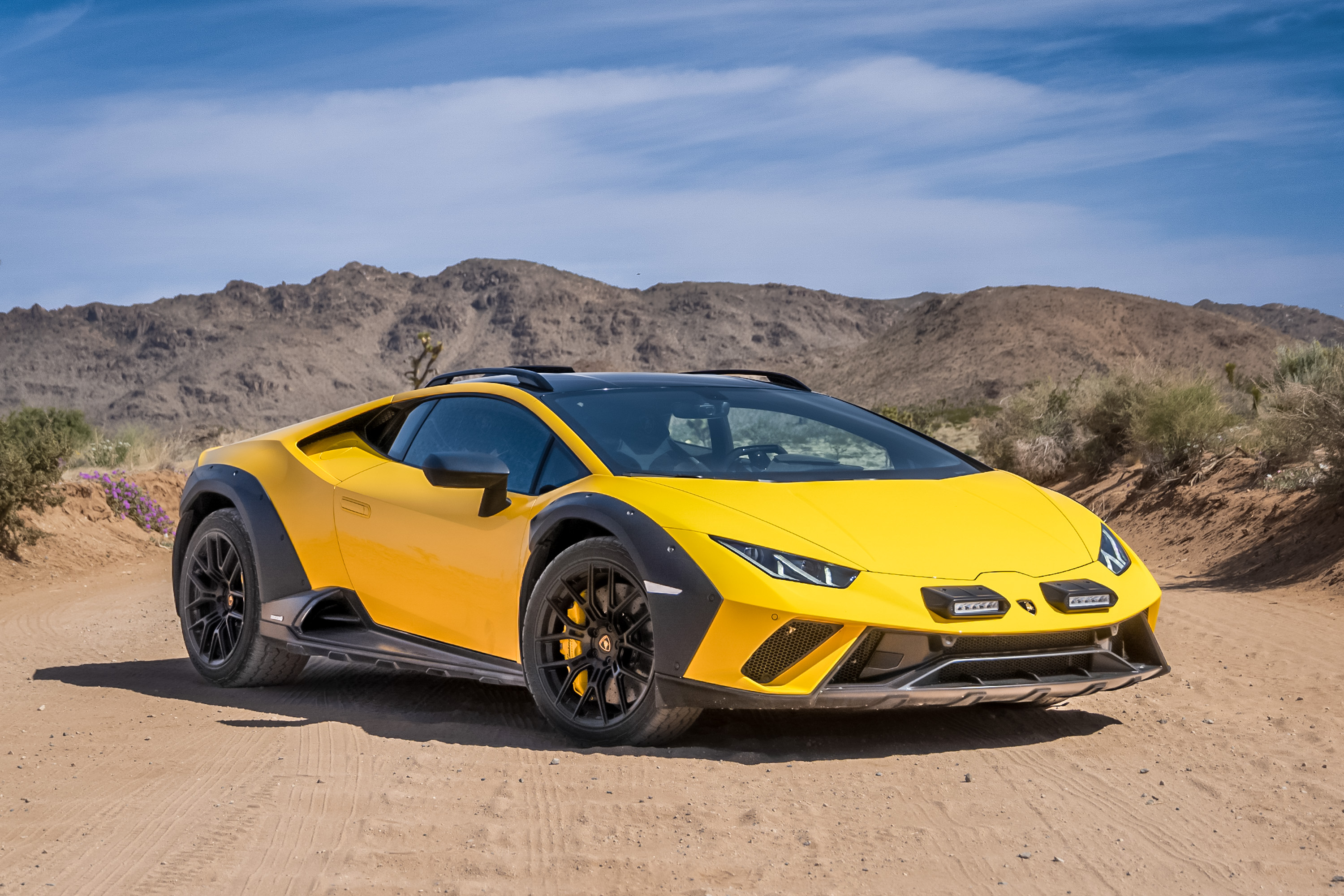
The Dakar undoubtedly improves upon a base 911’s off-road capability — or lack thereof. And despite the additional ride height, it still drives very similarly to the 911 GTS that it’s based on. That is to say: stiffer than stiff. But I suspect Porsche also learned a critical lesson here, after experiencing something different in the Lamborghini Huracan Sterrato.
Learning From Past Mistakes
Instead of using a hydraulic lift system, Lambo went with a more traditional setup of electronic dampers, just with more travel and revised mounting points. The lift, therefore, doesn’t increase stiffness, instead making the Sterrato more fun precisely because of the additional body roll.
Since the Dakar’s arrival, every 911 for the 992.2 facelifted generation now rides on softer suspension than the previous model (other than perhaps the new hybrid GTS, but that’s a whole different fiasco). This compliance improves daily drivability and driving dynamics 99% of the time. And then, stiffening up the shock dampers for more aggressive driving still works well. And yet the Dakar weighs less than half of a Rivian, or a full ton less than an Octa!
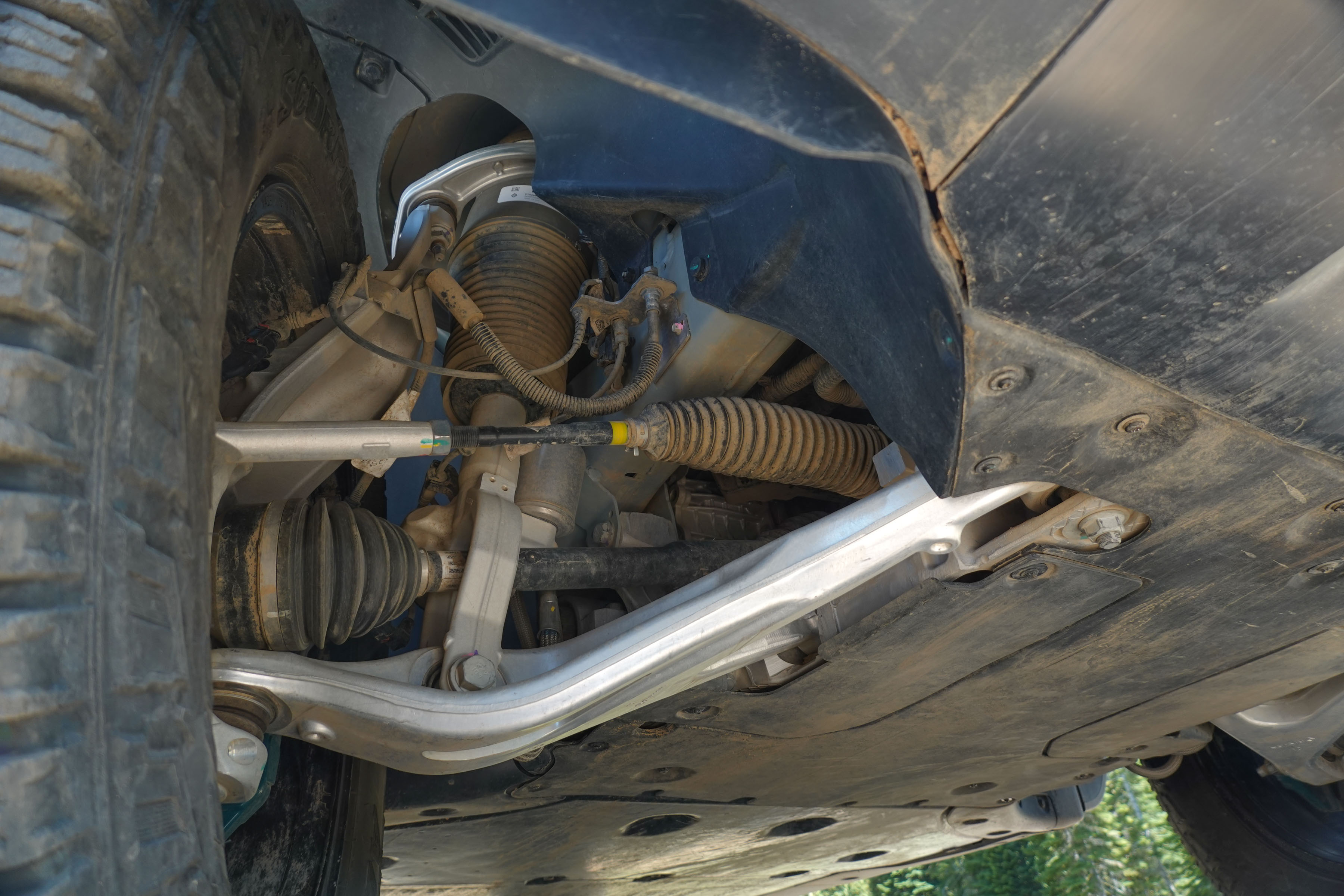
If Rivian gets a borderline pass due to the priority of EV packaging, then Land Rover has no excuse, especially because the hydraulic roll system only applies to the Octa. Hence, a large portion of the development costs likely contributed to that $150,000 pricetag.
Not even the Dakar Defender uses the tech. Baffling — or perhaps not, given the question of reliability, after I struggled a ton with failures from a “base” Defender 130’s simpler off-road modes. Then add another level of complexity on top — not great for the long haul, no doubt.
Keep It Simple, Silly
While off-roading out in the middle of nowhere, everybody wants a simpler rig. All the extra electronic controls for all these advanced suspension and four-wheel-drive systems add complexity.
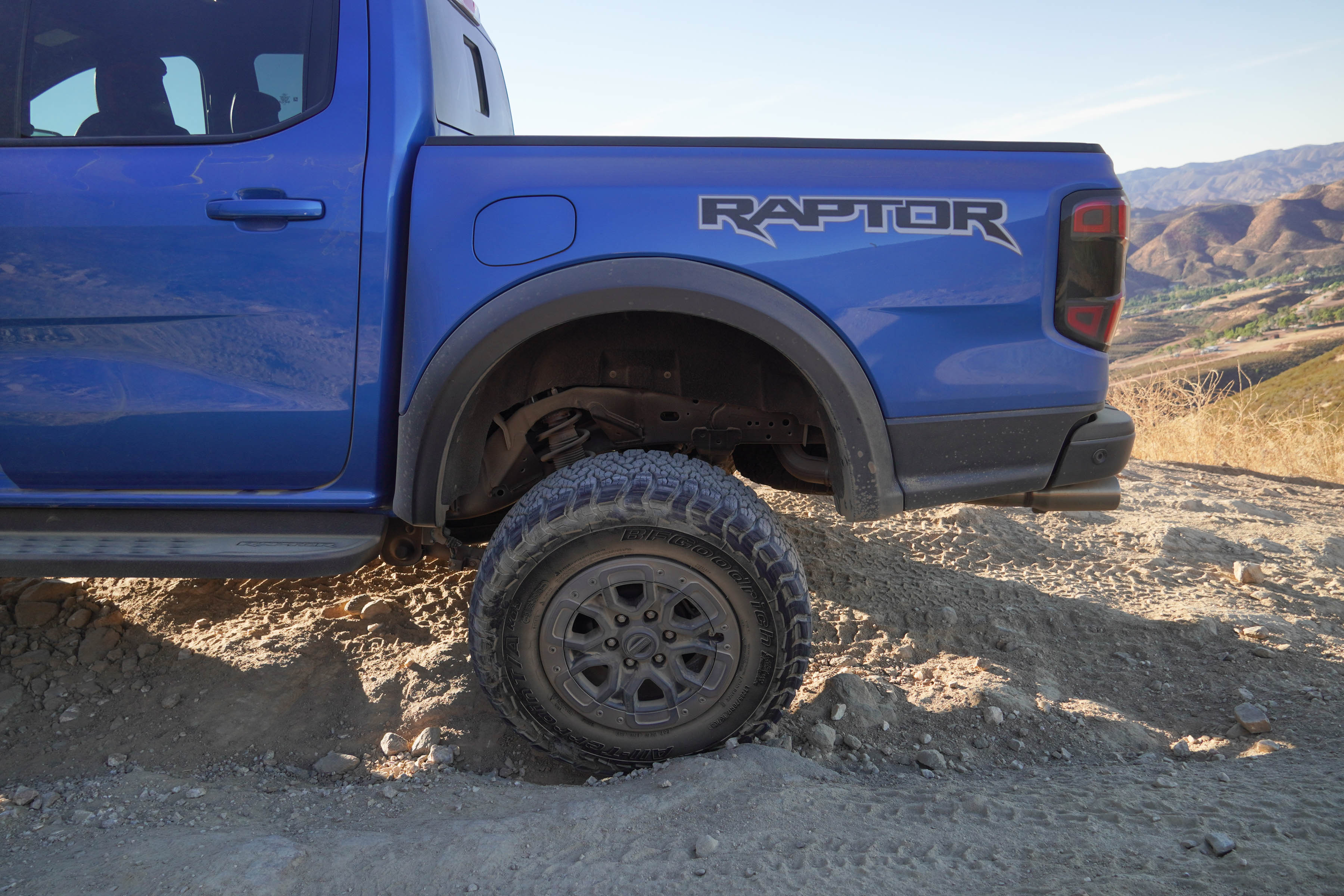
For example, one of the lowest parts of a Ranger Raptor’s underbody? A damper sensor plug for the Fox shocks. Talk about bad engineering.
Ironically, Rivian is one of only two automakers that I’ve ever heard call out trying to reduce the number of ECUs in every vehicle. That’s an effort to simplify that I appreciate.
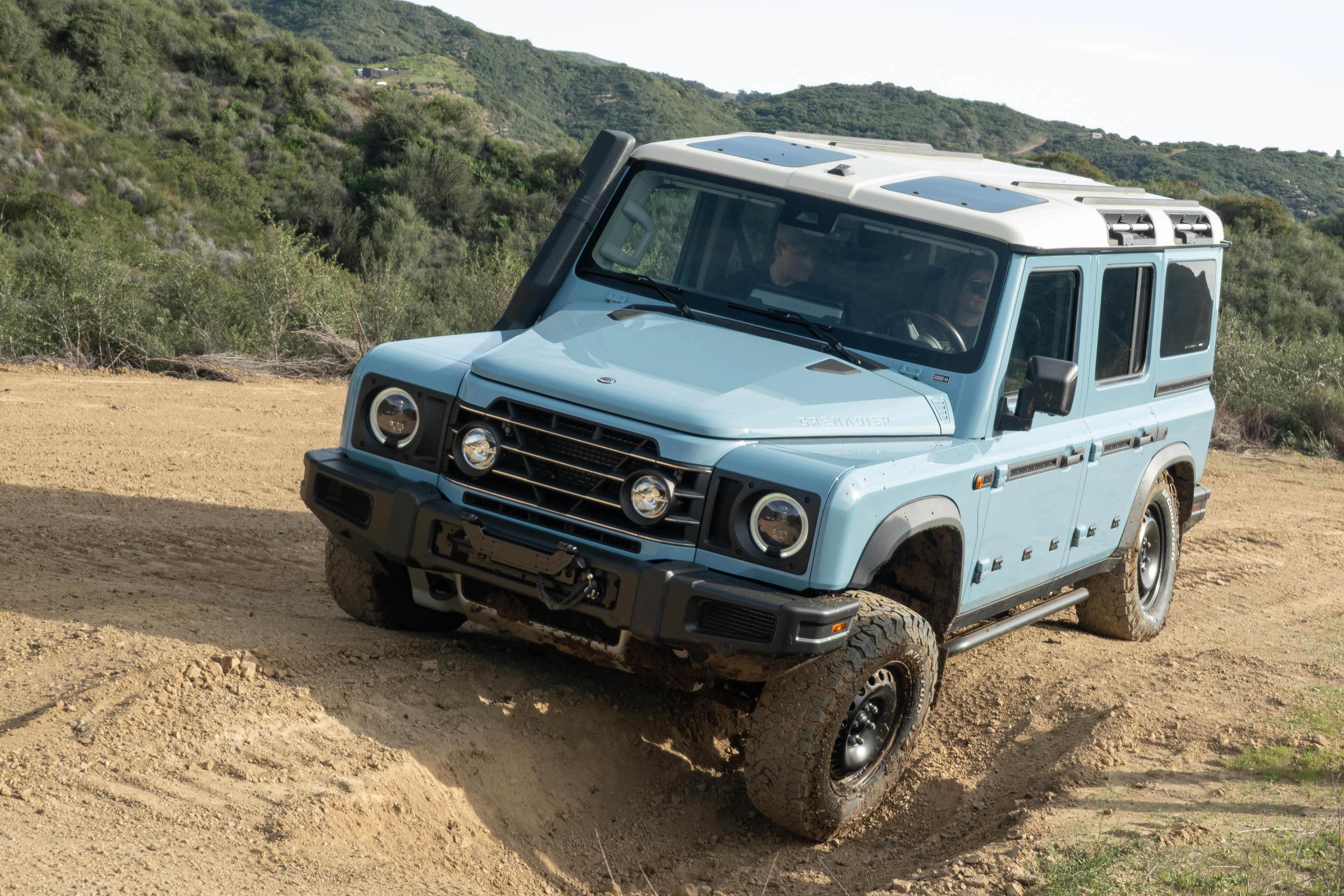
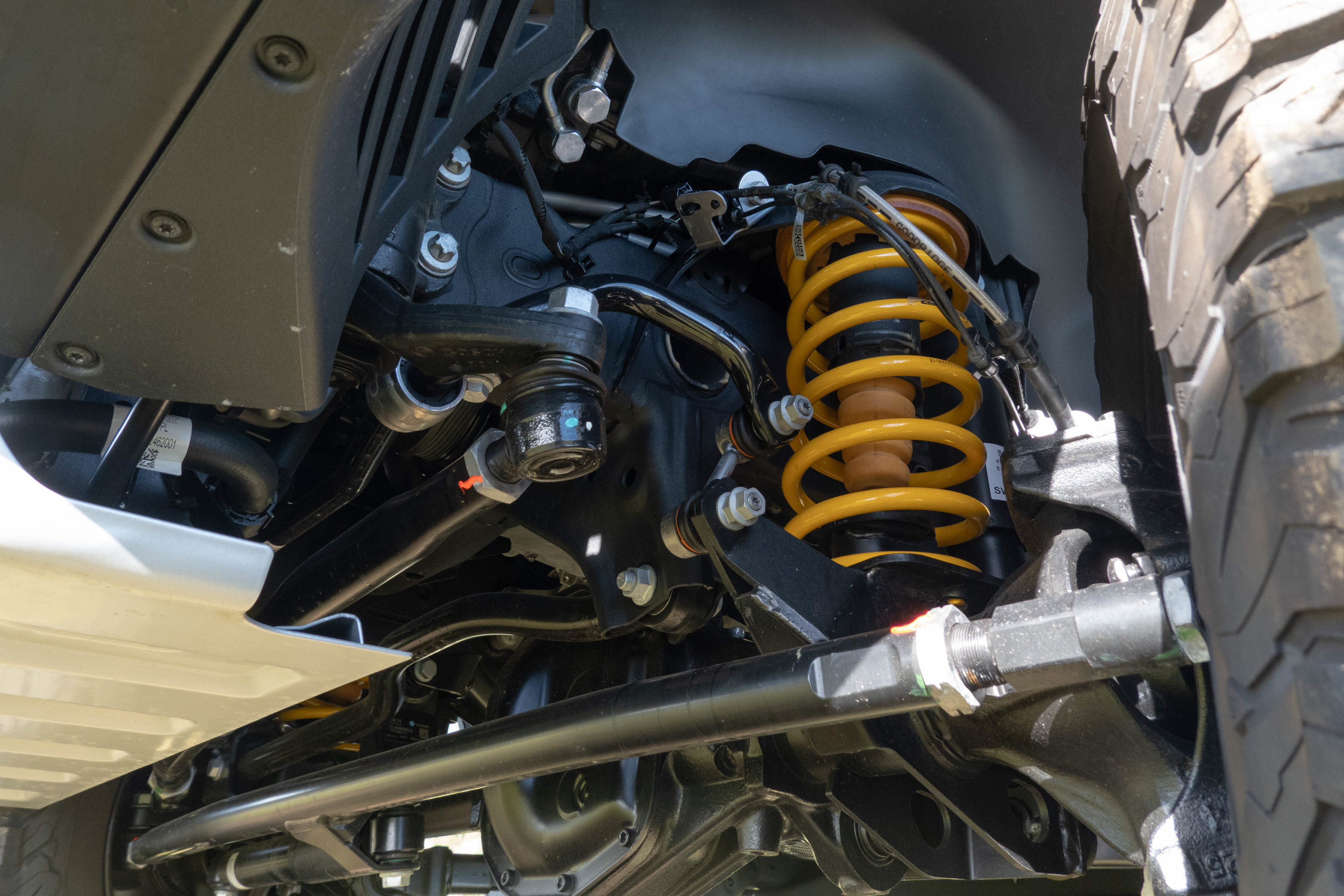
The other OEM? That classic Defender-inspired Ineos. Ineos turns this whole conversation on its head. Rather than going for advanced suspension to increase capability, Ineos stuck with passive Bilstein dampers and Eibach springs controlling solid front and rear axles. No disconnecting or active sway bar, either.
Then again, Ineos needed to revise the steering system for model year 2026 after accepting that consumers have come too far into the world of independent suspension to take such a drastic step back in time. The change makes a big difference, for the better. Though I still believe that a disconnecting sway bar would be a simple enough addition for Ineos to even further enhance the solid-axle articulation.
Enjoying the Drive Still Matters
I’m admittedly a fan of the disruptive Ineos ethos, though I can understand why others may not be. And I’ve had plenty of people tell me they don’t care how a 4×4 drives, only that it gets there and back without breaking.
But so often, when I get into a modern performance SUV — a Defender Octa or Porsche Cayenne, even a Lexus GX or Toyota Land Cruiser — the question always comes up of whether I’d take this ride at even money versus a 2006 Cayenne with the Advanced Off-Road Package.

If I wanted something simpler, I’d obviously go with a Montero, or a solid-axle 80 Series Land Cruiser. Then again, if I want two solid axles, should I go with leafsprings? I’d say solid axles and coilsprings would just about be the most tradeoff I’m willing to make for on- versus off-road performance. Because the truth remains that I, like most drivers, still spend more than 95% of my time on asphalt.
I want to have fun in the meantime, not wince as the wheels clunk and chop along, the interior trim panels sounding like they’re shearing off the monocoque. Even with the electronically adjustable dampers and airbags in Comfort mode, the Octa can’t soften up enough. Sure, I might be able to push it faster and harder than a simpler SUV, on-road and off. But for how far and how long, before something breaks?
And that’s not to mention the prospect of working on my own vehicles, which only further reinforces the appeal of keeping things as simple as possible. The key question comes down to bridging the gap between real-world reliability and a compromise between daily driveability and off-road performance.
If I raced with a team of mechanics, a less compromised SUV might be a different story. Regardless of personal preference, in every application I’ve experienced so far short of a McLaren, hydraulic roll control is simply not the answer.
Read the full article here
