



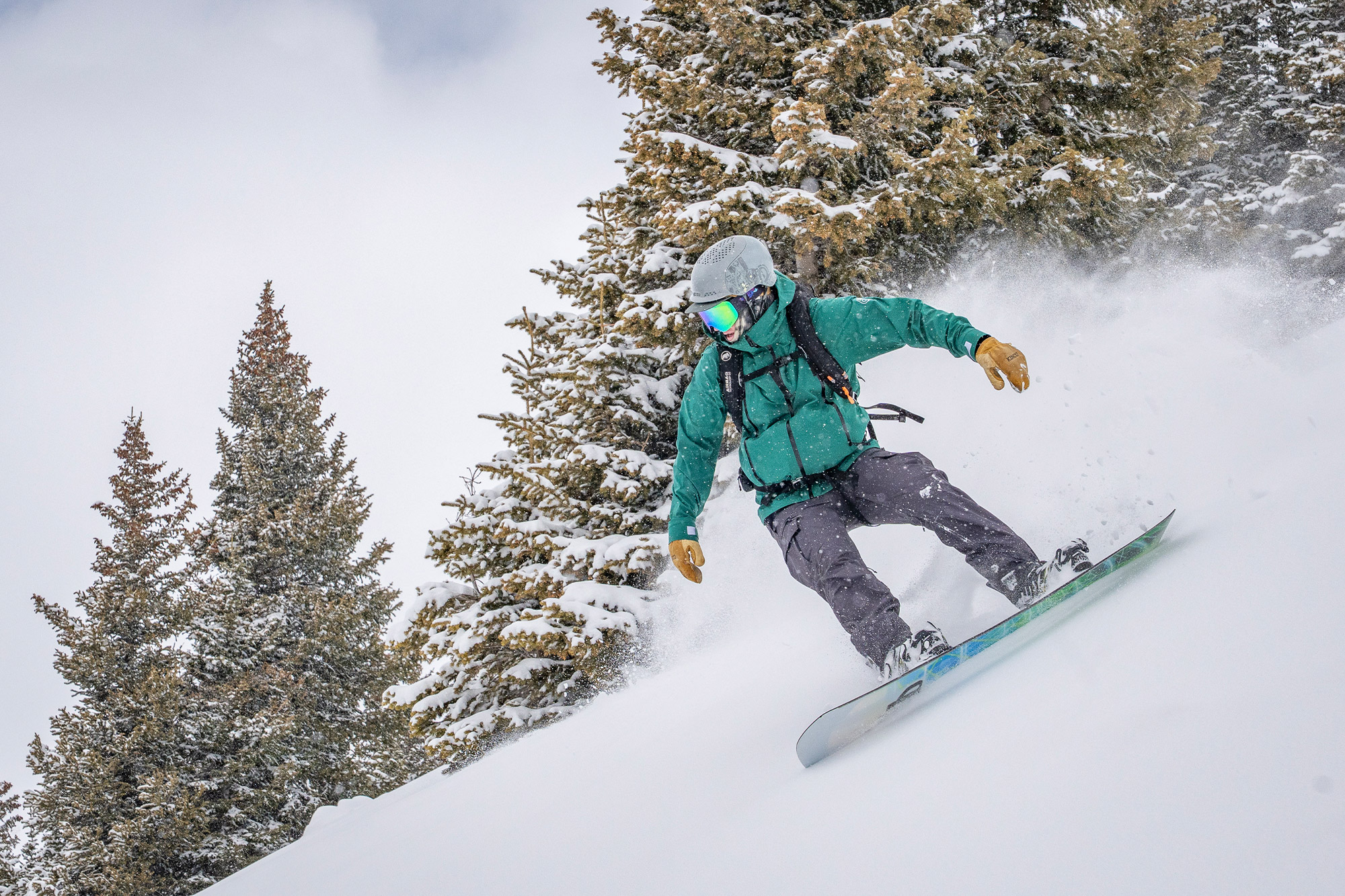

A great snowboard jacket is more than just part of your mountain look. It’s essential gear that protects you from the elements while letting your style shine through. But beyond aesthetics, what really sets the best snowboard jackets apart is technical performance.
Key components, such as waterproofing and breathability, are crucial for staying dry and comfortable, especially when riding in wet snow or during extended sessions in changing conditions. In this guide, you’ll find jackets with high waterproof ratings, fully taped seams, and PFC-Free DWR coatings to keep moisture out. Breathability matters too — pit zips, mesh-lined vents, and breathable fabrics help regulate your body temperature for backcountry lines or hiking park laps.
Whether you’re a beginner or a seasoned shredder, investing in a jacket with the right balance of function and flair will keep you warm, dry, and looking sharp all season long.
Read our Best Snowboard Jackets buyer’s guide to learn more.
The Best Snowboard Jackets for Men of 2025-2026
Best Overall Snowboard Jacket for Men
9/10 Rating
Best Budget Snowboard Jacket for Men
7.5/10 Rating
Best Waterproof-Insulated Snowboard Jacket for Men
7.5/10 Rating
Best Urban Style Snowboard Jacket for Men
9/10 Rating
Most Versatile Snowboard Jacket for Men
7.5/10 Rating
Best Backcountry Snowboard Jacket for Men
9/10 Rating
See more picks
-
Exceptional Waterproofing: a 28,000 mm GORE-TEX 2L -
Oversized mesh lined vents for high performance activity -
Stylish color options to stand out on the hill -
Backed by Burton’s lifetime warranty
-
Premium price point -
No insulation -
Only one chest pocket
-
Dakine signature baggy style -
Wrist gaiters -
Aquaguard zippers and fully taped seams -
Jacket to Pant attachment system
-
Wrist gaiters don’t have thumb holes -
15K waterproof rating might not be ideal for very wet conditions
-
Versatile 3-in-1 Design with a removable puffy liner -
Ample storage with 8 pockets -
Eco friendly materials like 100% recycled polyester
-
Limited breathability with liner installed -
Powder skirt not compatible with liner -
Jacket feels bulky, tight in chest -
Could be warmer for an insulated jacket
-
Relaxed fit designed for freeriding -
Ample storage -
Balance of resort performance and streetwear look -
Reasonable price point
-
Only 10K waterproof rating lacking for extreme conditions -
No insulation -
Small and lower down pit zips
-
3-in-1 versatility: Includes a removable fleece liner -
Large oversized chest pockets -
Lightweight and minimalist shell
-
No underarm vents -
Lack of pockets without liner -
Vest-only liner is less practical than full sleeves
-
Made by snowboarders for snowboarders -
High waterproof and breathability ratings for extreme conditions -
Lightweight and packable design -
Eco-friendly construction with 100% recycled materials -
Designed for backcountry and multi-day trips
-
Premium price point – over $700 -
Lightweight fabric can feel wind easily -
No insulation requiring layering -
Limited color options
Snowboard Jackets for Men Comparison Chart
Scroll right to view all of the columns: Price, Shell, Insulation, Waterproof/Breathability, Number of Pockets, Weight.
| Snowboard Jacket for Men | Price | Shell | Insulation | Waterproof/ Breathability |
Number of Pockets | Weight |
|---|---|---|---|---|---|---|
| 686 3-in-1 Rodeo Jacket | $330 | infiDRY 20K 3L shell, DWR finish | Yes – removable fleece liner | 20,000/15,000 | 6 | 1000 g |
| Dakine Triton Jacket | $280 | 100% polyester face with PFC-free DWR | No | 15,000/15,000 | 5 | Unavailable |
| Burton [ak] Cyclic Jacket | $485 | GORE-TEX 2-Layer fabric 100% polyester face, PFC-free DWR | No | 28,000/20,000 | 6 | 900g |
| The North Face Thermoball Jacket | $400 | DryVent 2L 100% recycled polyester, non-PFC DWR | Yes – removable puffy liner | 17,000/10,000 | 8 | 1,100 g |
| Salomon Venom Full Zip Jacket | $320 | 1 layer AdvancedSkin Dry shell | No | 10,000/10,000 | 6 | 725g |
| Jones Shralpinist Recycled GORE-TEX ePE Jacket | $800 | 3-layer GORE-TEX ePE | No | 28,000/25,000 | 6 | 700g |

How We Tested The Best Snowboard Jackets for Men
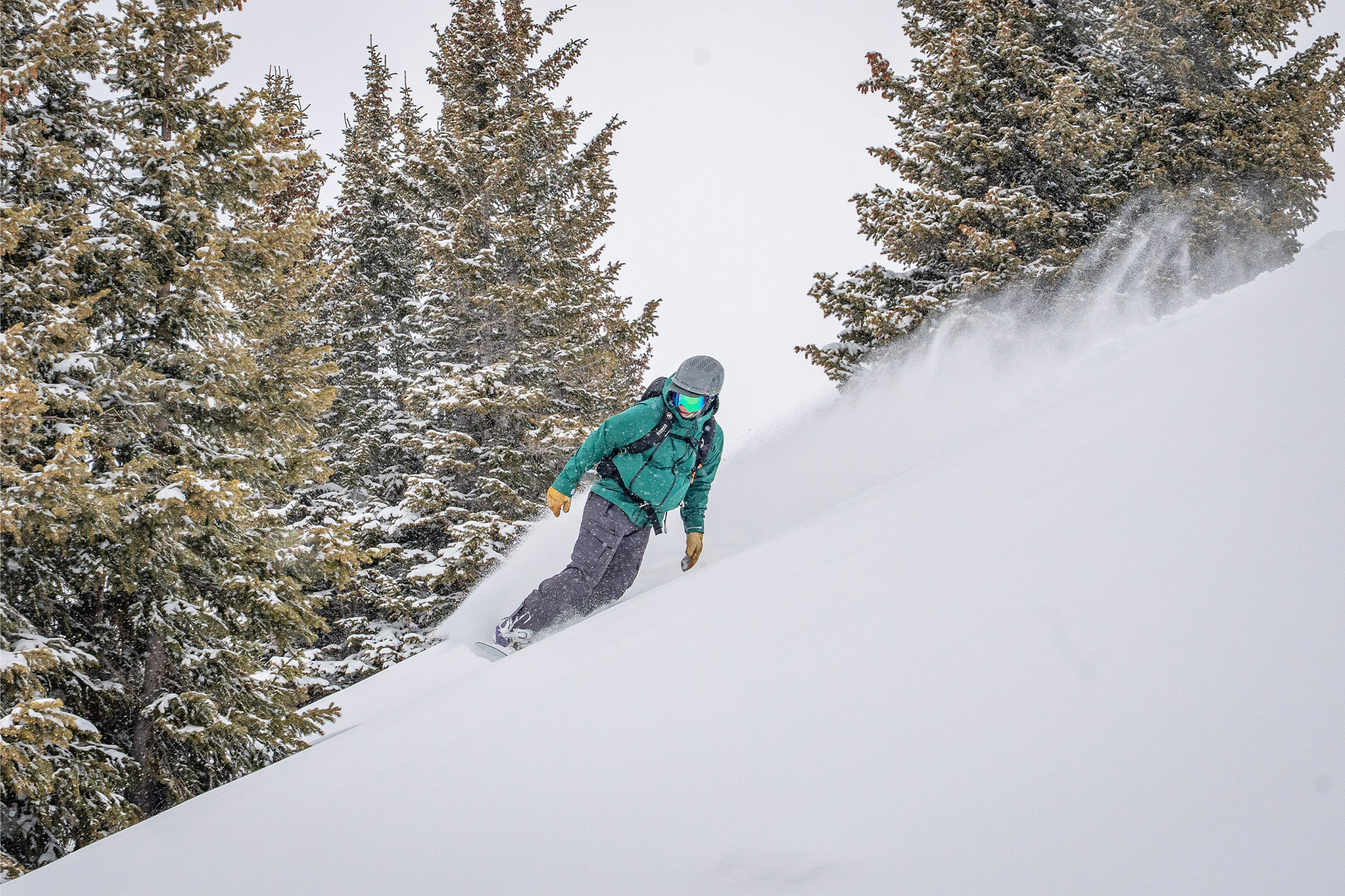
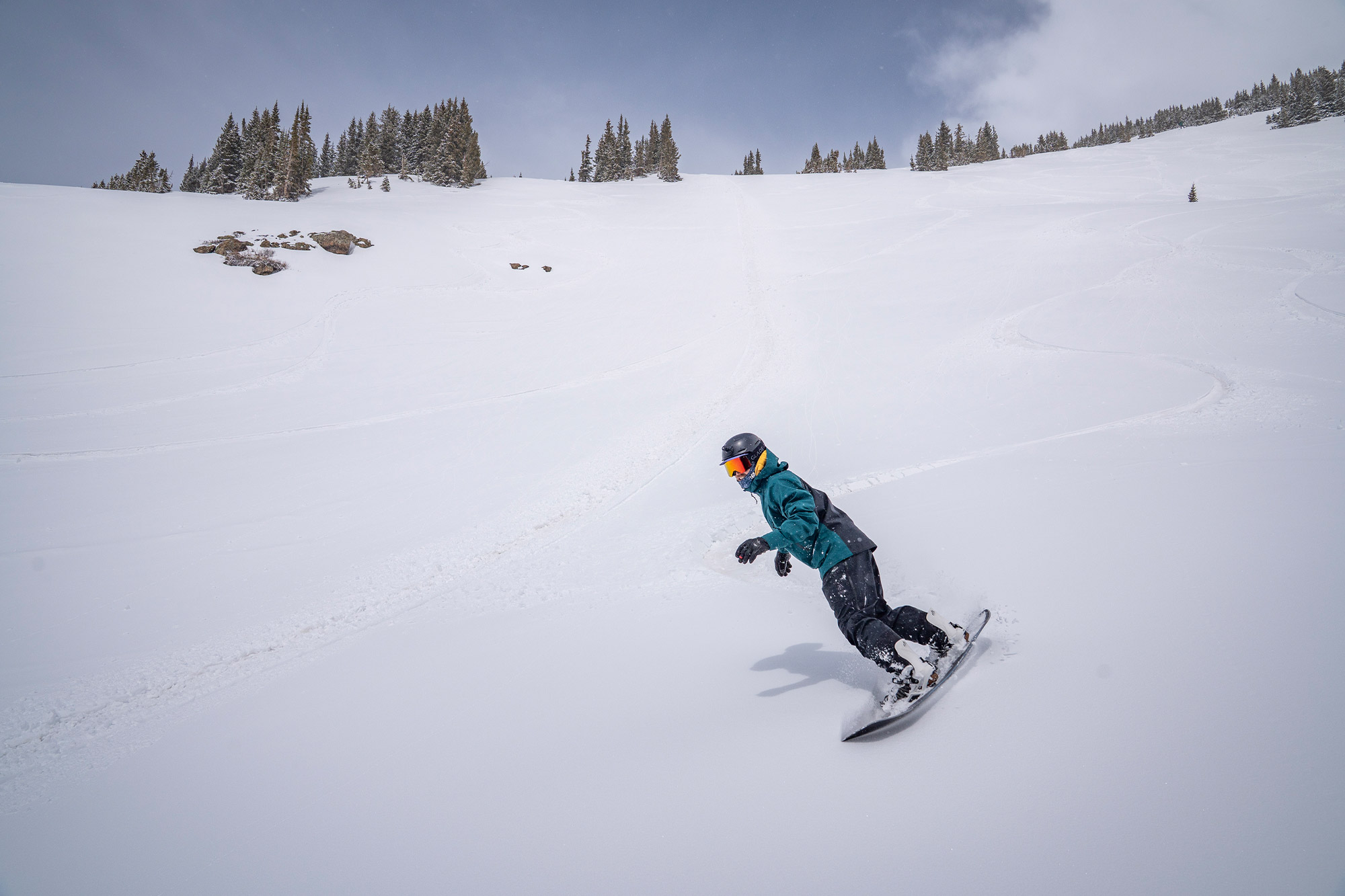
Our GearJunkie snowboard jacket gear testing involved a season of thrashing jackets across a variety of terrain and conditions.
Our Expert Testers
Leading the gear testing, contributor Eric Phillips has been snowboarding since 2005. Teaching professionally at multiple ski resorts, he is an avid resort charger, splitboarder, snowmobiler, powsurfer, and works in search and rescue in southwest Colorado. You’ll find him ripping big mountain backcountry lines or finding the best rocks to jump off of at his home resort.
Our Testing Grounds
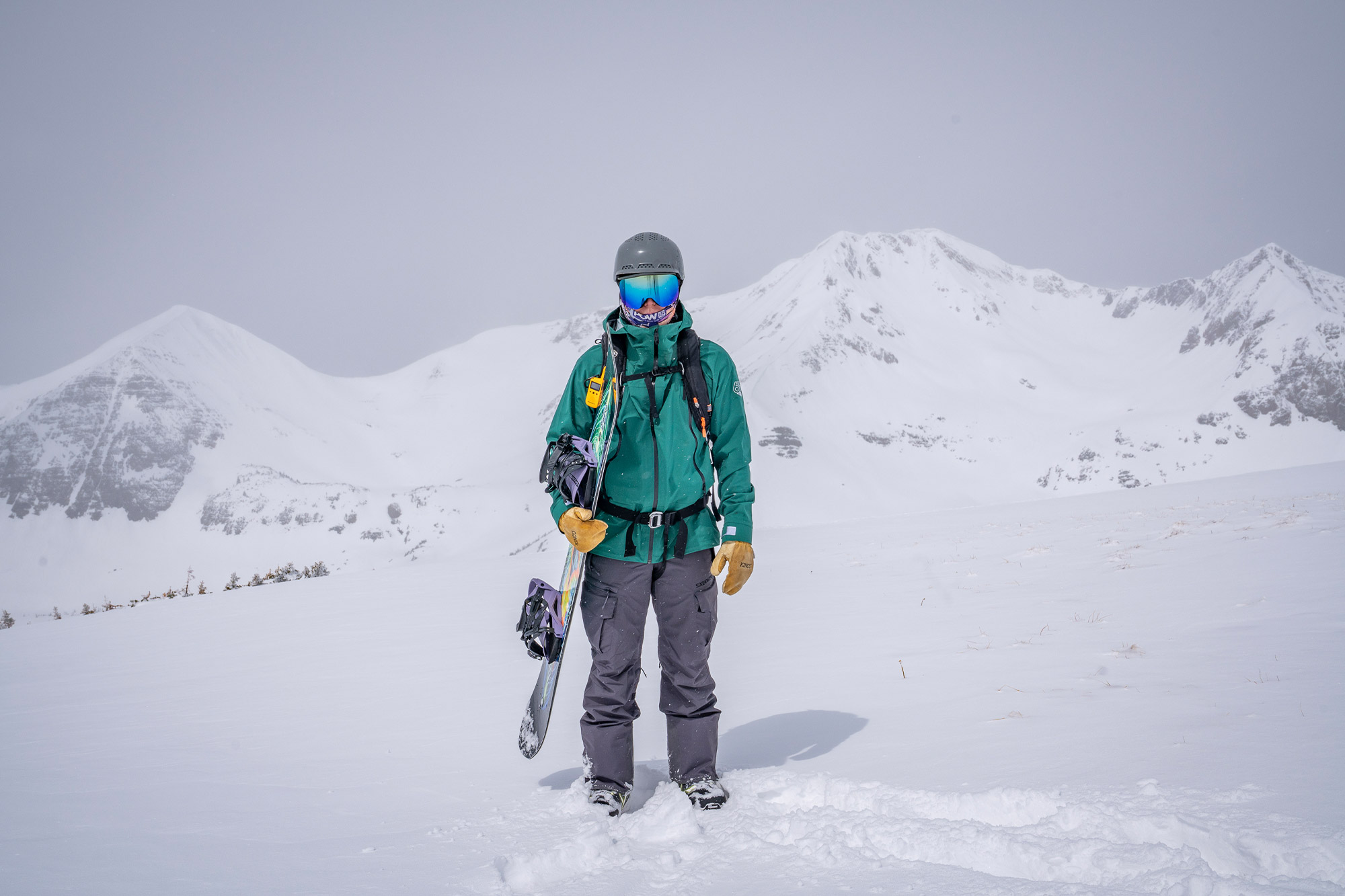
Our test team is centered in Crested Butte, Colorado, home to world-class resort steeps and legendary backcountry riding. We tested from the groomers to the park, to backcountry bowls, and even some backcountry snowmobile shuttling. Conditions ranged from double-digit negative lift lines to hot spring laps with every powder day in between.
Our Testing Process
When testing men’s snowboard jackets, we consider a range of key attributes, including fit, style, durability, functionality, ease of movement, zipper quality, pocket design and utility, waterproofness, breathability, snow exclusion, insulation, hood, collar, wrist gaiters, cuffs, and overall value.
We consider the climate and purpose for which each jacket is best suited. We also consider the most innovative, sustainable, popular, acclaimed, and legacy products across a range of price points and applications.
Insulation
Most snowboard jackets on the market are not insulated; instead, they come as just a shell. This means instead of having built-in insulation, one is expected to wear insulation underneath the shell on days that require extra warmth.
The benefit of a shell jacket is that it’s more versatile, allowing for layering to be tailored to the wearer. Meaning you could use it across a wider range of conditions, as opposed to a non-removable insulated jacket, which can be too hot for spring resort days or any backcountry touring.
Some jackets, like the 686 Smarty Rodeo and The North Face Thermoball, come with a removable insulating layer, allowing the jacket to be used as either an insulated layer or a shell, depending on your needs.
Most insulated jackets have the insulation built in as opposed to a removable layer. These jackets are often warmer and bulkier than a shell, though less bulky than a shell with a layer underneath. A bonus of insulated jackets is that the vents often run directly through the insulation to your baselayer. The downside of these jackets is that they might be too warm for spring riding or heavy activity like touring.
For most jackets, you’ll need to provide your own insulation in the form of layers. We recommend starting with a base layer; you can find the perfect one in our Men’s Base Layers guide. Next would be a midlayer, such as a fleece, a microgrid jacket, or even a puffy jacket. For really cold days, you can double down on this layer before adding in your shell jacket over top.
Waterproofing and Breathability
Snowboard jackets come in a range of waterproofness levels. The more waterproof a fabric is, the better it will protect you when there is a high water content in the snow — like in the PNW — or if you are outside in a blizzard for hours on end. Often, if a jacket is more waterproof, the breathability tends to decline. Premium jackets are able to maintain ultra-breathability with top-tier waterproofness, which is reflected in the overall cost.
The industry benchmark for waterproofness is GORE-TEX, a membrane that’s integrated into various 3-layer jacket designs or other in-house membranes. Typically, waterproofness is measured by the amount of water that can be placed on top of a fabric before it leaks, from 5,000 to 20,000mm or greater.
Preferred Waterproofness Based on Climate
The amount of waterproofing in a jacket can be paired with certain climates and weather patterns nationwide:
- 0-5,000mm: Resistant to light rain, dry snow
- 6,000-10,000mm: Waterproof for light rain and dry, non-heavy snow
- 11,000-15,000mm: Waterproof for moderate rain and dry, non-heavy snow
- 16,000-20,000mm: Waterproof for heavy rain and wet snow
- 20,000mm and greater: Waterproof for heavy rain and dense, wet, heavy snow
For many locations, a waterproof range of 10,000 to 15,000 mm works well for mild to moderate precipitation.
If you generally snowboard in a wetter climate with heavier snow (meaning the snow’s water equivalent, or the water content in the snow, is higher) or you want to use your snowboard jacket in the backcountry, a jacket with more waterproofing is a good choice.
On the scale of waterproofness, 30K is equivalent to a 747 jet, while 10K is comparable to a tiny bush airplane. The upper-end of protection is the most waterproof and ideal for coastal snow climates. Jackets with 10,000mm of waterproofing ratings are great for pairing with mild and moderate weather patterns and drier snow climates.
Waterproofness Range of Our Field-Tested Jackets
Here’s how our favorite jackets and the waterproofness stacks up side-by-side:
Face fabric treatments can also help make a jacket more waterproof, but they wear off with time and need to be reapplied. Traditional coatings are toxic for humans and the environment, and brands have been rolling out eco-friendly formulas, which are typically labeled PFC-free: Perfluorochemicals (PFCs) are synthetic chemicals. Some snowboard jackets also feature fully sealed seams and waterproof zippers for added moisture protection.
Vents
Vents refer to zippered openings in the outer shell of the fabric that extend directly to the inside, unlike a pocket, which is lined. The primary function of a vent is to let hot air trapped inside the jacket out, while also preventing snow from entering.
Venting is simple; the larger the vent, the more air can escape, and the more heat can be dissipated. For resort riding, small to normal-sized vents work just fine, but when you find yourself bootpacking or backcountry touring, you’ll quickly realize the need for a larger vent opening to dump the excess heat your body generates during vigorous activity.
Vents help keep snow out in two ways. The first is placement. Generally, on jackets, the mechanical vents are placed directly below the armpits, known as pit zips. When riding — unless you’re lying in snow — it’s hard to get snow into these openings. The Salomon Venom Jacket has the underarm vents toward the chest rather than underneath the arms, and we’re still undecided about the functionality and ease of use.
The second way vents block snow is through a mesh lining, similar to the one found on the Burton [ak] Cyclic Jacket. When considering a jacket, first consider the use case and find one that vents appropriately, such as large vents for backcountry excursions.
Powder Skirt
Anyone who has experienced a proper powder day has also experienced falling in powder; that stuff gets everywhere, and the last place you want it is up your back or down your pants.
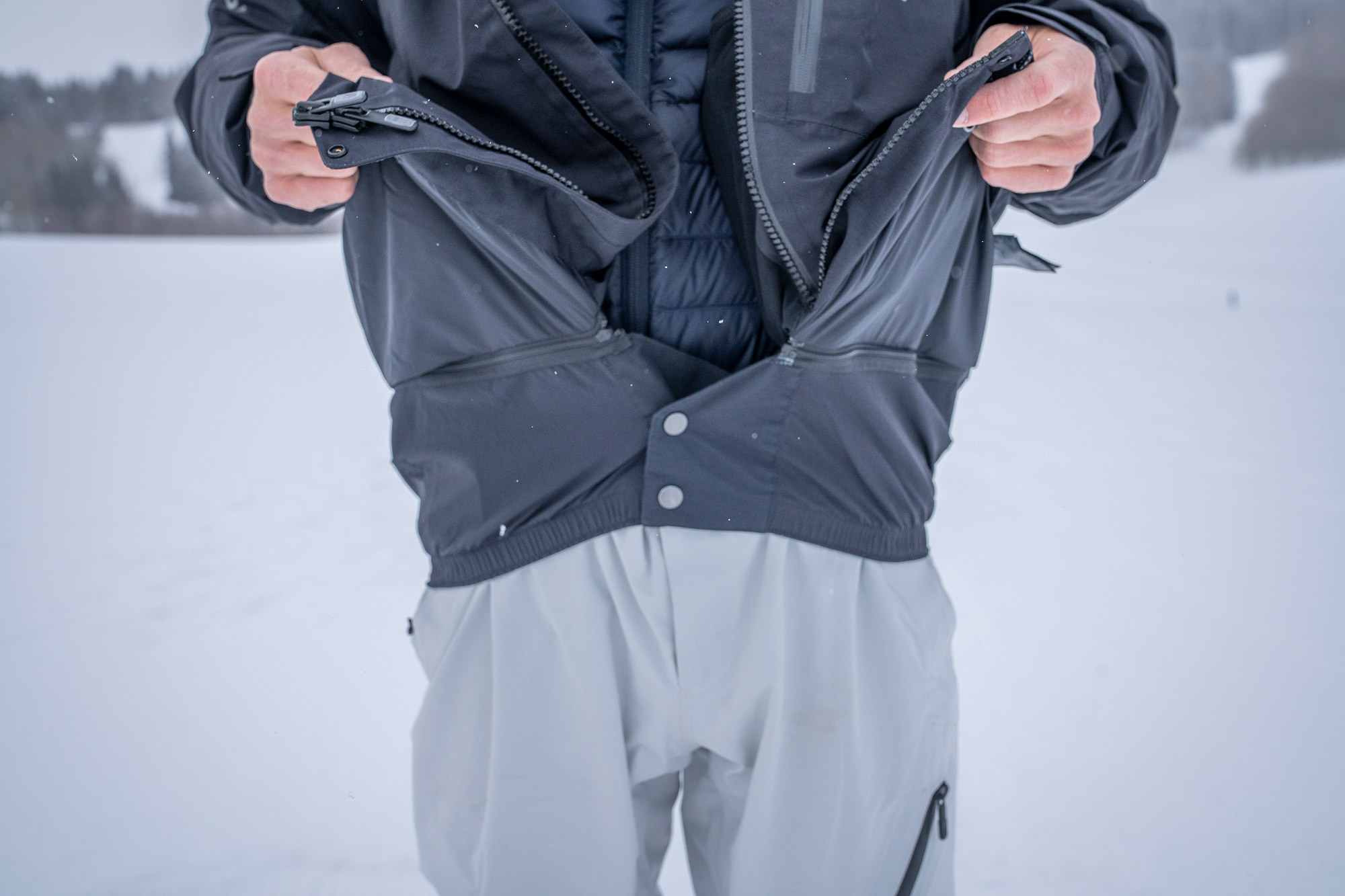
Thankfully, most snowboard jackets feature a powder skirt, or a stretchy piece of fabric that attaches around your waist, preventing snow from getting past and into your jacket. You can think of it like a snow barrier belt; simply clip it around your waist, ensuring it’s seated lower than your pants, and you’re ready to send it into the deep, fluffy stuff.
On some jackets, such as the 686 Smarty Rodeo, the powder skirt can be easily removed via a zipper on days when you don’t need it. Other jackets, such as the Dakine Triton, feature an adjustable powder skirt to accommodate smaller or larger waists. This is done through two sets of snap buttons. On other jackets like the Burton [ak] Cyclic, the powder skirt can even clip into snow pants, preventing it from riding up or letting snow into the gap.
At the end of the day, if you live or plan to ride somewhere with deep powder, we highly recommend a jacket with a powder skirt.
Pockets
Snowboard jackets are generally worn at the resort, as opposed to the backcountry, where one is using a backpack. At the resort, many people ride without a backpack, leaving only the pockets of their jacket and pants to hold everything for the day, such as keys, wallet, snacks, water, headphones, action cameras, and more.
Exterior Pockets
There are four main types of pockets found in snowboard jackets. First is the chest pocket, which is found on one or both sides of the chest and is a great option for a phone; some jackets often have a connection point here for wired headphones (if anyone still uses those). You can often easily access this pocket while wearing a backpack, like on the Jones Shralpanist.
The next set of pockets are hand pockets or cargo pockets, which are found on the front of the jacket, near the waist, and are great for warming hands or storing snacks. Next is a pass pocket, a small pocket designed to hold a ski pass, usually located on the left arm. We find these particularly helpful for safely holding and scanning our ski pass, as well as doubling as a credit card/ID pocket.
Interior Pockets
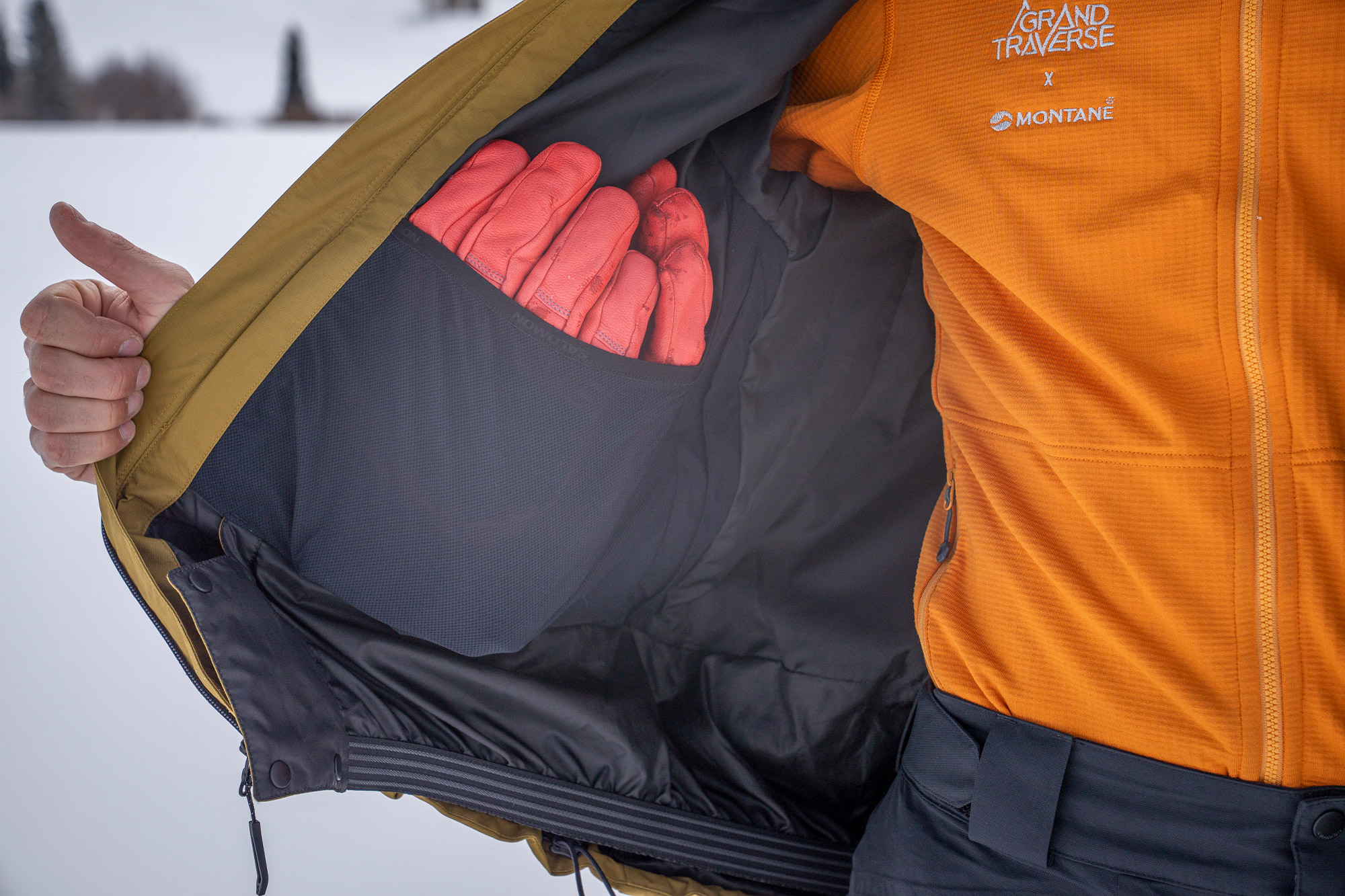
Lastly, there are interior pockets often referred to as stash pockets. These are typically mesh-lined, open-top pockets located on the inside of the jacket, often on one or both sides of the zipper. These pockets are ideal for storing large items, such as goggles, skins, action cameras, water bladders, and more. You can stash a lot in these pockets, just be aware you won’t have quick access, meaning you’ll have to unzip the jacket to reach any item.
Some additional pocket qualities we like are integrated goggle wipes, like the one found within The North Face Thermoball jackets’ pass pocket. Other jackets, like the Burton [ak] Cyclic, have extra insulation on the phone/media pocket to keep your phone battery from freezing as quickly.
Price & Value
The prices in our snowboard jackets guide range from budget-friendly choices to top-of-the-line expedition gear, though most fall somewhere in the middle, around $300.
Budget
For those who aren’t looking to break the bank and don’t need cutting-edge high-performance technology, there are plenty of options available in the $200 – $300 budget tier. These lower-priced jackets are a great starting point for beginner and intermediate riders; while they might not be as feature-packed or handle harsh conditions as well, they will get you out on the slopes. Lower-cost options are often less durable, lack additional qualities, and are less likely to withstand repeated harsh conditions. However, for milder, drier climates or infrequent seasonal use, a budget option can often be the best choice. This price tier still has some great and particularly stylish offerings like the Salomon Venom Anorak ($280) and Dakine Men’s Triton 15K Shell Jacket ($280).
Mid-Tier
At the mid-tier, $300 – $400 is the sweet spot for most riders. Most of the jackets in our guide fall into this category. Jackets here feature higher waterproofing and breathability of fabrics, higher-quality fabrics that offer increased durability, more garnishes like fleece-lined zippered pockets, insulation, and sustainability. Jackets here are often more than enough for regular resort riding and even some sidecountry.
Some of our favorite Jackets in this category are the 686 Men’s SMARTY 3-in-1 Rodeo ($330), a great value in terms of versatility, and theNorth Face Thermoball jacket ($400).
Premium
Above the $400 price tag, you’ll find the best of the best, top-shelf snowboard jackets. Jackets in this category will feature premium fabrics, details, and a dialed-in fit. These fabrics are often the highest rated in terms of waterproofing and breathability, and they will last longer in harsh climates than the other tiers. Another benefit of this category is that they are usually more sustainable. If price isn’t an issue, this tier really delivers on performance. Our favorites include the Burton [ak] Cyclic GORE-TEX 2L Jacket ($485) and the ultra premium Shralpinist Recycled GORE-TEX ePE Jacket ($775).
Frequently Asked Questions
While you could go commando under your snowboard jacket, we don’t recommend it. You’ll want to wear a moisture-wicking base layer and possibly a midlayer (like fleece or synthetic down) to stay warm and dry. Shell jackets are meant to be part of a layering system.
This depends on your needs and the frequency of your riding. Budget jackets ($200-$300) work well for occasional resort riders in mild conditions. Mid-tier ($200-$400) provides better waterproofing, durability, and finer details. Premium options ($400+) are designed for serious riders who face harsh weather or backcountry travel.
Yes. While there’s a lot of overlap, snowboard jackets often have a looser fit for mobility and style, more drop-tail coverage for sitting on snow, and larger pockets for gloves or tools. Some brands, like Jones, specialize in making jackets for snowboarders.
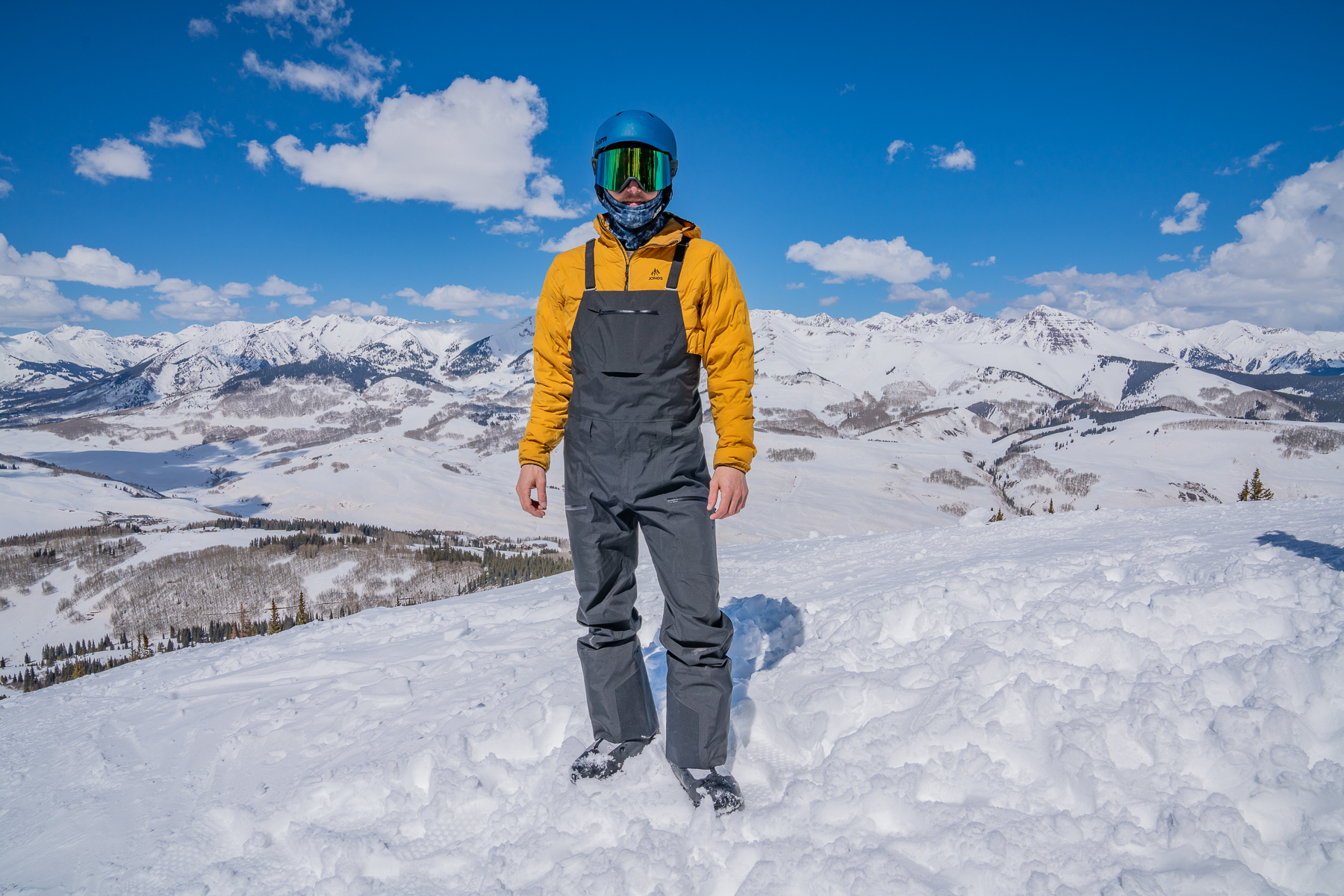
Whether you ski, snowboard, snowmobile, or splitboard, we’ve found the best men’s ski bibs.

Searching for the best ski goggles for skiing, snowboarding, or snowmobiling? We’ve got you covered with our vetted collection.
Read the full article here
