




On Sept. 2 the U.S. military carried out an airstrike against a suspected drug-smuggling vessel in international waters near Venezuela, in accordance with the Trump administration’s maritime campaign against narcotics trafficking.
The first strike destroyed the boat and killed most of the people aboard. Surveillance video later shown to members of Congress revealed two men survived the initial blast and were left drifting in open water, clinging to the wreckage. U.S. forces then launched a second strike that killed those survivors as well, according to multiple U.S. officials.
Lawmakers who viewed the footage said the men appeared shirtless, unarmed and disoriented as they struggled to stay afloat. Several described the imagery as deeply “disturbing,” as the survivors were clearly alive for an extended period before the follow-up strike.
Tom Fitzgerald of Fox 5 Washington DC’s “On The Hill” speaks with Military.com Deputy Editor Nick Mordowanec to discuss the investigation into the U.S. boat strikes.
What U.S. Commanders Say They Observed
Between the first and second strikes, U.S. aircraft continued to monitor the two men in the water.
The central justification for the second strike rests on what commanders concluded they were witnessing during that period of observation.
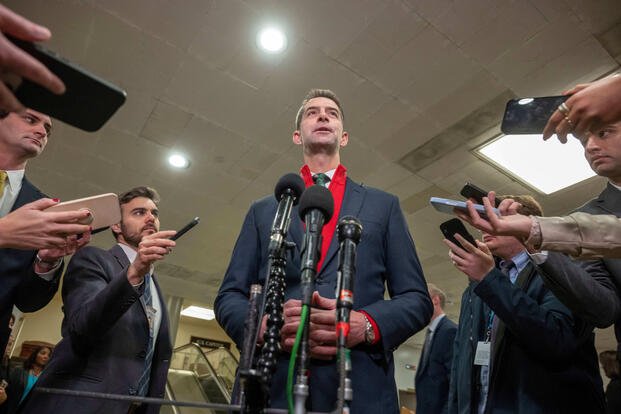
U.S. Sen. Tom Cotton (R-AR), who reviewed the classified video, told reporters that intelligence personnel assessed the men were not merely trying to survive but were instead attempting to flip the disabled boat to recover the narcotics cargo and continue their mission.
Cotton said the survivors were “trying to flip a boat, loaded with drugs bound for the United States, back over so they could stay in the fight.” He further suggested other trafficking vessels might have arrived to recover the drugs if the wreckage was left undisturbed.
That interpretation potentially implies the operational basis for treating the two men as continuing threats rather than incapacitated survivors.
Hegseth’s Initial Denial
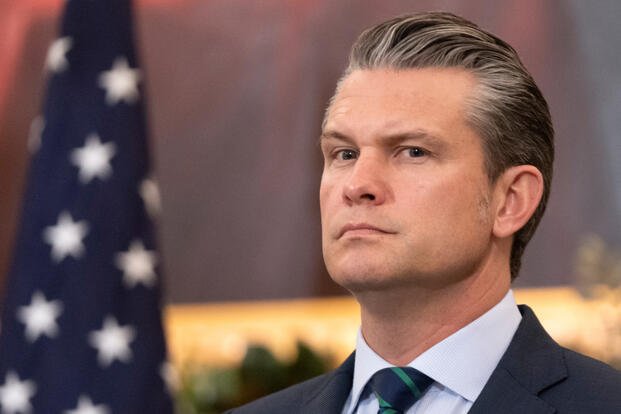
As reports of the second strike surfaced in late November, Defense Secretary Pete Hegseth moved quickly to deny that he had ordered the killing of survivors.
A Washington Post report claimed he issued a “kill everybody” directive after the first strike—an allegation Hegseth publicly rejected as fabricated, inflammatory and derogatory, essentially referring to it as fake news.
President Donald Trump, when asked about the strike, publicly backed Hegseth and said he believed him. At that stage, the administration framed the second strike as a battlefield-level decision made by commanders rather than a product of civilian direction from the Pentagon.
‘Fog of War’ and Operational Distance
As congressional scrutiny mounted, Hegseth seemed to further distance himself from the second strike in question.
The defense secretary stated he had watched the first strike in real time but did not see survivors afterward, and had already left the room for another meeting when the second strike occurred. He described the sequence of events as unfolding in the “fog of war.”
This positions Hegseth as architect of the broader campaign while maintaining that he was not personally involved in the tactical decision to re-engage the boat.
Delegated Authority Confirmed
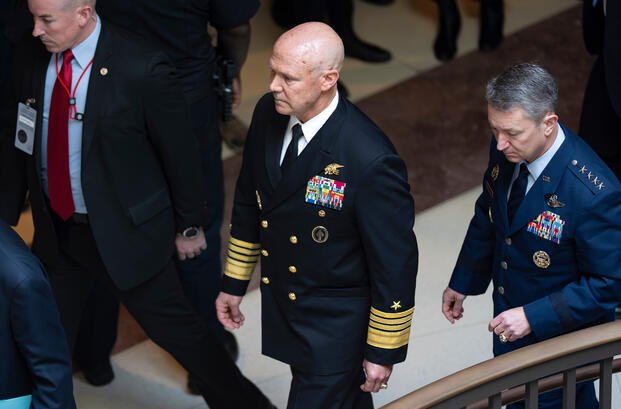
The Trump administration has clarified that while Hegseth did not issue the second-strike order himself, Navy Adm. Frank Bradley approved the attack under the authority Hegseth had delegated for the campaign.
The administration again defended the decision as lawful and within the approved rules of engagement. That confirmation narrowed the controversy to whether the rules Hegseth established permitted lethal force against survivors who were already in the water.
From Denial to Full Endorsement
Hegseth’s position hardened decisively days later.
On Dec. 6, speaking at the Reagan National Defense Forum, he publicly said he “fully support[s] that strike” and that he “would have made the same call” himself if placed in the commander’s position.
Around the same time, Time reported Hegseth dismissed criticism by publicly confirming yet another strike to TPUSA’s Andrew Kolvet with the comment: “Your wish is my command, Andrew. Just sunk another narco boat.”
What the Law of Armed Conflict Requires
The legal problem for the administration begins with the most basic protections in maritime warfare.
Article 12 of the Second Geneva Convention requires that wounded, sick and shipwrecked persons “shall be respected and protected in all circumstances.” This protection applies regardless of how the shipwreck occurred and regardless of the individual’s prior conduct.
Customary international humanitarian law reinforces this rule. Persons who are hors de combat, including those who are shipwrecked and defenseless, “shall not be made the object of attack” and intentionally targeted.
These are not abstract principles; rather, they’re binding war crime prohibitions recognized by the United States and incorporated into U.S. naval warfare doctrine.
Why the Administration’s Justification Is Disputed
The administration’s argument hinges on its claim the survivors were trying to recover narcotics and continue the trafficking mission. Legal experts have forcefully challenged that justification.
International law scholars have stated that attempting to salvage contraband does not qualify as “direct participation in hostilities” sufficient to override shipwreck protections, particularly where the individuals are unarmed and adrift in open water.
The law draws a bright line between hostile combat activity and survival or salvage behavior. Once a person is defenseless due to shipwreck, the default legal duty shifts from attack to protection unless there is an imminent armed threat.
Here, multiple lawmakers stated that no visible weapons or hostile acts appeared in the footage before the second strike.
Congressional Revolt, Scrutiny
The political backlash has been swift. Democratic lawmakers who viewed the classified footage described the second strike as “murder” and demanded public release of the video. Multiple members warned the incident could expose U.S. personnel and leaders to war-crimes liability.
Rep. Jim Himes (D-CT) went further, saying Hegseth has “zero credibility” on the strikes and accused the Pentagon of stonewalling transparency.
Republicans have largely defended the operation using the administration’s narcotics-as-national-security framing, though several have stopped short of explicitly endorsing the second strike.
The Broader Campaign
The Venezuelan incident is not isolated.
Since September, the U.S. military has conducted nearly two dozen maritime strikes against suspected drug-smuggling vessels in the Caribbean and eastern Pacific. More than 80 people have been killed in those operations, according to reports.
Hegseth has repeatedly described traffickers as “narco-terrorists” and compared the campaign to counterterrorism operations against al-Qaeda, arguing that traditional law enforcement approaches are inadequate. Under his leadership the Pentagon has followed a “warrior ethos” mentality.
Command Responsibility and the Legal Line
Under international law, responsibility does not attach only to the person who pushes the button. It also attaches to senior officials who establish the rules of engagement when those rules foreseeably lead to unlawful killings. The prohibition on killing shipwrecked persons is among the clearest in the law of armed conflict.
Hegseth’s public progression now has potential legal repercussions. He denied ordering the second strike but acknowledged it occurred under authority he delegated. He has now said he would have ordered it himself.
That sequence places the Venezuelan boat strike at the center of a growing legal confrontation over whether the U.S. is prepared to treat incapacitated criminal suspects as lawful wartime targets at sea.
The Second Geneva Convention draws a firm line against that outcome. Whether current U.S. policy now crosses it is the question facing Congress, military lawyers and international observers.
Story Continues
Read the full article here
